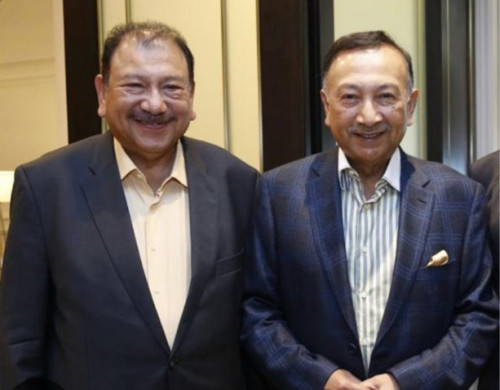
SAIWAN Wong, as he prefers to position his nom de plume, was an eternal optimist, not just in his own disposition, but also his perspective as an old-school journalist/editor.
For this purpose, I’ll sidestep the extended aspects of his impressive resume in the newspaper and media industry.
So, I’ll time-travel to the mid-1980s, when we were very tight as junior reporters and buddies in The Star’s halcyon years, before the government shut them down to forever deconstruct their zeal and make-up.
The most distinctive character trait in Saiwan’s good-natured soul was that there wasn’t a silver lining he couldn’t rough-draft during dark and dire moments.
One example: in 1986, when we were both junior reporters at The Star.
I had just been extracted from my four-year stint in Kota Baru as the Kelantan staff correspondent, just before the general election that year.
The Star’s editors’ infinite wisdom concluded that I was best optimised at headquarters, and upon reappearing at the news desk on March 1, Saiwan was loitering nearby, greeting me with a big, warm smile and a jolly hello.
He was short and rolling in the pounds, but he walked in quick steps and with energy, and nattered confidently, being from Seremban, also in fluent Negri Sembilan Malay parlance.
Since 1984, when he joined The Star, we had communicated a dozen times over the landline telephone (how quaint) after he was assigned the menial task of typing dictations of my news reports (these were the typewriter years, light years before the PC or smartphone was envisioned).
We always engaged in boisterous banter – Saiwan was hip and connected, his nose, ears and senses permanently probing fertile ground not only on national political shenanigans, but also juicy internal office scuttlebutt, gossip and intelligence.
He was a natural storyteller: he spun enthralling tales on who’s romancing who, who got into the news desk’s black book, petty scandals, personality flaws of each news-desk editor, or who was about to be promoted.
This made Saiwan the ideal go-getting reporter who fed me – a loner up in the east coast – a priceless and handy lifeline.
He became the closest buddy and confidant I could have then.
No second guesses as to the state of our pockets: we were always skint a week before payday, and there was little between us for a decent meal, let alone a jaunt at the favourite watering hole.
But Saiwan, the eternal optimist, was not about to get hung up: he always had a plan.
Occasionally, Saiwan would declare, too loudly or within the editors’ earshot, that he was the cheapest reporter around, wedged in the lowest grade in the lowest wage bracket (such delicious contrariety: he left us at the top of his game, possibly in the highest wage bracket, and a Datukship to boot).
And his plan to swing us out of this short-term destitution? Saiwan’s ability to wrangle a quick, small loan for the both of us from a senior, motherly writer, who had a soft spot for him. In 1986, RM50 stretched a long way for a week.
Saiwan was sharp too. One time, after we were debating at a mamak restaurant on our usual political anecdotes, the bill arrived.
We were about to go dutch when Saiwan spotted accounting errors, marched to the cashier, demanded a correction and opined agitatedly that people were too trusting in their food bill. The bill quickly shrank by 40%.
Saiwan was generous with his time and contacts: when I was still groping in the dark, he’d feed me relevant politicos’ phone numbers and addresses, and even help make “introductory” calls.
Being the “insider”, he gave me useful tips on approaching certain Sabah politicians and where to ambush them.
Saiwan took the initiative to steer me out of trouble, too, with the editors, and even navigated my flings, offering unconventional tips on the art of wooing (he had a steady girlfriend then). Sometimes it worked, and sometimes it didn’t.
All said, this was the philosophical measure of his professionalism – and humanity.
Keeping contact since the magical days
I left The Star in May 1987 for greener pastures at the New Straits Times, but maintained ties with Saiwan, who understood, but was still upset at me leaving.
But his fortunes multiplied: in the coming years, he rose high up the newsroom’s executive ranks, before making the shrewd move out to entrench himself in his last top executive post at the Malay Mail.
The last time I stumbled into him may have been a little over a decade ago, at a corporate high-tea bash in KLCC. He was as friendly and robust as he ever was from the mid-1980s.
There was also a moment, by coincidence, when we stumbled again into each other as speakers in a journalism workshop. We listened in on each other’s pitch, and butted in with queries and comments.
We kept contact over Facebook and WhatsApp like everybody else, though he went out of his way to make sure some media statements I passed to him were published on the Malay Mail portal.
Saiwan and I go back at least 35 years, but the defining, even magical, moments, of 1984 to 1987 cemented my friendship… and affection for my buddy.
His death reminded me that there are still old-guard journalists, compatriots from my early years still hacking it away, whose numbers, regrettably, are shrivelling by the year.
It is with sadness and earnest reflection that I say there will never be another Saiwan. As clichés go, that he “left before his time” is dead centre.
Rest in peace, my brother in arms. You’ve earned it. – The Vibes, May 15, 2021
Azmi Anshar was a reporter with The Star from 1981 to 1987. He is now an independent media consultant and beach bum after retiring as an award-winning commentator from the New Straits Times in 2014