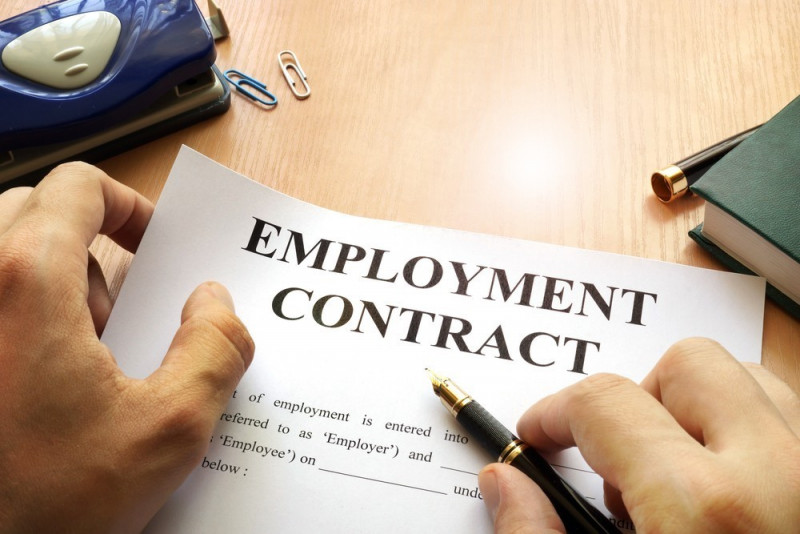
THE outbreak of the current pandemic has changed the working of the world and the workplace is also not spared. With lockdown and movement control orders, many employers are slapped with major business disruptions with having to opt to reduce their workforce to sustain their business, or the final straw is to shut down or to merge with other similar companies.
Decisions over laying off staff is not an easy one and it comes with legal implications imposed by employment contracts. Employers may end up paying hefty amounts in compensation during lay-offs which can place them in difficult financial situations.
The pandemic has also compelled many employers to revisit the traditional terms of employment contracts, so as to include clauses which may absolve or mitigate their losses in the event of having to lay off workers during unprecedented times, i.e. during pandemics or epidemics.
Can Covid-19 constitute a force majeure?
One such clause is the “force majeure” clause. “Force majeure” refers to an unforeseen event which is beyond the control of the parties to the contract which prevents the performance of one or more of the contractual obligations.
The force majeure clause absolve the party of having to fulfill one or more contractual obligations when faced with a certain event. Common examples of force majeure include natural disasters, wars, epidemics etc. Traditionally, the force majeure clause was only included in commercial contracts but with the current chain of events in the world, i.e. in light of Covid-19, the possibility of its introduction in employment contracts has been raised.
Force majeure is a creature of contract i.e.; the scope of the force majeure clause depends on the construction and language used in the clause. Employers should opt to use more precise and detailed words such as “pandemic”, “epidemic”, or disease to cover a situation like the current Covid-19 pandemic, instead of more general terms such as “act of government”, “act of God”, or “event which are outside the party’s control”.

Although use of general terms tend to cover more events, it may be unenforceable and void on grounds of uncertainty and lack of clarity. Further, it would open a gateway to litigation to construe the scope of the words used. In order to avoid these hassles or uncertainties, it is always advisable to resort to more precise words.
In drafting the contract, an employer may explicitly spell out the consequence of triggering force majeure. The clause may allow for immediate termination of the contract, i.e. laying off employee upon occurrence of the force majeure event; suspension of the contract, i.e., the employees are suspended from their employment for a fixed period of time or during the pendency of the force majeure event; or suspension followed by possible termination i.e. the employees are suspended for a given period and should the event of the force majeure extend beyond a stipulated period of time, the employee may then be laid-off.
One also should be mindful in drafting the force majeure clause to stipulate the notification requirement and procedure of notification to notify the other party of their intention to rely on the clause, the absence of which may render the clause being void for uncertainty.
Have you taken steps to mitigate damages?
The presence of a force majeure clauses does not automatically absolve employers of their contractual obligations in the event of the occurrence of a force majeure event. One who relies on the force majeure clause need to show that:
- inability or delayed performance of the obligations under the contract was due to the force majeure event. It is insufficient if the performance of the obligations is more difficult or expensive. Thus, for instance if arrangements can be made for the work to be completed from home, an employer may not be able to invoke force majeure clause though it may be more costly or difficult for them.
- non-performance or delayed performance of the obligations was due to circumstances beyond their control; and
- they have taken all reasonable steps to avoid or mitigate the force majeure event or its consequences.
The burden of proving the above lies throughout with the employer. It should also be noted that the court will not construe the force majeure clause in isolation but together with the other provisions in the contract. Thus, the court would consider the purpose of the contract before allowing the force majeure clause to be invoked and each case would be decided on its own facts.

What about frustration of contract?
It is pertinent to note that in the event of absence of force majeure clause, employers may resort to doctrine of frustration which is similar to force majeure in that it absolves a party from having to perform his contractual obligation.
A contract is frustrated when some irresistible or extenuating event has made it physically or commercially impossible to fulfil the obligations under the contract or the obligations are so radically different from that envisaged by the parties at the time they entered into the contract.
The courts have interpreted “physically and commercially impossible” to mean impossibility of performance over a prolonged period of time.
However, it is difficult to invoke the doctrine of frustration as courts are generally cautious in interfering with what is agreed between the parties and the court has construed circumstances resulting in frustration narrowly. Further, what amounts to a prolonged period of time has not been defined and in situations such as the current pandemic, it is unclear whether or not frustration could be invoked unless the pandemic prolongs for a period of time which the court considers long enough for the doctrine to be invoked.
Covid-19 certainly has changed the operation of the workplace and employers should incorporate lessons learned from Covid-19 in their future employment contracts to avoid if not mitigate future losses. In the event an employer is forced to lay off a worker due to events such as the current pandemic which makes it impossible for the employment contract to continue, it is unclear whether the doctrine of frustration would apply.
Force majeure clauses on one hand, if drafted precisely with sufficient clarity, may offer some solutions to employers when faced with the difficult task of laying off employees. However, it should be noted that force majeure clauses would not automatically absolve an employer of his contractual obligations and he has a duty to mitigate before invoking the clause. It should also be noted that the courts will look at the case as a whole and examine whether the employer had just cause and excuse in invoking the force majeure clause in dismissal of the employee.
Closing thoughts
As with any anticipated or potential breach, once a client knows their risk, they are usually wise to approach the other party to see if some revised contractual terms will avoid a complete breach or failure to perform. It is incumbent upon lawyers to have these frank discussions with their clients, and to help them make the best employment contract decisions in these uncertain times. – The Vibes, June 15, 2021
Ameet Kaur is managing partner of Ameet’s Chambers and Surain Satgunarajah is IP associate with Adipven (M) Sdn Bhd