YESTERDAY, the country experienced a new high of 13,215 in terms of number of Covid-19 cases detected. While this number will have caused great alarm among most Malaysians, it is important to interpret these numbers in the proper context. More testing will detect more positive cases and, with the proper SOPs, this will help contain the spread of the virus. Moving forward, there is an urgent need to shift away from looking at the total number of daily Covid-19 cases and instead focus on more specific and relevant figures including percentage of positive cases, number and percentage of serious cases, ICU admissions and capacity, and number of deaths. With the focus on the right set of figures, there is hope for a gradual reopening of various economic sectors safely and responsibly, even if the number of cases remain high.
As we have seen in the UK, even with 80% of the adult population vaccinated, the number of cases have averaged close to 35,000 over the past seven days. What is important is that the number of serious cases and the number of deaths, especially among the vaccinated population, is very low. This has allowed the UK economy to reopen, even while the number of new Covid-19 cases remain relatively high.
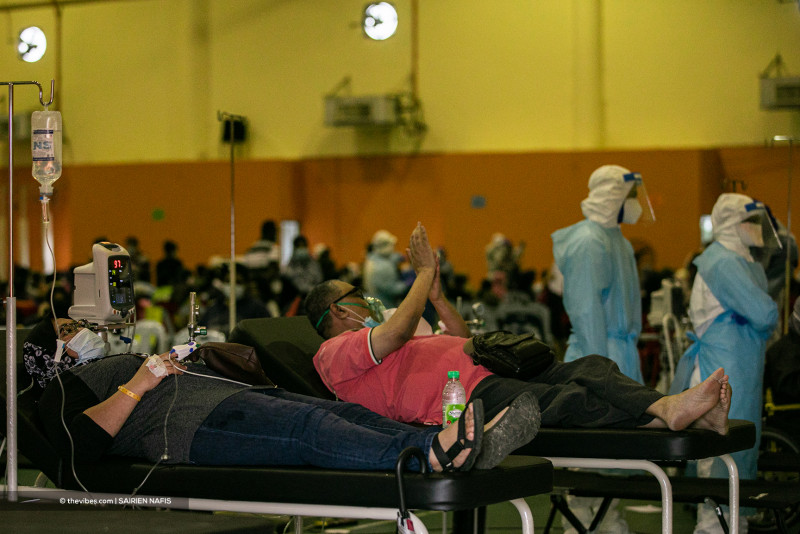
A record number of tests – 134,569 – were conducted in Malaysia in the 24 hours leading up to the Covid-19 daily figures released yesterday. While the percentage of positives remains high at 9.8%, the approach towards more testing is the right one to take as this will allow for the identification of more Covid-19 patients so that they can be asked to quarantine at home (for non-serious cases) or admitted to a hospital (for more serious cases). What is also important to note is that 96% of Covid-19 cases involve those with either no symptoms (60.9%) or mild symptoms (35.1%). Patients in both these categories are asked to quarantine at home. Of course, this still means that there are 531 cases that are in Category 3 (symptomatic patients with lung infection), Category 4 (needing oxygen supplementation) and Category 5 (critical patients with multiple organ complications). But 531 cases seems much less “scary” to the public than 13,215 cases, and it actually presents a more accurate picture of the impact of Covid-19 patients on the healthcare system.
As of July 14, 12.65 million doses have been administered, representing 36% (first dose) and 17% (two doses) of the adult population. It is expected that all residents who have registered for the vaccine in the Klang Valley will receive their first dose by August 1 (not including undocumented migrants) and be fully vaccinated by the end of August. As the number of vaccinations continues to increase, the number of cases should come down. During this time of transition, we need to move away from focusing on the number of total daily cases. Instead, the public should be educated to shift their attention to the more important and relevant indicators such as the number of serious cases (Category 3 to 5), the number of Covid-19 related deaths and ICU capacity.
I call upon the National Security Council (NSC) to not use the number of daily cases (4,000 is a very arbitrary number) but instead, change the indicators of focus to those recommended above and use these indicators to determine when the economy can be opened up slowly and safely. In addition, any decision by the NSC for any sector of the economy to remain closed has to be based on science and data, not on unsubstantiated speculation and fears on where clusters “may” develop eg. in shopping malls or in gyms. – The Vibes, July 16, 2021
Ong Kian Ming is Bangi MP and DAP assistant political education director