IT is the month of Merdeka. As Malaysians, let us appreciate at least one thing that went right in the last eight months: we are being vaccinated at a fast pace, and this has given us life insurance.
While millions of people around the world are desperately waiting to get one shot, Malaysia is close to immunising the entire nation.
Malaysia has been making international news for delivering the fastest daily vaccination doses per capita. Being consistently third on the international graph, it has surpassed the rates of Europe, Australia, Japan, and may even perform better than the United States soon.
However, all these well-deserved international accolades have been fogged up by politicians, who nominate themselves as leaders to resolve the present economic crisis. In the process, we have two instabilities at hand – economic and political.
It is abundantly clear to the whole world that vaccination is key to economic recovery. Getting vaccinated against the coronavirus is a critical direction towards normalcy in any country. People become healthier, making it easier for them to return to work, which will in turn increase overall economic activity.
Logically, a fully immunised nation will help restore the economy as it attracts local and foreign investments and tourism, creates jobs and revives the services industry.
Our vaccine roll-out is bound to foster socio-economic recovery in the next few months. Already, hospitals are seeing a decline in patients. For instance, Klang Hospital saw a 50% drop in Covid-19 admissions and Kuala Lumpur Hospital saw a drop from 200 to 20.
A Health Ministry clinical audit revealed that only four fully inoculated folk have died of Covid-19 out of nearly 13,000 fatalities.
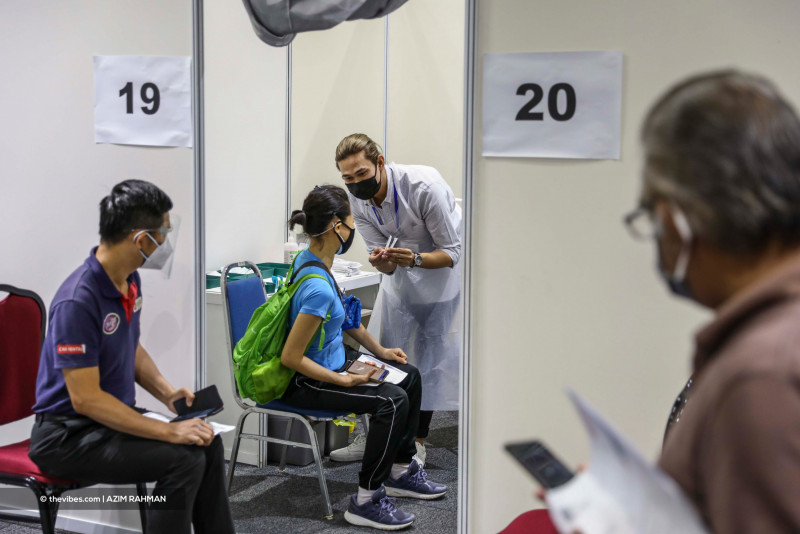
If Malaysians tune in to reality on the ground, there is a pace of about 500,000 doses administered per day.
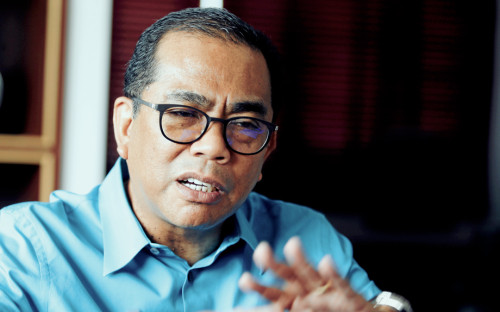
“We administered 12 million doses in July alone. This is more than the eight million cumulative doses from February to June,” said then National Covid-19 Immunisation Programme (PICK) coordinating minister Khairy Jamaluddin.
Khairy and his team had crafted the entire programme with a steady hand and guided the whole nation towards vaccine equity.
“Vaccinations can help the economy recover and nation, heal. More than 40% of our adult population have received two doses, and more than 50% have received at least one dose. A total of 81% of all registered adults have received at least one dose of the vaccine.”
Khairy had also promised: “I will not stop until every adult is fully immunised by the end of October.”
_-_Sairien-02.jpg)
With a sense of urgency to beat Covid-19, every person was tracked down and vaccinated at a record that was ahead of the forecast time.
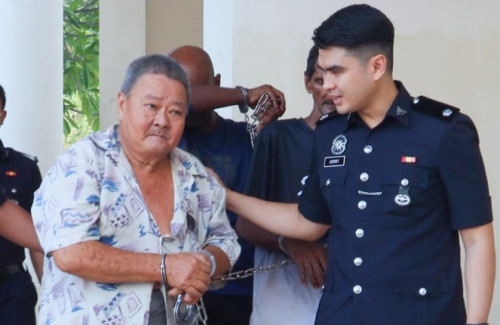
This comprised every adult – persons with disabilities (who were given drive-through privileges), inmates in prisons and detention centres, and even foreigners – including the 3.6 million undocumented non-citizens and 160,000 refugees in the country.
It was not an easy task during the “Rule of a Raging Virus”. Public trust had to be built, misinformation allayed, and the best vaccine procured, stored and delivered to ensure everyone is immunised. To date, very few with a clear conscience can complain about the facilitation of their shots.
In some countries, the undocumented are hidden from the public eye by a cloud of logistic issues. Not being on the mainstream radar, they are easily ignored in the overall vaccine distribution plan. PICK’s most difficult task was to identify them.
Many quarters challenged the programme, saying it will be impossible to track down the undocumented and administer the vaccine. But PICK managed to do the unthinkable. The team, together with the Health Ministry, mobilised resources and reached out to the refugee and asylum-seeking communities.
Meanwhile, undocumented non-citizens faced a double jeopardy of problems. They hid in fear of detention or deportation if they did come forward. During the lockdowns, they were sealed in crowded quarters, making it possible for the virus to reverse the direction of its flow and speed up its momentum of infection.
Among this group are individuals forgotten by policies, exploited by employers – including multinational corporations – and marginalised by the Human Resources Ministry and labour laws that should have protected them.
Now, with the MySejahtera app, these hidden figures have become statistics that can be analysed and translated to better protect workers from their employers with laws, policies and facilities.
It is sad that our phenomenal vaccination track record has been taken for granted and sidelined as an indicator towards economic recovery.
Agreed, vaccination alone cannot be the silver bullet with other variants of concern. If we are not careful, the virus may prosper with the wrong change of hands.
Our politicians will go down in history for overturning a health crisis for their own political personal gains and transparent agenda behind it. Could they not have waited for next year for us to choose our own leaders based on their merit?
Today, even the harshest critics have become disquiet bystanders, in despair and apprehension of the next leadership to come from a small group of people.
At this moment, it will be so very transparent if someone takes over the leadership with greed for power. We will never be able to forgive that person. Not again. It is just wrong timing.
Amid the leadership crisis, I would like to write a vaccination and economic recovery story. – The Vibes, August 19, 2021
Vasanthi Ramachandran is an author and columnist, and runs the non-governmental organisation Helping Hands