
POWER is the vital force that inhabits an individual, a space, or even an object of veneration.
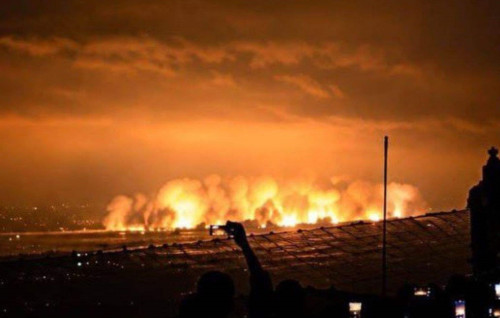
It can be a force of nature, like an earthquake or a tsunami. It can arise from within a group of people as collective energy. Power is never everlasting. It may manifest suddenly and leave as abruptly. When an entity loses the force that made it powerful, it loses its aura completely.
From the Hindu perspective, power is creative and represents the potential energy within. At the mythic level, it is recognised as shakti, or sakti.
Shakti is metaphorically presented as the female energy and principle. In its primal stage, this energy exists as coiled-serpent (kundalini) energy located at the base of the spine. When stirred through yogic practices and meditation, the kundalini uncoils, rises and charges the psychic centres (chakras). Gaining further energy, it metaphorically blooms into a thousand-petalled lotus. The blockages are cleared. The individual experiences epiphany.
The gods of the Hindu pantheon are inert until energised by their respective shaktis. Take the supreme god Siva: he is still, if not for the energised presence of his consort, Shakti. This creative female power spurs Siva to create and participate in the cosmic play of Maya, the Web of Illusion.
Without the creative power of Shakti, Siva ceases to be intoxicated by his own dramatic romance with his consort Shakti. Verily, this Maya is also the Leela – the play of the cycle of Life, Preservation, Death and Rebirth, together with the rhythm of the seasons. The universe never stops turning.
Influenced by this concept of shakti are many Indonesian wayang and traditional theatres, where the most powerful male characters of the Mahabharata or Ramayana are all invested with sakti. The “good” guys are usually depicted as halus characters – refined in mannerism, speaking in delicate voices, and moving confidently, unhurriedly, almost femininely.
They are unperturbed by the dangers that surround them, unlike the kasar and raucous demon types who demonstrate their animalistic traits and are evil personified. They will eventually be vanquished and are destined to lose their powers.
Halus and kasar should not be mistaken as a representation of gender, but rather, the quality of the personality. As such, evil female characters can also be kasar.
Can this power be lost in the way that it is bestowed?
It is believed that when a powerful leader loses control of himself, when he brags and demonstrates his power, he abuses the sacred presence of sakti. This will lead him to lose the very power that protects him.
Here is another concept. Travelling up the Malay Archipelago, power is always associated with semangat. Semangat is the vital force that inhabits a person, a place, or even an object of veneration such as a keris (Malay dagger).
A person with strong semangat inspires confidence in others. He is not easily frightened; he is powerful both physically and spiritually, and is able to fend for himself against illness or evil spirits.
The belief that even a place has potential power or semangat is not exceptional to the Malays. In the Indian tradition, Tirtha describes a place that possesses great power. This can be a temple, a body of water, or the sacred tomb of a saint. Among our Orang Asli, it can even be a mound (busut jantan). A place emanates a certain vibration that affects one’s psychic state. This is energy, vibes, power.
The belief that spirits or metaphysical energy can be found in all forms of life or matter is no longer a far-fetched notion. New research proves that trees can communicate with one another, and animals can express love, or experience extreme distress before being slaughtered.
Ironically, in our age of artificial intelligence and digital life, many vestigial beliefs from our animistic past are experiencing a revival – especially among New Age groups.
.jpg)
So, how about artists? Where is the power within the artist?
The power within is a great gift of the first order not to be taken lightly. The fulfilment of an artist’s life may depend on it.
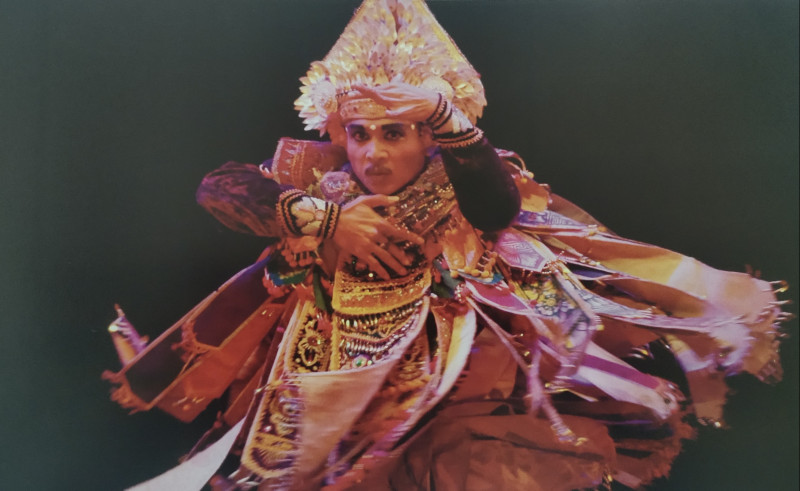
Its numinous quality can be gleaned from the duende of a gypsy flamenco dancer, the taksu of a Balinese dancer, or the angin of a makyong Seri Panggung.
These qualities emanate from the calling of the artist, a primal gift and artistic temperament that is both instinctive and intuitive. This creative power has the ability to stir and invigorate the gut. As the energy rises to the solar plexus, it sets the senses on fire, alighting the artist with an almost divine presence during a performance.
It is that quality which causes the audience to become enraptured when a powerful artist comes onstage. Suddenly, the space is energised manifold. Time stands still, and space becomes fluid! The artist transforms and opens the floodgates for the audience to experience “liberation” from a mundane existence.
Yes. A costume, headdress or mantra is all that is needed, and the transformation is complete. The dancer-artist is on another, higher plane, not quite human. This vestigial phenomenon recalls a time when the original shaman was himself a performer par excellence. It is tacitly understood that a shaman has to perform his best in order to effect a healing!
What if an artist ignores this powerful calling?
Then, this divine calling will “curse” and torment him with a wretched life bereft of fulfilment. But heed it, and it will transport him on an adventurous journey of exploration with his creative talents and a life fully lived!
On the flip side, the presence of power can be a catalyst that rouses the monster within. Even more desirable than money, power corrupts. And when absolute power corrupts, it does so absolutely!
In the course of human history, there have been ample instances where godly prophets, benign rulers, charismatic artists, as well as the most immoral charlatans, presided and reigned – as they still do.
They manipulated and influenced with the powers invested in them. For better or worse, they were able to hold sway and stir the imagination of the people. Collectively, the world reaped the consequences of their influence.
Whether they inspired us to be better humans or led us into the dark pits of violence and barbarism, they inevitably left their imprints on history.
Power itself is neither good nor evil. Only the individual who wields it can exercise it positively to achieve the entrusted benefits for the good of all.
Positive power needs to radiate from both the bottom of the pyramid and the very top, to evolve an informed and civilised society. Power must be positively harnessed.
Power as semangat and sakti presiding in mutual synergy within the artist and the audience, and the politicians and the rakyat, illustrates the need for a total makeover of our present system of governance.
It is the power that marshals the collective energy of the rakyat with the political will to catalyse a real change of the deep-state corruption and ineptitude within our governance. For too long, this dark evil has been allowed to grow cancerous. It is now rotten to the core.
Power without integrity or knowledge, or without wisdom and noble intent to serve, is squandered – not unlike the malignant black goddess Kali (a form of Shakti) when she runs amok, while Siva lays withered and impotent as a mere shava (corpse).
In the Balinese tradition, the evil power of the widow witch Calonarang is deflected by the galumph of the good mythic Barong.
The public voice and conscience must be heard and prevail. Otherwise, abuses of power will destroy the rakyat! – The Vibes, August 20, 2021
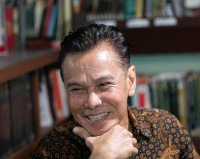
Datuk Ramli Ibrahim is Sutra Dance Theatre artistic director