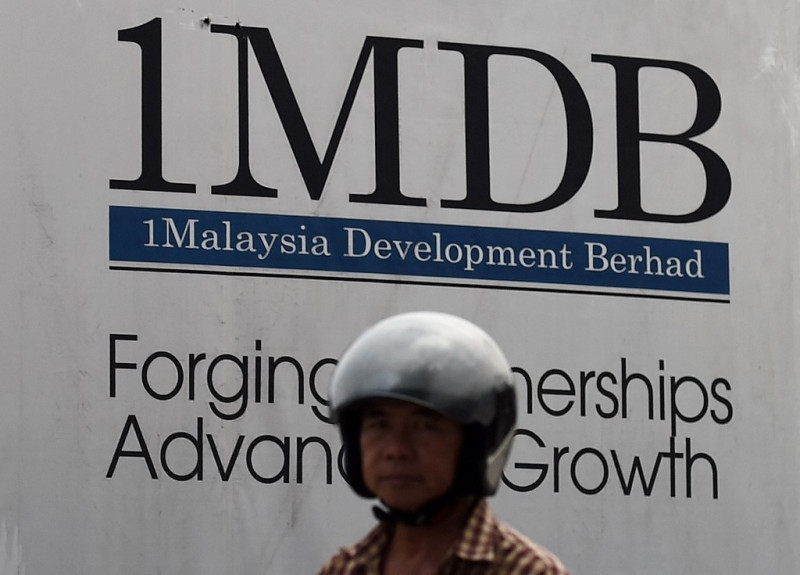
AN ARBITRATION was filed in London by two entities against Malaysia’s sovereign fund 1MDB and Malaysia’s Finance Ministry (MoF) sometime in June 2016. These entities were IPIC and Aabar Investments from the United Arab Emirates.
Instead of proceeding with the arbitration, the parties settled the matter. A consent award was entered. It required 1MDB and MoF to make huge payments to IPIC and Aabar – to the tune of some US$5.8 billion (RM24.5 billion). This was done at a time when the government of Malaysia was under the Barisan Nasional rule led by Datuk Seri Najib Razak as the prime minister.
After the Pakatan Harapan government took over in May 2018, this consent award was challenged on the grounds that the award was entered into, not actually to compromise in good faith the legal disputes between the parties in the arbitration, but instead, “in bad faith to conceal, or further the concealment of Mr Najib’s prior fraud and dishonesty”: para 104 of Judgment of Andrew Baker J in the UK High Court case of Minister of Finance (Incorporated) 1 Malaysia Development Berhad v International Petroleum Investment Company & Aabar Investment PJS.
The basis was that the parties colluded to settle the matter – to conceal Najib’s fraud and dishonesty from its victims, namely the Malaysian state and its people. It was argued that IPIC and Aabar were complicit in the dishonesty of Najib as alleged in such a way as to have made it a fraud, or contrary to public policy, that the consent award was issued.
The underlying frauds were allegedly perpetrated by Najib and others together with two individuals – Qubaisi and Husseiny who were at the material time the managing director of IPIC and the CEO of Aabar respectively. Both have been convicted in Abu Dhabi of criminal offences related to these frauds.
The time to challenge any award under the law is 28 days. This case was brought some 511 days after the award was made. So, the government applied to extend the time to challenge the consent award. This was strenuously opposed by IPIC and Aabar.

The court granted the extension of time, because, said the court, the case of the Malaysian government was not weak and needed proper consideration in a full trial. The exceptional delay in filing the case was justified by the court on the basis that the new attorney-general (AG) could do nothing until Najib left office as the prime minister (the previous AG had exonerated Najib of any wrongdoing).
It was also reasonable, ruled the court, for the then new AG (Tommy Thomas) to take time to gather sufficient evidence to prove the underlying fraud and Najib’s involvement so that it would stand up in a full trial. Else, said justice Jackson, it would be unfair to the government of Malaysia and a prima facie affront to justice to not grant the extension of time for the case to proceed to trial on the merits.
“I have no real hesitation in those circumstances in concluding overall that it would be unfair to the claimants (1MDB and MoF Inc), and an injustice, to deny them the opportunity of advancing their claim, and that the extension of time they require in order to do so, very lengthy though it is, should be granted,” he said in the 51-page judgment.
Parties now will have to file their pleadings – claim and defence within a prescribed timeline; and the matter listed for hearing, hopefully sooner rather than later.
The people of Malaysia have a legitimate expectation that the arbitration to nullify the consent award will be pursued vigorously to ensure that the country is not burdened with this enormous debt of billions. – The Vibes, December 15, 2021
Gurdial Singh Nijar is a former law professor from Universiti Malaya