THE Human Rights Commission of Malaysia (Suhakam) is concerned with the case of Rohana Abdullah, a stateless woman raised by a Malaysian who has been struggling with her citizenship issue after reportedly being abandoned by her biological Indonesian mother and Malaysian father when she was two months old.
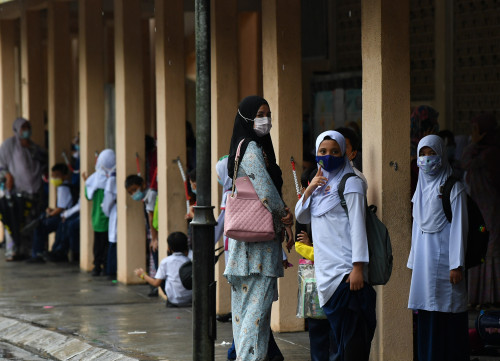
Abandoned children always suffer from discrimination and denied basic rights such as access to education and medical care.
Suhakam commends the prime minister’s gesture to assist Rohana and welcomes the home minister’s move to investigate this matter but hopes that the ministry will not only focus on citizenship applications on a case-by-case basis but instead, take a holistic approach to address all citizenship issues involving stateless persons in Malaysia.
Stateless persons have been struggling with the denial of fundamental human rights and dignity, and it is incumbent upon the state to find an immediate resolution to bridge this gap, in respect of the rights of the children.
Currently, children separated from their biological parents and born out of wedlock are most affected by the citizenship laws in Malaysia.
While Malaysia’s provisions relating to citizenship adhere to the principle of jus sanguinis, they are strictly conditioned on proof of the legality of marriage of the biological parents and place of birth of the child.
Article 8(2) of the UN Convention on the Rights of the Child (CRC) obliges Malaysia to speedily re-establish a child’s identity in the event that they were illegally deprived of some or all the elements of his or her identity.
In addition, Suhakam has consistently advised the government to withdraw its reservation on the right to nationality under Article 7(1) of the CRC and ratify the International Convention on Civil and Political Rights (ICCPR), which contains the same guarantee under Article 24(2).
The federal constitution contains a strong legal safeguard against statelessness as provided in the Second Schedule, which states that “every person born within the federation who is not a citizen of any other country is a citizen of Malaysia by operation of law”.
The federal court landmark case of CCH & Anor v Pendaftar Besar Bagi Kelahiran Dan Kematian Malaysia (2021) clarifies that “citizenship by operation of law” is a fundamental and constitutional right.
In addition, section 19B of Part III of the Second Schedule clearly provides that every person born in Malaysia who is not proven to be a citizen of any other country and who does not acquire any other citizenship is a citizen of Malaysia by operation of the law.
In cases like this, the documentation required by the National Registration Department (NRD) must be reasonable and in line with the provisions of the federal constitution as stateless persons generally lack any proper and formal form of identification.
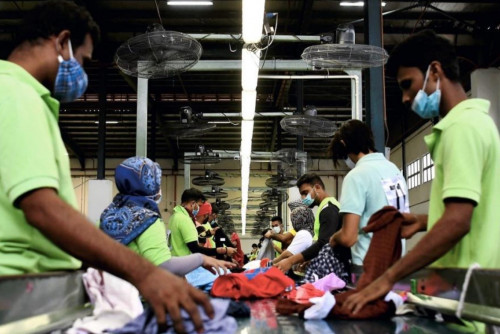
Stateless communities in Malaysia are unable to enjoy their inherent rights such as education, healthcare, employment, social security, freedom of movement and many others, which could also lead to serious social problems.
If not addressed, the cycle of statelessness will also be endless for their future generations.
Therefore, in addressing this long-standing issue, Suhakam calls for the government to immediately review and reform all laws and policies on citizenship, and to adopt more transparent procedures in facilitating the application of citizenship to reduce and prevent statelessness in the country. – The Vibes, January 20, 2022