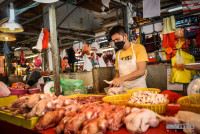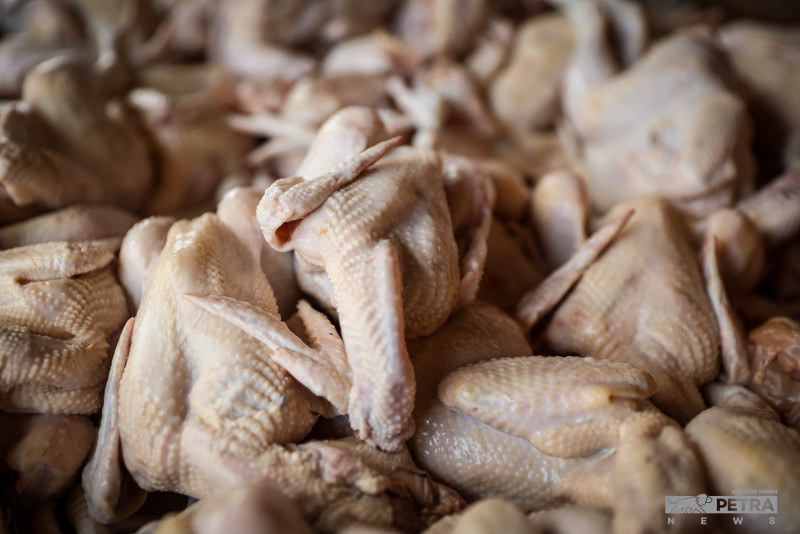
THE Institute for Democracy and Economic Affairs (Ideas) expressed concerns that the government’s recent decision to halt the exports of 3.6 million chickens per month from June 1 is a short-term solution to address the issue of chicken shortages in Malaysia, and will lead to unintended negative consequences to Malaysian consumers and the larger economy such as higher prices for imported chicken and the loss of significant markets in the long-term.
Amid periods of uncertainty, countries like Malaysia are leaning towards self-sufficiency in food policies such as food export bans in order to prioritise their own needs over the spirit of regional cooperation.
Ideas believes that such policies are inward-looking and often lead to disruptions in the domestic and global markets.
As noted by Ideas CEO Tricia Yeoh, “The newly introduced export ban on chickens has the potential to damage the industry as a whole, particularly the breeders. Malaysia’s export of live birds has increased from 40.19 million birds in 2007 to 59.08 million in 2020.
“With the government imposing a RM8.90 (per kg) ceiling price on chicken to keep poultry prices low, local suppliers rely on exports to countries such as Singapore, Thailand, Japan, Hong Kong and Brunei in order to cover the cost and keep their operations afloat.”
With the export bans, Ideas warns that breeders would suffer significant losses due to the low-profit margins that will arise from depending solely on local sales which are insufficient to cover the high production costs.
This may lead to many suppliers ceasing operations and ultimately damage the poultry industry as a whole. Additionally, investments and expansionary plans in this sector may be stunted in the future if the government cuts off access to lucrative markets as a short-term remedy to a food supply shortage.
Exports bans will also lead to trade diversion among importing countries like Singapore, and this will hurt the local industry in the long term with the loss of a significant market. A knee-jerk ban on exports would only exacerbate domestic chicken supply in the long run and further compound our food security in this area.
From the recent past, it was observed that the implementation of export bans resulted in negative consequences. During the pandemic in 2020, Vietnam and Cambodia introduced export bans on rice.
This has led to higher import costs and prices for imported rice, which hurt consumers and households. Additionally, Indonesia recently announced an export ban on palm oil, which they reversed.
It was highlighted that after the ban was introduced, the Indonesian exchange rate weakened, as markets expected export earnings to decrease. By attempting to protect its people, the ban led to increased costs of imports through the depreciation of the currency, which led to further price hikes. Such results can also be experienced by Malaysians in our context.
Ideas Economics and Business Unit director Juita Mohamad said: “During the pandemic, export bans were widely implemented, especially for personal protective equipment among selected Regional Comprehensive Economic Partnership member countries, and to date, the bans are still in place even when production capacity is increased and domestic demands met.
“It is evident that such measures are easily introduced by governments, but the elimination does not come as promptly, even when output has increased and local domestic demand is met.”
In the short run, Ideas suggests that instead of taking an inward-looking stance in solving the food security issue, Malaysia can tap into existing and potential bilateral and multilateral partners for further cooperation to ensure food security is attained not just in good times but also in uncertain times.
Leveraging on our existing partnerships with other countries’ producers can result in an increased supply of selected food products in the near term.
The removal of the approved permits is also a good step to ensure a sufficient supply of food items. Nevertheless, without the removal of tariffs and non-tariff barriers in the immediate term, such as reducing import duties, streamlining and expediting certification processes, the current food and chicken supply in Malaysia will not be increased significantly.
In the long run, Malaysia needs to improve on its R&D in food-tech and agriculture sectors so that capacity, productivity and crop yield can be built up over time to further support Malaysia’s future food security. – The Vibes, June 3, 2022
Ideas is a nonprofit research institute dedicated to promoting solutions to public policy challenges