THE 2022-2023 theme for the International Day for the Eradication of Poverty is “Dignity for All in Practice”.
It is said that “The dignity of the human being is not only a fundamental right in itself but constitutes the basis of all other fundamental rights… Today, many people living in persistent poverty experience their dignity being denied and disrespected.”
Researchers in Malaysia at the Ungku Aziz Centre for Development Studies, University Malaya have shown that the Malaysian model of measuring poverty must be more realistic and inclusive.
A snippet of the facts
The current reality shows that globally 1.3 billion people currently live in multidimensional poverty, half of them children and youth.
In Malaysia, the effects of the Covid-19 pandemic have caused the rates of absolute poverty and extreme poverty to increase to 8.4% and 1%, respectively in 2020.
As of July 31, 136,923 households are in the extreme poor category, while 308,699 households are categorised as poor (based on the poverty income line of 2019).
The country’s relative poverty rate stood at 16.2% in 2020. Relative poverty measures the number of households earning below 50% of the median income of RM5,209 per month.
The Malaysian conundrum
The fact is that poverty and inequality are not inevitable. The eradication of poverty following the 2030 UN Agenda is possible but only if the right decisions, policies and programmes are implemented.
The first issue is data collection and availability. Researchers have stated that poverty measurement tools must be updated to reflect multi-dimensional aspects of poverty, and that using income as the only yardstick is no longer accurate.
In order to implement evidence-based policies, decisions and empowerment programmes must be data-driven. Indonesia is a good example of the open availability of poverty statistics. Malaysian data is not only very highly guarded but also not accurate as it has loopholes leaving out segments of the community facing poverty issues on different levels/dimensions.
Prof Fatimah Kari recommends that the data of HEIS (Household Income & Expenditure Survey) should be altered to have sampling according to DUN/ Parliament areas to be more inclusive of problems arising in a particular area. Also, this allows for more accurate impact assessment or effectiveness of poverty eradication programmes.
She also states, in a policy note to the government, that the poverty measurement line is problematic and must move towards an index that is more diverse.
The Covid-19 pandemic exposed in Malaysia the weakness of the social protection system. Malaysia clearly needs a revised social protection policy that is more comprehensive and inclusive.
The i-Suri protection launched in 2018 for women is a step in the right direction.
Some personal experience working with families on the edge:
- The access to affordable housing is a major problem, situations where Malaysian families rent rooms and live together. The house might have 4 bedrooms and 4 separate families living together.
- In urban areas, the husband and wife work; however, under their care, there are 11 people living in the same house. These are extended family members who they have to care for.
- The husband earns RM1,500, the wife is a homemaker and they have 4 children.
- A single mother who earns about RM 3,500, pays a house loan of almost RM1,800, and is not eligible for any aid, even though she has two young children to care for.
- A single mother with one child, caring for her parents who are elderly, and a sister who is an OKU. They pay rent, and do not own their own home.
- The Social Welfare Department automatically rejects applicants that have a company (SSM) registered in their name. The irony of the situation is that if someone wants to start a small business and apply for business loans or grants, they need to have to be registered with the Companies Commission of Malaysia (SSM). Many rather not apply because they fear losing the welfare handouts.
What we clearly see is that inequality increases political polarisation and it disrupts social cohesion as people feel left behind.
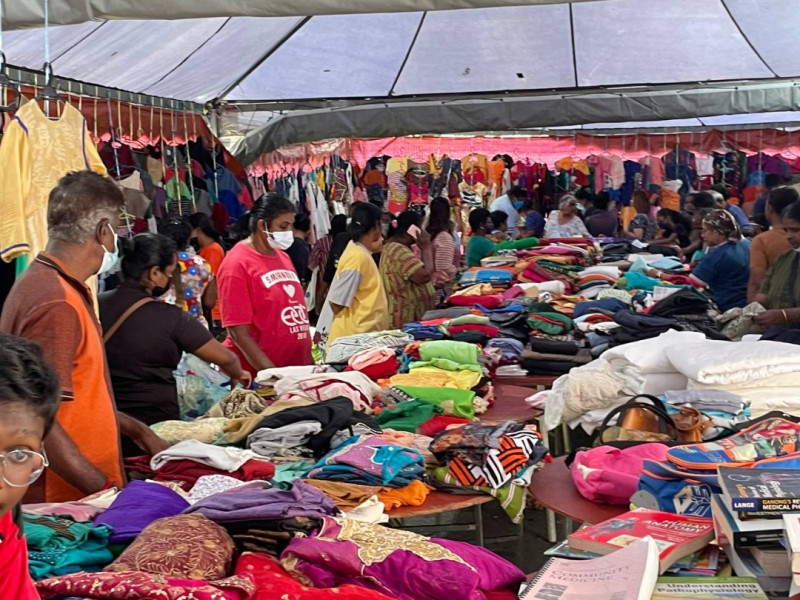
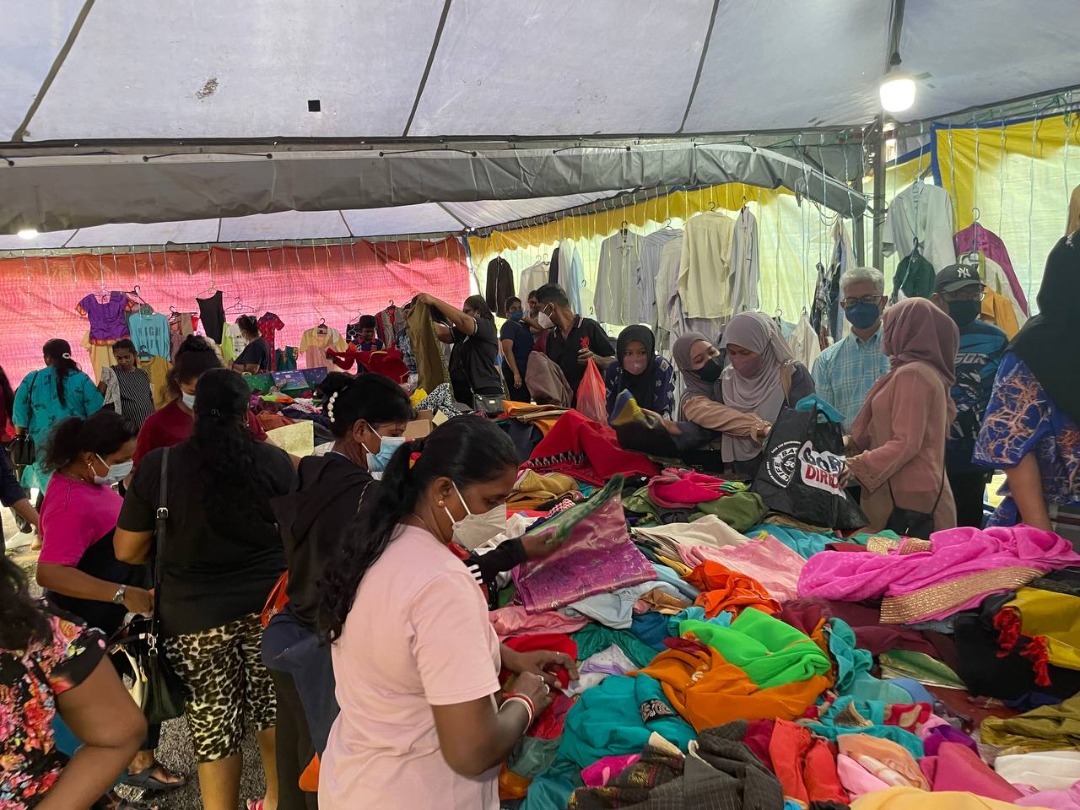
The recently concluded Community Garage project organised by Persatuan Wanita Nadi Selangor (Wanis) in collaboration with Persatuan Kebajikan dan Perpaduan Kota Raja in Sentosa, Klang shows the high demand that families on the edge have for clothes, shoes, books, bags and other household items.
The garage that was scheduled to run for six hours had to close after clothes finished in two hours – the demand was just that overwhelming. The main bulk of visitors to the free garage programme were women and children, and a portion of old citizens.
The need to study poverty from multiple dimensions is now more critical than ever. The problems faced by rural families are different from those in urban areas, and again different for communities like the Orang Asli.
If Malaysia is truly hoping to restore a semblance of dignity to poor families, then we must address objectively how they are affected by climate change, food security, mental health, child poverty and domestic violence, drug and alcohol abuse, lack of housing, access to education, and access to permanent supply of electricity and water (rural and East Malaysia).
We must have the political will and conviction to ensure that no family, mother or child is left behind. There is no need to reinvent the wheels, but the focus must be on how we measure poverty dimensions or levels, it has to be more realistic, inclusive and more systematic before we can even hope to address Agenda 2030. – The Vibes, October 18, 2022
Sangetha Jayakumar is Wanis chairman and PKR vice women chief