CONSIDER this scenario, which many would have experienced but vow never to have to go through it again.
You have a contractual dispute of about a hundred thousand ringgit, and have filed a court case which is in the initial stages of litigation.
You brace yourself for a lengthy court hearing, appeals and counter appeals, indeterminate prohibitive costs, an uncertain outcome, and wondering whether it was even worth filing the case. You prepare yourself for the mental stress and anxiety for the next several years, including a possibility of financial ruin.
What if I say there is an alternative dispute resolution to court litigation called affordable arbitration (AA), which could dispose of the case within six months, and fees of arbitrators capped at most RM2,000, with commensurate minimal costs? Lesser claims may even come pro bono.
Too good to be true? No, it is indeed a reality right now. Stay tuned to find out how you can access this novel social service.
Retired Court of Appeal judge, Prof Datuk Hamid Sultan Abu Backer, has single-handedly been on a mission for the last five years to bring AA to the masses to provide social justice based on natural justice. He has been relentlessly working on institutionalising and mainstreaming AA as the preferred mode of dispute settlement compared to litigation, in Malaysia and other commonwealth countries such as India, Singapore and UK.
His latest significant coup in this journey was the organisation of a first-of-its-kind event by the Jabatan Kehakiman Syariah Malaysia on October 5, involving about 120 senior shariah judicial officials across the country, leading legal practitioners including two recent Bar Council presidents, and renowned subject-matter experts.
I was personally invited by Justice Hamid to join this distinguished group. My story here is an independent assessment of Justice Hamid’s innovative AA scheme, and why AA should be urgently rolled out and widely accessed in Malaysia.
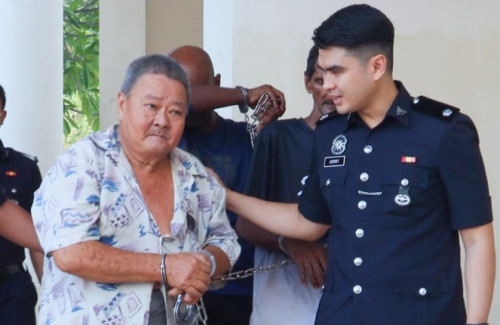
Recently, many have witnessed court litigation and arbitration involving former premier Datuk Seri Najib Razak, and the Sulu arbitration final award being enforced in foreign jurisdictions, respectively.
I have to caution that these are extreme examples and not representative, but points to the fact that only the rich and powerful can bend and abuse the law and its processes.
Litigation versus arbitration
We are familiar with court litigation based on our constitution, federal/state laws and regulations. However, arbitration is also a well-established jurisprudence for dispute settlement of civil and commercial cases based on Malaysia’s Arbitration Act 2005 (Act 646), which in addition is anchored by international treaties and conventions.
The United Nations adopted the Convention on the Recognition and Enforcement of Foreign Arbitral Awards in 1958, commonly called the New York Convention. The convention, a brief document, is just that, to enforce arbitral awards, now in about 170 countries.
Detailed rules on the conduct of arbitration came much later in the form of UNCITRAL Model Law on International Commercial Arbitration 1985. Malaysia’s arbitration act is almost a copy paste of the model law, localised to our context. Therefore, compared to national laws, arbitration is harmonised across the world, called model law states, numbering 85 countries in 118 jurisdictions.
The significant features of arbitration are: (i) subject to prior agreement by parties (Chapter 2, Act 646), (ii) parties are free to determine their (and number of) arbitrators (Chapter 3), (iii) parties are free to determine the rules of procedure (Chapter 5), (iv) award is final and binding on the parties (Clause 36), subject to limited recourse against award (Chapter 7), (v) award binding and enforced as judgement of the high court (Clause 38), with very limited obvious grounds for refusal such as violation of due process, subject matter not subject to arbitration, against state laws, or conflict with public policy (Chapter 8). No court shall intervene in matters governed by the act, except where so provided in the act (Clause 8).
In brief, based on the above features, arbitration, as compared to litigation, is touted to be the most efficient, effective, and fastest mode of resolution of disputes.
Arbitration recognises party autonomy, emphasises substantive justice over procedural justice, enables swift fact-based resolution by subject-matter experts having a bigger role than legal professionals, and arbitrators adopting the inquisitorial approach.
In essence, the principle of amiable compositeur underwrites arbitration, i.e. consideration of what is fair, just and equitable given the particular circumstances, rather than strictly based on procedural law and case precedents.
In addition, parties are motivated to reach a compromise to attain a win-win solution, rather than the winner-takes-all in court proceedings. There are no appeals up to the Federal Court, more so a review of its decision or a royal pardon.
In fact, the setting is equivalent to the village penghulu or panchayat system of social justice of yesteryears, which the Privy Council in 1934 ruled is enforceable.
Yet, it is estimated that less than 1% of disputes are dealt with by arbitration; the rest choking up our congested court system. Conventional arbitration is expensive dealing with complex or international cases where millions of ringgit are at stake.
The needy, especially from the B40, can’t even attempt to settle disputes because of high costs and complexity in both systems.
University cum Court Annexed Arbitration (UCAA)
The UCAA scheme was mooted and developed by Justice Hamid to provide affordable arbitration to the common people at low cost, but in full compliance with all relevant laws and rules. For this purpose, the UCAA is modelled thus:
To train a cadre of university faculty, graduates and professional alumni as legal and subject-matter expert arbitrators. So far, eight universities have expressed interest to participate in this scheme. The key benefits are low costs and speedy resolution using existing premises and resources, while enabling mutual practical learning for arbitrators in their respective fields;
Currently, UCAA can only handle pending cases filed in court, for which both parties agree to arbitration. The case shifts from litigation to arbitration. The court may facilitate the process, including sitting as arbitrators together with respective counsels and experts, preferably in the court premises. The arbitration award will eventually be adopted and enforced as a high court judgement;
The UCAA model rules of procedure for affordable arbitration were developed following the UNCITRAL Model Rules 2010. A key feature of the model is limiting the cost of arbitrators (existing salaried or retired officials), and party-to-party costs not to exceed half the scale costs under the Rules of Court 2012. Parties may even agree to waive party-to-party costs.
The UCAA scheme was first rolled out at the JKSM event on Oct 5 among the judicial, legal and subject-matter expert officials. It consisted of the theory on arbitration, a moot court session on a simulated dispute, and writing of award. All participants had to undertake prior intensive self-learning on the theory and laws of arbitration, which was tested at that session. A certificate of attendance on affordable arbitration was issued to successful participants.
It should be noted that this training does not replace the formal training as lawyers or arbitrators, but to create a national ready pool of legal and expert arbitrators who can be called upon to provide affordable arbitration as a social service.
In fact, Justice Hamid claims he has the infrastructure and capacity to train all the 20,000 plus Bar Council and shariah lawyers in one month, pro-bono except consumables.
Datuk Mohd Naim Mokhtar, shariah director-general/chief justice, noted that this is the first time civil and shariah lawyers met to discuss mutual learning on arbitration leading to harmonious application in both systems.
He further noted a 49% increase in family divorce cases settled by arbitration in shariah courts between 2015 and 2019.
Ultimately, Justice Hamid hopes that this pilot scheme will pave the way for a full-fledged arbitral scheme for AA to handle all cases having prior arbitration agreement or clauses without referral from courts.
Universities, with their abundant pool of legal and expert professionals, resources, and facilities, can become university arbitration centres to handle affordable arbitration, which no other institution can offer. It may eventually co-exist as a parallel justice system handling civil and commercial cases.
Justice Hamid estimates about 50% reduction of government financing for civil and commercial cases in five years, while enabling the courts to free their workload to handle criminal and other complex cases expeditiously.
This idea is not far-fetched, as modern universities have transformed from pure research and teaching entities to university-industry collaborators and commercialisation outfits. Similarly, universities can transform into the delivery of affordable arbitration for the common people.
It is to be noted that this scheme does not replace existing dispute settlement mechanisms, such as in small claims, tribunals, conventional arbitration with fast track or expedited procedures, or legal aid, but can be complementary and provide choices to access justice for various segments of the society.
The effectiveness of arbitration can be seen from the criminal case of Roger Ng embroiled in the 1MDB scandal, where the randomly drawn public acted as jury and decided on the facts of the case within one month. Compare this to Najib’s case, which took four years, and is still ongoing. If laypersons can deliver a verdict on a criminal case, why can’t subject-matter experts overseen by lawyers dispose of civil and commercial cases speedily?
What is Malaysia waiting for?
I understand the who’s who in Malaysia and overseas have lauded this AA scheme as ingenious, innovative, novel, attractive, and which implementation is long overdue. If so, why has Malaysia yet to adopt affordable arbitration? Rather than looking back, let me pose these questions to the various stakeholders.
a) Would the judiciary take steps to embrace affordable arbitration, considering they will be the main beneficiary from the reduction of substantial workload? As noted, all it needs immediately is an issuance of a practice direction to facilitate arbitration of pending cases. Eventually, the necessary rules and practice of courts can be amended to facilitate arbitration, as in the case of mediation now. The chief justice recently said alternate dispute settlement mechanisms offer parties the opportunity to resolve disputes without the lengthy and tedious process of litigation, and that both are complementary in the quest for justice. The executive and legislature should also proactively push AA to the forefront of service of the common people.
b) Would the legal fraternity promote AA as complementary to litigation, and shift the balance towards arbitration for dispute settlement? It is believed that lawyers are not keen to handle minor cases based on cost-benefit analysis, and do advise against litigation. Would the solicitors preparing contractual agreements include arbitration as one of the dispute resolution mechanisms?
c) Would universities in the country now work towards providing AA as university arbitration centres as part of their portfolio of learning and services to the public, based on the format and lessons learnt from UCAA?
d) Would product and service providers, such as hospitals, insurance companies, include AA for speedy settlement of disputes? The negative image created by open court litigation would certainly affect their image and business, even if they can afford it and have undue advantage.
e) Finally, would the public demand AA as standard clauses in contractual arrangements such as sale and purchase agreements, tenancy agreements in their quest for access to social justice?
This is a job for all of us to make it happen. As Justice Hamid says, his vision, and I am sure of all Malaysians, is to make Malaysia the first country to mainstream affordable arbitration ahead of other countries.
Societies where disputes and grouses cannot be settled through lawful means would resort to public agitation, protests, campaigns, pickets, demonstrations, and so forth. No responsible government should allow its poor and needy to seek justice on the streets. – The Vibes, October 23, 2022
Raman Letchumanan is a former senior fellow at the Nanyang Technological University of Singapore, a former director at the Ministry of Science, Technology and Environment, and a former head of environment/disaster management at the Asean Secretariat in Jakarta