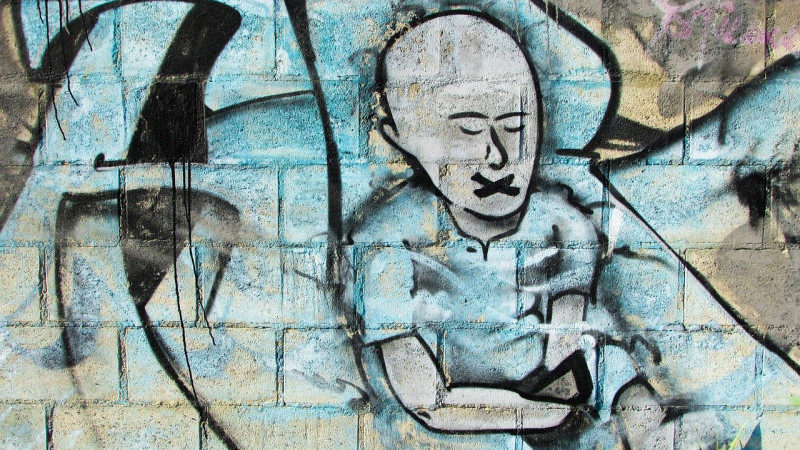
CENSORSHIP is increasing in Malaysia, while efforts to reform laws that unduly restrict the right to freedom of expression have stalled, said Amnesty International Malaysia at the launch of its virtual campaign, Unsilenced.
With an online gallery of posts, publications and content that have been banned and censored over the years in Malaysia, Unsilenced aims to raise awareness of the negative effects that censorship has on people in Malaysia, and highlight examples of attacks on those who freely express their views and inspire everyone to defend the right to freedom of expression.
“Attacks on the right to freedom of expression are once again rising in Malaysia. Repressive laws are still on the books, and more and more people are coming under police investigation simply for speaking their minds,” said Katrina Jorene Maliamauv, executive director of Amnesty International Malaysia.
“The Unsilenced campaign gives everyone an opportunity to take action and call on the government to repeal the main laws denying people in Malaysia the right to freely express ourselves, namely the Sedition Act, Section 233 of the Communications and Multimedia Act (CMA), the Film Censorship Act and the Printing Presses and Publications Act (PPPA).”
After the change of government, two of the most widely deployed laws to unduly restrict the right to freedom of expression – the Sedition Act and Section 233 of CMA – have been frequently used against human rights defenders, journalists and social media users who criticise the government, royalty or religion. Sexual minorities have also been targets of government restrictions.
In May, Home Minister Datuk Seri Hamzah Zainudin revealed that the government has initiated 262 sedition investigations in 2020, a dramatic increase from the 78 initiated in 2019, and more than double the 31 in 2018. In addition, since the beginning of the Covid-19 pandemic, there have been 273 investigations related to allegations of sharing false information under Sections 500 and 505(b) of the Penal Code, and Section 233 of CMA.
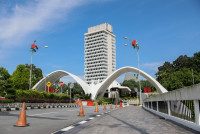
In August, Deputy Finance Minister Mohd Shahar Abdullah defended the Sedition Act in Parliament, saying it remains relevant. According to Communications and Multimedia Minister Datuk Saifuddin Abdullah, in the first half of 2020, there were 143 investigations under Section 233 of CMA, with seven cases brought to court. In comparison, from the beginning of 2018 to February 2019, 47 investigations were opened.
He tweeted that his ministry is “looking into” Section 233 of CMA, but beyond this, there has been no indication of any concrete steps to reform this law or others that unduly restrict the right to freedom of expression.
“Recent proposals to revive the anti-fake news law and the ‘propaganda unit’ at the Special Affairs Department (Jasa) under a new name raise further concerns that the country is sliding back to an era of fear and repression,” said Maliamauv.
Time for people in Malaysia to be Unsilenced
Amnesty International Malaysia will launch the Unsilenced campaign to reclaim the right to freedom of expression in the country. Partnering with activists and popular voices, it will be live across traditional and social media.
A gallery of items that have been censored and banned in Malaysia over the years will remind people of the long history of censorship and how repressive laws have been used to curtail the right to freedom of expression, and to control popular culture, for example:
• Martin Scorsese’s 2013 dark comedy Wolf of Wall Street, despite being indirectly funded by Malaysians via 1Malaysia Development Bhd money, was ironically banned in the country due to its use of “profanity” and the portrayal of sex and drug use.
• Ernest Zacharevic’s 2013 street mural of two Lego figurines in Johor Baru – one a robber and the other carrying a designer handbag – was painted over by the city council, which did not find the depiction of the city’s high crime rate amusing.
• In 2018, portraits of LGBT activists at an art exhibition were ordered to be taken down, as according to a minister: “LGBTs are still unacceptable and cannot be promoted.”
“From the music we listen to, films we watch, books we read, to the content we produce online, the campaign Unsilenced will highlight how far the authorities have gone to control the opinions and ideas that people are allowed to seek and share in Malaysia,” said Maliamauv.
The organisation is also partnering with popular voices to create awareness on the insidious ways in which laws are being used to unduly restrict the right to freedom of expression for Malaysians. As the crackdown on freedom of expression increases, there has been no progress to repeal the laws that are being used to arbitrarily restrict this right.
On the contrary, with their wide powers and arbitrary nature, the Sedition Act, Section 233 of CMA, and different provisions of the Penal Code have been intentionally used to limit and censor criticism of those in power. The laws fail to comply with international human rights law and standards, and violate the rights to freedom of expression and peaceful assembly, which are enshrined in Articles 19 and 21 of the Universal Declaration of Human Rights (UDHR), and also guaranteed in the federal constitution.
Amnesty International Malaysia is urging the authorities to ensure the Sedition Act is abolished, and that similar laws infringing on the right to freedom of expression, including Section 233 of CMA, and different provisions of the Penal Code, PPPA and the Film Censorship Act are repealed or substantially amended.
The organisation is also calling on the government to ratify the International Covenant on Civil and Political Rights and other human rights instruments, in order to bring Malaysia closer to complying with international standards.
“Throughout our country’s history, those in power have too often sought to harass and intimidate human rights defenders, to squash dissent, to stifle critical thought, to strangle the media, and to keep Malaysians under a climate of fear,” said Maliamauv.
“All individuals in Malaysia deserve to live out our right to think, feel, create, share, seek and express ourselves freely. We have repeatedly stood up against oppression and found ways to express ourselves; we must keep claiming our right to be unsilenced.”
Visit unsilenced.amnesty.my to be Unsilenced.
Appendix: A snapshot of freedom of expression violations in 2020
March 4: At least 20 activists were investigated under the Peaceful Assembly Act following the change of government for participating in peaceful protests. Those questioned include human rights defenders Ambiga Sreenevasan and Thomas Fann, chair of electoral reform group Bersih.
Human rights defender Fadiah Nadwa Fikri, who had been investigated under the Sedition Act days earlier for a social media post calling on people to join the protests, was also questioned by police.
March 27: 20-year-old shopkeeper Nurshahira Mohd Mizuar was fined RM10,000 and sentenced to three months in prison for remarks she posted on Facebook allegedly insulting police, after officers instructed her to return home under the movement control order (MCO). Her sentence was later suspended.
May 4: Tashny Sukumaran, a journalist with the South China Morning Post, was questioned for two hours under Section 504 of the Penal Code and Section 233 of CMA over her tweets covering an immigration raid in Kuala Lumpur.
May 8: Business owner Datuk Shamsubahrin Ismail was charged under Section 233 of CMA and the Penal Code for social media remarks he made criticising the government’s prosecution of those violating lockdown orders.
May 20: MP Xavier Jayakumar was investigated under the Sedition Act for criticising the government’s move to limit Parliament’s session to one day.
June 10: The founding director of the Centre to Combat Corruption and Cronyism (C4), Cynthia Gabriel, was questioned under the Sedition Act and Section 233 of CMA for a statement criticising the manner in which the current government was formed. Police also questioned MP Sivarasa Rasiah for a statement he made in November last year on the arrest of alleged supporters of the Liberation Tigers of Tamil Eelam (LTTE).
June 14: Radio personality Patrick Teoh was charged under Section 233 of CMA over a Facebook post that allegedly insulted the crown prince of Johor.
June 9: Blogger Dian Abdullah was charged under Section 233 of the CMA and Section 505(b) of the Penal Code after she posted comments critical of the prime minister and the king. She faces up to three years in prison.
July 3: Seven staff members of international news outlet Al Jazeera were investigated by police following the release of a report on the treatment of migrants under Covid-19 lockdown. Five of them were given 30 days to leave the country, and have faced difficulties renewing their work permits since.
Furthermore, the authorities launched a manhunt for Rayhan Kabir, a migrant worker who was featured in the report, before arresting, detaining and deporting him.
July 7: Heidy Quah, founder of the Refuge for Refugees NGO, was questioned by police for her post on Facebook highlighting the conditions at an immigration detention centre. She received threatening messages over her post, but no investigation was conducted into these threats.
Previously, human rights activist Tengku Emma Zuriana Tengku Azmi also received threats on social media after she criticised the government’s treatment of Rohingya refugees, with no action taken by the authorities.
July 13: Malaysiakini editor-in-chief Steven Gan was charged with contempt of court over five comments posted by the news portal’s readers that were allegedly critical of Malaysia’s judiciary. The government argued that that under Section 114A of the Evidence Act, the portal can be held liable for comments posted by others, as it is presumed that the portal publishes the comments itself.
November 5: Police investigated the Universiti Malaya Association of New Youth (Umany) after it posted an article on social media commenting on the role of the king in a constitutional monarchy. Nine students were questioned, while activist Wong Yan Ke was charged under Section 188 of the Penal Code after he filmed a police officer conducting a raid on a Umany leader’s home.
For more information or to arrange an interview, please contact Bryan Cheah at +6012-550 1072 or [email protected]. – The Vibes, December 3, 2020
Amnesty International Malaysia strives for the promotion and protection of human rights in Malaysia and across the globe