THE National Education Advisory council (NEAC) has been revived to tackle issues facing the education sector including dropouts, racism, and extremism in schools. We hope the NEAC will lift education standards.
The former Education director-general Datuk Amin Senin is heading the NEAC. The council is expected to contribute views and ideas to the ministry in formulating and improving the direction of education in the country.
Among others, the main focus of the council is to examine the issues of the workload borne by teachers, including clerical duties, which has become a critical issue among educators.
Prof Datuk Mohamad Fauzan Noordin has been appointed deputy chairman while other council members include Prof Omar Yaakob, Datuk Mehander Singh Nahar Singh, Prof Datuk Noor Inayah Ya’akub, Mohd Abd Aziz Mahmud, Aminuddin Awang, Rusilawati Mohd Salleh, and Chee Poh Kiem.
Surprisingly, there was no Tamil scholar-educator appointed to the NEAC. Since education is a priority, it should be inclusive of all schools irrespective of the medium of instruction or type of school.
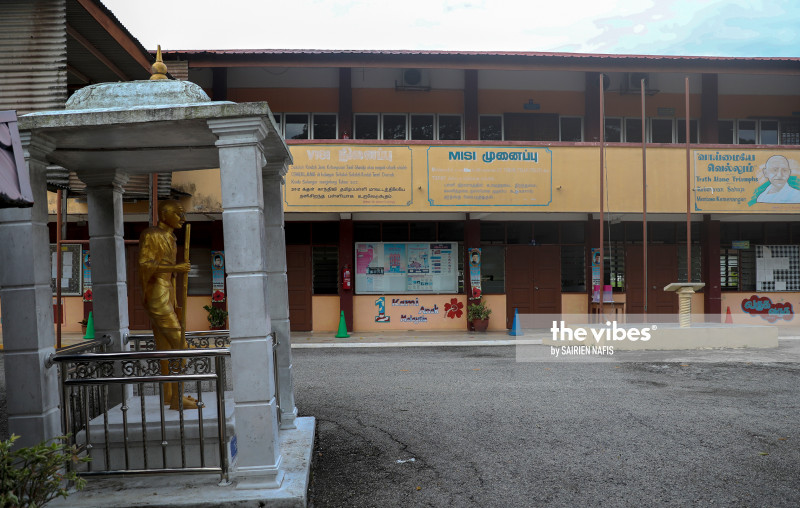
As we know, the state of Tamil schools in the country will always be a cause for concern. After 65 years of independence, Tamil schools are in an extremely worrying state. The vast majority of the students come from poor households.
The NEAC must focus on new ideas in order to improve Tamil school education, emphasise soft skills to inculcate character, the welfare of teachers, and address poverty among B40 students.
Tamil schools facing closure
Now there are only 528 Tamil schools in the country with a total of 79,309 students. In 1980 there were 589 Tamil schools.
Tamil schools are facing closure due to low enrolment or having to combine with other schools according to the ministry’s policy. With falling enrolment, Tamil schools are facing a bleak future.
Schools should be allowed to move to Indian-majority areas to have higher student enrolment.
The Tamil schools are in no way equivalent to the country’s Malay- and Chinese-medium schools.
Budget allocation for Tamil schools has always been a major issue. Some schools are using old blocks which have structural problems.
In the last 10 years, Tamil schools have begun to perform better. But in 2020, the projected budget for Tamil schools was approximately RM29 million, which was lower than the budget allocated the previous year of about RM50 million.
Some Tamil schools in our country – particularly in Selangor, Perak, Johor, Kuala Lumpur, Negri Sembilan, and Kedah – do not have enough students.
There is a concern that if enrolment does not rise or facilities are not improved, these schools will be forced to close. Most schools are not enjoying full facilities. Conditions of Tamil schools in rural areas are even worse.
I am afraid that these schools may soon disappear.
In 1816, Malaysia’s first ever Tamil class took place in Penang Free School. In 1897, the country’s first Tamil school was opened in Seremban at SJK (T) Jawa Lane.
Two hundred years later, the fate of Malaysian Tamil schools continues to be in limbo with low enrolments. It is disheartening to assume that Tamil schools are in a sad state of affairs.
Though more than RM700 million has been allocated since 2009 to significantly improve the infrastructure and basic facilities of Tamil schools, most are subjected to a poor learning environment.
In 2022, the Education Ministry received a budget allocation of RM52.6 billion. From this figure, Chinese and Tamil schools only received a total of RM120 million.
There is a growing realisation among Tamils in particular and Malaysian Indians generally that Tamil schools should be safeguarded.
The permits or licences of the closed Tamil schools can be used to build new schools in areas of high Tamil-Indian concentration. Improving the infrastructure of schools can also result in the increase of student enrolment. – The Vibes, January 22, 2023
M. Vivekananthan has served the government of Malaysia at various ministries and agencies for almost 30 years