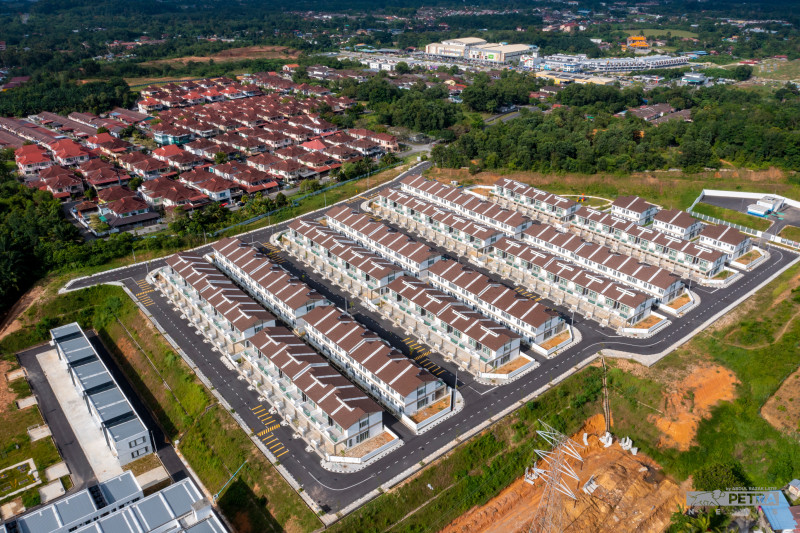
BOTH the 10th and 11th Malaysia Plans have stated that housing development will focus on the provision of adequate housing, as well as ensuring a safe, healthy, and harmonious living environment equipped with complete public amenities and quality recreational facilities.
A National Housing Policy (NHP) was then drafted and launched in 2018 to provide the direction and basis for the planning and development of the housing sector by all relevant ministries, departments, and agencies at the federal, state, and local levels as well as the private sector.
To ensure that the housing sector will achieve the desired development and positively contribute to continuous economic growth, the NHP is expected to be able to solve the problems and challenges pertaining to the quality of construction, the issue of abandoned housing projects, and the affordability to own or rent houses via an effective distribution system in the People’s Housing Programme.
To fulfil these needs, factors such as affordability, development cost, and selling price persistently influence supply and demand in the housing sector.
Based on the current situation, housing development is concentrated in urban and suburban areas, where purchasing power is higher and the market is extensive.
In order to address current housing needs, both the government and private sector must play their respective roles to fulfil their social obligations, especially to the low-income and middle-income groups.
The then Housing and Local Government Ministry, now renamed the Local Government Development Ministry (LGDM), has been monitoring the implementation of housing development projects by the private sector and enforcing the Housing Development (Control and Licensing) Act 1966 and its regulations to ensure housing projects are implemented according to schedule and completed within the stipulated time frame.
The LGDM has also been taking steps to revive abandoned projects through the Special Task Force for Revival of Abandoned Housing Projects. The task force focuses on efforts to revive abandoned housing projects, solidify the legal aspects, and ensure more effective enforcement, as well as establishing the direction and policy of the housing industry.
Challenges to National Housing Policy
To ensure that the housing sector achieves healthy development and continuously contributes positively to the nation’s economic growth, various issues and challenges related to the housing sector need to be effectively addressed.
Among the issues identified are:
(i) Quality of houses built;
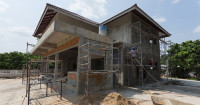
(ii) Abandoned housing projects;
(iii) Affordability and accessibility for the people to own or rent houses;
(iv) Demand exceeding supply for low- and medium-cost houses;
(v) Construction of affordable public housing (APH) at non-strategic locations; and
(vi) Distribution of APH.
Low construction quality
Although most houses built have met the minimum quality requirements set, there are still developments that have not met the standard requirements, which leads to low-quality construction. The use of low-quality construction materials and a lack of skilled workers also contribute to the low quality of houses built. Low usage of state-of-the-art technology in construction and high dependency on unskilled and cheap migrant manpower also contribute to the decline in the quality of houses.
Weaknesses in implementation, compliance with service delivery system
Before a housing project commences, it has to go through the application and approval processes at the land office and the local authority. LGDM is responsible for the issuance of housing development licences and advertisement and sale permits after the development order and building plans are approved by the local authority. If there is a glitch in any of the processes, the whole system or development process would be disrupted and the project would not start on time.
Weaknesses in control, monitoring, enforcement
There are various laws which are applicable to housing development. Amongst them are the National Land Code 1965; Housing Development (Control and Licensing) Act 1966; Local Government Act 1976; Town and Country Planning Act 1976; Street, Drainage, and Building Act 1974; and a host of other state regulations and land laws. The need to abide by these legal aspects and regulations is vital to be understood and complied with to ensure housing projects are implemented based on the issued approvals.
However, there are still weaknesses in the control, implementation, and enforcement of these laws.
In building APH, there are several agencies and bodies involved such as PR1MA Corporation Malaysia, Syarikat Perumahan Negara Bhd, statutory bodies, and state economic development corporations. Coordination amongst these agencies is needed so that the construction and distribution of these houses can be executed in a more orderly, systematic, and just manner in each state.
In this regard, the NHP proposes that the role and collaboration among agencies and related bodies are further strengthened.
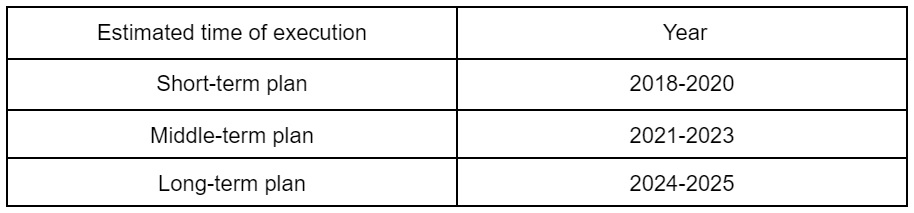
The implementation of the NHP Action Plan (2018-2025) will involve various ministries, departments, agencies, and the private sector – responsible for various aspects of the housing sector as a whole.
The main agencies (lead agencies) and implementing agencies for each action and implementation period have also been identified. The implementation period set out under the action plan is as follows:
One of the five policy statements that was outlined in the NHP 3.3 is reiterated below:
NHP 3.3: Encouraging the BTS (build-then-sell) concept in the housing provision system whereupon a timeline was formulated for year 2019 (transition from sell-then-build, or STB, to BTS 10:90 concept) and year 2023 (transition from STB to absolute BTS i.e. 0:100 concept).
Conclusion
Abandoned housing projects continue to be a dampener to the hopes of many house buyers and their families from realising their dream of being owners of their own homes.
Their continued presence remains a thorn in the housing industry that does not bode well for the well-being of affected house buyers; neither does the lax, and lack of, enforcement programmes by LGDM; nor the reputation of errant developers.
Although the majority of developers have fulfilled their delivery promises to house buyers, there are still some “bad apples” that have reneged on their end of the bargain when they abandoned projects.
BTS 10:90, a far safer home delivery system
Besides causing a dilapidated environment, abandoned projects also cause unnecessary hardships to many people as they need to continue with their monthly bank instalments for their housing loans, and in many cases unless the projects are successfully revived, there will be no end in sight as to how long they have to bear their ordeal. Some victims of abandoned housing projects have to suffer in silence for more than 22 years.
We had previously urged the government to make good the implementation of the build-then-sell 10:90 system as the industry’s housing delivery model from 2015 as was recorded in Parliament’s Hansard.
The National House Buyers’ Association (HBA) has previously urged the government not to deviate from the original road map to implement the BTS 10:90 system put in place under the Housing Development (Control and Licensing) Act and regulations. The laws have been amended to adopt the BTS 10:90 model since 2012 with the introduction of Schedule I and Schedule J sale-and-purchase agreements.
Under the BTS 10:90 system, house buyers only need to fork out the initial down payment of 10% when buying a house and do not need to make any further payment until vacant possession of the property is delivered to them. As such, the servicing of end-financing loans does not kick in until the houses are completed with all certifications obtained and keys with vacant possession are presented to buyers.
The government’s abandoned project revival efforts do not seem to be able to match or counterbalance the fresh problematic projects that have been labelled “sick” or “delayed” that continue to come online to add to the statistics of “abandonment”.
The BTS 10:90 is a far safer home delivery system and the government should, without further delay, compel the housing industry to adopt the system as we believe it will drastically if not totally eliminate cases of housing projects being abandoned.
This is precisely why the government is encouraging it and offering incentives to developers who opt to adopt this mode of selling their products. But it fell short of compelling the industry to adopt this BTS 10:90 concept concurrently.
HBA now urges the current government to make BTS 10:90 mandatory for all new housing projects to safeguard the interest of the rakyat and to eliminate the scourge of abandoned housing projects.
‘Phase-in’ period to BTS 10:90 concept
The government could consider a gradual “phase-in” period, to avoid a big paradigm shift in the housing market, and after taking into consideration the “time freeze” and drawbacks during the Covid-19 pandemic, i.e.:
(i) By 2023 – BTS 10:90 mandatory for affordable housing category
(ii) By 2025 – mandatory 50% BTS 10:90 concept to be adopted for all housing developments
(iii) By 2027 – all housing developments mandatorily adopt BTS 10:90
Even the 12th Malaysia Plan (2021-2025) has been launched with the slogan “A Prosperous, Inclusive, Sustainable Malaysia” and the papers reiterated the same aspirations and vision vis-à-vis the housing aspect.
Has there been a marked difference towards improvement?
Is the government with the slogan “Malaysia Madani” prepared to “take the bull by the horns” and aim at leading the country forward vis-à-vis eradicating the abandonment of housing projects and saving people’s life and hardship?
After all, “Madani” is the Malay acronym for SCRIPT which stands for sustainability, care and compassion, respect, innovation, prosperity, and trust. – The Vibes, May 7, 2023
Datuk Chang Kim Loong is honorary secretary-general of the National House Buyers’ Association, a non-governmental, not-for-profit organisation manned by volunteers. It can be contacted at [email protected]