AN arbitration process is a voluntary form of alternative dispute settlement where concerned parties resolve disputes through arbitrators. Arbitration is extensively used and forms an important part of the justice system in our society today. It is considered an attractive form of alternative dispute resolution as it offers privacy to all parties and is perceived to be cost-effective, time efficient, and flexible.
For any case to undergo the arbitration process, there must be an arbitration clause in the original agreement. The outcome of an arbitration award is binding and enforceable in any court as long as it is pursuant to the law.
Arbitrators, similar to judges, have the power to adjudicate matters. However, unlike judges, who cannot be appointed by the parties involved, arbitrators, on the other hand, can be appointed by the parties involved in the arbitration.
This being the case, an oversight mechanism is vital to ensure arbitrators are held to strict ethical standards to avoid cases of “rogue arbitrators” or bias.
Although arbitration is not part of the judicial system, it is not a foreign concept in Malaysia, as Malaysia is home to the Asian International Arbitration Centre, a global hub for alternative dispute resolution for the past four decades.
The Sulu case, in which eight individuals claimed to be heirs of the deceased sultan of Sulu and staked a US$15 billion (RM70.15 billion) claim against Malaysia, had no arbitration clause as there wasn’t any agreement between the Malaysian government and the eight claimants.
The purported final award resulting from the sham arbitration was issued illegally by a Spanish arbitrator, Gonzalo Stampa, to the eight claimants despite the prior annulment of his appointment as an arbitrator by the Spanish court.
This case has raised critical concerns about the importance of ethical conduct, integrity, professionalism, and good practice by arbitrators, which are the cornerstones of the arbitral process. These qualities inform the choices made by the parties involved in choosing an arbitrator to settle their dispute.
Any person who acts as an arbitrator is expected to undertake serious responsibilities to the public as well as to the parties involved, which include ethical obligations. Failing to do so could cause the whole arbitration system to be undermined.
In the Sulu case, the elements of professionalism and ethical conduct are absent as the arbitration process was not mutually agreed upon by the parties involved (in this case, the eight claimants and the Malaysian government) and the purported final award was illegally issued by an arbitrator whose appointment, as mentioned earlier, had been annulled by the Spanish court, and therefore has no jurisdiction to adjudicate the matter.
The Sulu case also exemplifies how an arbitration process can be abused to threaten sovereign countries in the absence of an oversight mechanism and a failure of arbitrators to adhere to strict professional and ethical standards.
A strict code of ethics for arbitrators will cut any sham arbitration that could go so far as to try to cripple
sovereign nations at their knees. No sovereign nation should be held to ransom by conspirators because arbitrators are not held to a strict standard of ethics.
The arbitration process of today is not immune to abuse. The arbitration process allows for the seat of arbitration to be moved. Before the judgement in Spain was concluded, the arbitrator in the Sulu case moved the seat of arbitration to Paris. The claimants then continued to pursue the recognition and enforcement of the purported final award in other countries, such as the Netherlands and Luxembourg.
Hypothetically, the claimants could continue forum shopping indefinitely in as many countries (that are
party to the New York Convention 1958) as they choose until they reach an outcome that they find satisfactory.
They are able to pursue this as they are funded by a litigation fund with seemingly deep pockets and investors backing their pursuit, hoping that the claimants win in order to pocket a percentage of the commission from the award.
The pursuit could be endless. For Malaysia, the expense in dollars, cents, and resources needed to defend its sovereignty and security comes from taxpayer contributions.
From Malaysia’s perspective, this is not a commercial battle but rather a sovereign nation defending its security and sovereignty against sham arbitration.
As Malaysia continues to defend itself, efforts are being made in tandem to better understand the Sulu case and how the arbitral process can be further made airtight to avoid being abused.
Among these efforts is the upcoming Sabah Edition of the International Arbitration Colloquium 2023, which will take place on July 4 in Sabah.
The colloquium, which was also held in Kuala Lumpur on May 9, successfully brought together academics, legal practitioners, historians, and the international arbitration community and served as a platform to encourage discussion on the Sulu case. The colloquium will be brought to the United Kingdom later this year.
I am hopeful that the international arbitration community will take effective and joint action to maintain the sanctity of the arbitral process and the practice of arbitration.
Any country, rich or poor, should not fall victim to rogue arbitrators or be held at ransom via abuse of legal processes, such as in the Sulu case, which was, from the start, a sophisticated abuse of the arbitral process.
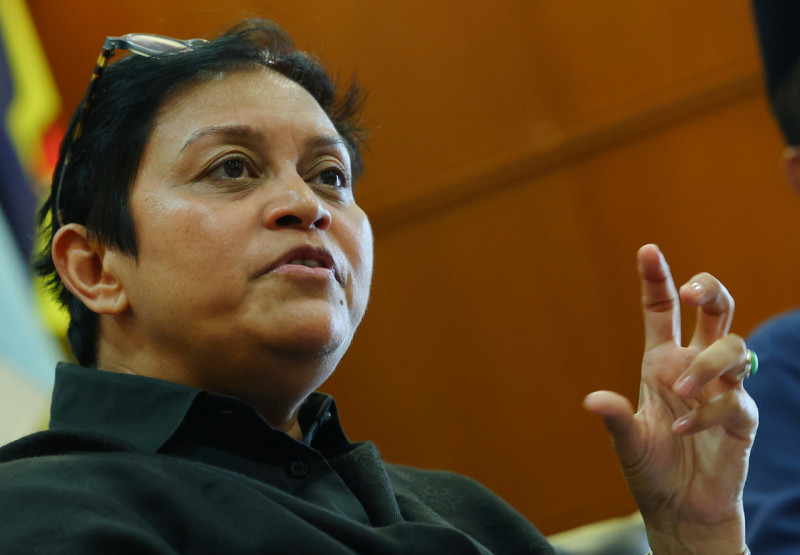
As a lawmaker and former legal practitioner, I support the strengthening of the global arbitration system and call for the regulation of litigation funding, especially for transparency and proper disclosure. This is to mitigate any potential risk of abuse and prevent unethical or reckless practices by litigation funders in the name of profit.
The Malaysian government will continue to do everything possible to put an end to the Sulu arbitration forum shopping and the financial impact of this sham award on the Malaysian government and Malaysian taxpayers. – The Vibes, June 24, 2023
Datuk Seri Azalina Othman Said is the minister in the prime minister’s department (law and institutional reform)