THE largest World Cup in football history will get under way on Friday amid growing scrutiny over soaring ticket prices, political tensions and security concerns, as FIFA prepares to welcome millions of supporters to a tournament spanning three nations for the first time.
Hosted jointly by the United States, Mexico and Canada, the expanded 48-team competition marks a significant departure from previous editions, featuring a record 104 matches and an unprecedented logistical operation across North America.
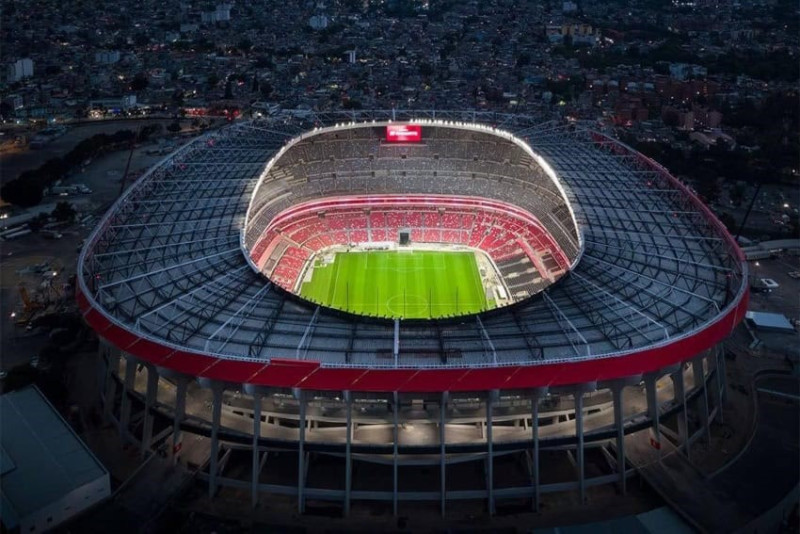
The tournament opens at the iconic Azteca Stadium in Mexico City, where hosts Mexico face South Africa, launching nearly six weeks of competition before the final takes place at MetLife Stadium in New Jersey on 19 July.
AFP reported that while the spotlight will inevitably fall on football's biggest stars, off-field controversies have threatened to overshadow the build-up to the global spectacle.
FIFA President Gianni Infantino has continued to promote the tournament as "the greatest stage the world has ever seen", but the governing body faces mounting criticism over ticket pricing that has left many supporters outraged.
Ticket Prices Spark Backlash
The sharp escalation in ticket costs has emerged as one of the most contentious issues surrounding the tournament.
Premium tickets for the World Cup final are reportedly priced at up to US$32,970 (approximately RM133,000), a dramatic increase from the roughly US$1,600 charged for comparable seats at the 2022 tournament.
The surge extends across much of the competition's 104-match schedule, with numerous tickets still circulating on secondary markets despite expectations of strong demand.
Even United States President Donald Trump expressed surprise at the prices, including those for the host nation's opening fixture against Paraguay in Los Angeles.
"It is too expensive. I would not pay that price either," he told the New York Post.
Political Tensions Cast Shadow
Human rights organisations have also raised concerns over the tournament's broader political environment.
Human Rights Watch has warned that immigration policies and responses to public protests in the United States could result in a World Cup atmosphere marked by what it described as "exclusion and fear".
Those concerns intensified after FIFA removed a referee from Somalia from the tournament following reports that he was denied entry into the United States upon arriving in Miami.
Iran's participation has likewise been affected by visa complications, with several members of the nation's administrative delegation reportedly unable to secure entry to the United States ahead of the competition.
Expanded Tournament Brings Major Changes
On the field, the World Cup's expansion from 32 to 48 teams will dramatically alter the competition's structure.
The group stage alone will feature 72 matches, while only 12 teams will be eliminated before the knockout rounds begin.
A total of 32 nations will advance to the next phase, including the eight best third-placed teams.
FIFA has also introduced a series of new regulations aimed at improving the flow of matches, including cooling breaks in each half, a 10-second limit for player substitutions and stricter enforcement against time-wasting.
Messi, Ronaldo and England's Long Wait
Much of the footballing narrative centres on whether Lionel Messi, now 38, can further strengthen his claim as the greatest player of all time by leading Argentina to a successful title defence.
His long-time rival Cristiano Ronaldo, aged 41, will attempt to overcome the effects of age and guide Portugal to a historic first World Cup triumph.
England, meanwhile, arrive hoping captain Harry Kane can finally end the nation's 60-year wait for football's most coveted prize since their lone World Cup success in 1966.
The tournament is also expected to embrace a more entertainment-focused approach, with FIFA planning a Super Bowl-style half-time show for the final featuring Madonna, Shakira and BTS.
The performance is expected to extend the interval to approximately 25 minutes, potentially making the World Cup final one of the longest in the competition's history.
For FIFA, however, the central challenge remains ensuring that football itself remains the dominant story as the world turns its attention to North America for the sport's most prestigious event. - June 9, 2026