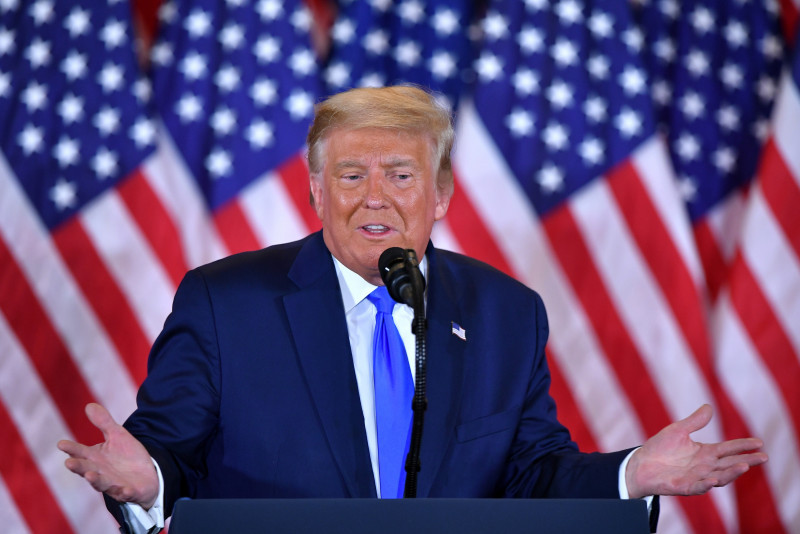
U.S. President Donald Trump has extended the United States travel ban to seven more countries, including Syria, in a move the White House described as strengthening national security by restricting entry from nations deemed to have inadequate vetting and information-sharing systems.
The expanded restrictions, set to take effect on January 1, apply to citizens of Burkina Faso, Mali, Niger, South Sudan, Syria, and holders of Palestinian Authority-issued travel documents. Laos and Sierra Leone, previously subject to partial restrictions, are now fully barred from entry.
On Wednesday, Reuters cited the White House saying the measure targets “countries with demonstrated, persistent, and severe deficiencies in screening, vetting, and information-sharing to protect the Nation from national security and public safety threats.”
The decision comes despite President Trump’s previous efforts to support Syria following his November talks with Syrian President Ahmed al-Sharaa, a former al Qaeda commander who has sought to present himself as a moderate leader seeking to unify his war-torn nation.
Trump also referenced a recent attack in Syria in which two U.S. Army soldiers and a civilian interpreter were killed by a suspected Islamic State operative.
Speaking on his Truth Social platform, the former president promised “very serious retaliation” for the incident, which he described as a “terrible” attack.
The White House justified the ban on Syria by citing high visa overstay rates and the country’s continuing lack of a central authority to issue passports or civil documents, alongside insufficient screening and vetting measures.
“Syria is emerging from a protracted period of civil unrest and internal strife. While the country is working to address its security challenges in close coordination with the United States, it still lacks an adequate central authority for issuing passports or civil documents,” the statement said.
In addition to the full bans, Trump’s proclamation imposes partial restrictions and entry limitations on 15 further countries, including Nigeria, which has been singled out for scrutiny over claims of persecution against Christians—a situation the Nigerian government argues misrepresents the broader security and religious context.
Since returning to office in January, Trump has aggressively pursued stricter immigration enforcement, deploying federal agents to major cities and restricting asylum seekers at the U.S.-Mexico border.
The expansion of entry restrictions marks a further intensification of measures following last month’s shooting of two National Guard members in Washington, D.C., carried out by an Afghan national admitted under a resettlement programme that Trump officials said lacked sufficient vetting.
The administration’s move underscores its ongoing focus on tightening U.S. immigration policy, particularly from nations deemed high-risk or inadequately screened. - December 17, 2025