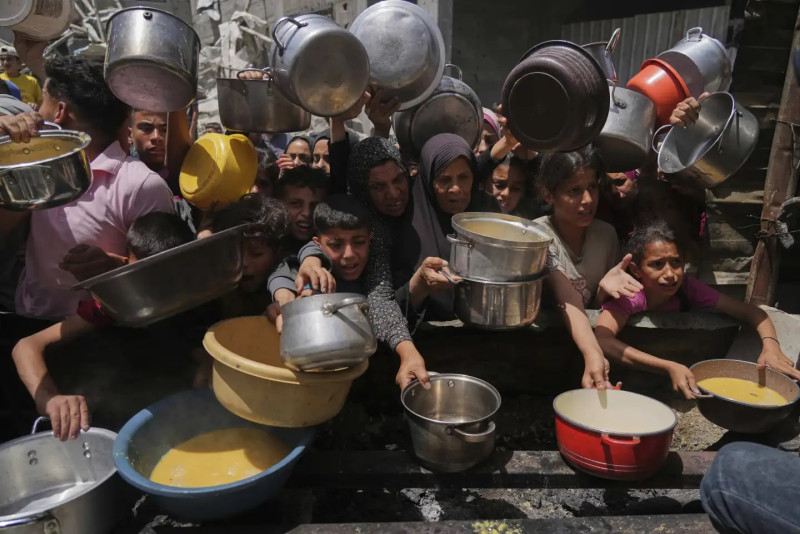
DISPLACED Palestinians in Gaza have warned of an impending catastrophe as Israel prepares to revoke the licences of dozens of international organisations providing vital humanitarian assistance in the war-torn enclave.
Aljazeera reported today that residents say the move could leave the besieged population without medical care, shelter, or basic supplies, compounding the suffering of a population already struggling to survive amid winter conditions and widespread destruction.
Palestinians in Khan Younis said there is “no alternative” to the support offered by aid groups. “Where are we supposed to go? We have no income, no money,” Siraj al-Masri told Al Jazeera on Wednesday.
He warned that the closure of organisations would have dire consequences: “Only a few medical points remain. This makes the situation extremely difficult and will lead to a catastrophe for the injured and the wounded. Even ordinary people who come seeking treatment will face severe hardship.”
Israel is set to revoke the licences of 37 international NGOs, including Doctors Without Borders (MSF), the Norwegian Refugee Council, CARE International, and the International Rescue Committee, citing new regulations requiring organisations to disclose details of their staff and operations.
Critics say the ban is part of a broader effort to demonise groups that assist Palestinians, including United Nations agencies, with unproven accusations of links to Hamas.
“Even with the presence of humanitarian organisations, the situation is already tragic,” said Gaza resident Ramzi Abu al-Neel.
“If their support and presence are removed, God knows what will happen. Many children will die, and lives will be destroyed, and many families will be devastated by this decision.”
International concern has grown over the move. On Tuesday, the foreign ministers of ten countries, including Canada, France, Japan, and the United Kingdom, issued a joint statement urging Israel to ensure that aid organisations “are able to operate in Gaza in a sustained and predictable way.”
The statement added: “Any attempt to stem their ability to operate is unacceptable. Without them it will be impossible to meet all urgent needs at the scale required.”
Despite a ceasefire, Israel has continued to kill Palestinians in Gaza and restrict the entry of aid, food, and temporary housing. With much of Gaza reduced to rubble, more than one million residents have faced harsh winter conditions in makeshift tents.
Economic activity has stalled entirely, leaving most of the population dependent on international support.
“Most people rely entirely on the assistance that comes from international organisations,” said Abdullah al-Hawajri, a displaced Palestinian in Khan Younis.
The United Nations Relief and Works Agency for Palestine Refugees (UNRWA) condemned Israel’s decision, saying it “further compromises the humanitarian operation” in Gaza.
UNRWA chief Philippe Lazzarini described the measure as setting a “dangerous precedent” and warned: “Failing to push back against attempts to control the work of aid organisations will further undermine the basic humanitarian principles of neutrality, independence, impartiality and humanity underpinning aid work across the world.”
The decision follows a troubling pattern. In 2025, Israel introduced measures targeting UNRWA and restricting its work, while the Gaza Government Media Office reports that around 500 aid workers and volunteers were killed during Israel’s two-year conflict, which also involved a crippling blockade that triggered famine.
Observers note that the ban may violate the ceasefire agreement and US President Donald Trump’s “20-point peace plan,” which states: “Entry of distribution and aid in the Gaza Strip will proceed without interference from the two parties through the United Nations and its agencies, and the Red Crescent, in addition to other international institutions not associated in any manner with either party.”
Many of the affected groups are part of the established UN-backed mechanism for aid distribution, making the potential disruption all the more critical for Gaza’s population. -- January 1, 2026