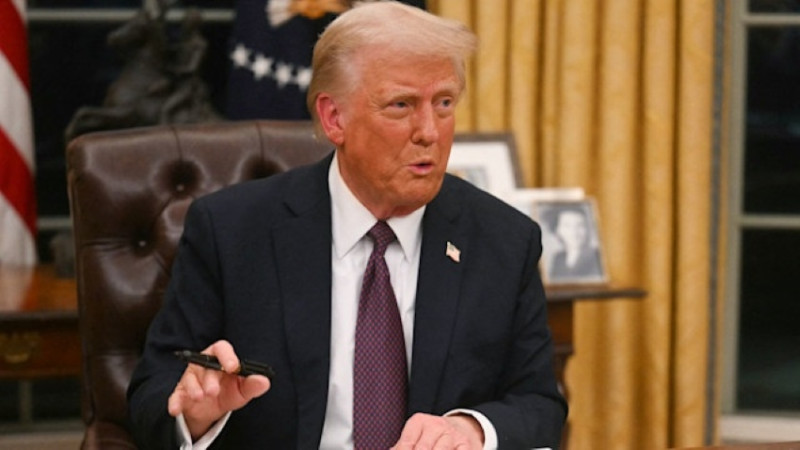
U.S. President Donald Trump on Friday signed an executive order introducing the “America First Arms Transfer Strategy,” a major overhaul of U.S. foreign military sales policy.
The measure instructs federal agencies to prioritise weapons deliveries to allies that invest heavily in their own defence and occupy critical geopolitical positions.
Reuters reported on Saturday that the White House saying the strategy is designed to accelerate the delivery of U.S.-manufactured arms to partners considered essential for regional security, while simultaneously using foreign purchases to expand domestic production capacity. No specific countries were named in the executive order.
“Future arms sales will prioritise American interests by using foreign purchases and capital to build American production and capacity,” the White House stated in a fact sheet accompanying the order.
Under the strategy, the Secretaries of Defense, State, and Commerce will compile a sales catalogue of prioritised platforms and systems and identify opportunities that align with the administration’s objectives.
For decades, U.S. arms sales operated on a first-come, first-served basis, with adjustments for priority nations requiring extensive bureaucratic hurdles.
The new executive order seeks to streamline these processes, including improving end-use monitoring and third-party transfer procedures, reducing delays and enhancing transparency.
The White House highlighted that the previous “partner-first” approach had led to production backlogs and delayed deliveries, mismatching orders with U.S. manufacturing capacity.
By prioritising nations with substantial defence spending and strategic significance, the administration aims to ensure that arms exports serve both national security objectives and the revitalisation of the U.S. defence industrial base.
The policy shift also complements broader NATO objectives. In 2025, NATO leaders reaffirmed a defence spending target of 5% of GDP and reiterated their mutual commitment to collective defence.
Trump’s strategy seeks to leverage these investments, encouraging allies to strengthen their own militaries while supporting American manufacturing and technological advantage.
The executive order marks a notable departure from past U.S. practice, signalling that strategic value and regional influence will now dictate the prioritisation of arms transfers over longstanding “first-come, first-served” arrangements. - February7, 2026