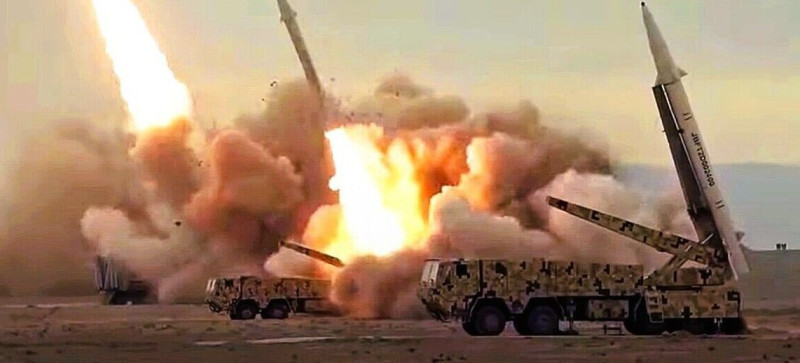
IRAN dramatically widened regional tensions on Saturday by launching ballistic missiles towards Bahrain and Kuwait in retaliation for a new United States military strike, raising fears of a broader confrontation across the Gulf and further undermining efforts to secure a lasting ceasefire.
AFP reported that the latest exchange came after weeks of indirect negotiations failed to produce an agreement capable of ending hostilities in the Middle East or restoring normal operations through the strategically vital Strait of Hormuz, one of the world's most important energy shipping corridors.
According to the United States Central Command (CENTCOM), American forces intercepted four Iranian attack drones over the Strait of Hormuz on Friday before carrying out strikes against an Iranian coastal radar installation.
Iran’s Islamic Revolutionary Guard Corps (IRGC) subsequently announced that it had responded by targeting what it described as “enemy bases in the region” with missile attacks.
CENTCOM said Iran launched seven ballistic missiles towards Bahrain and Kuwait. Six were intercepted, while another failed to reach its intended target.
The attacks provoked swift condemnation from both Gulf states. Bahrain, home to the headquarters of the US Fifth Fleet, described the missile strike as a “blatant act of aggression”, while Kuwait warned that the incident represented a “dangerous escalation”.
In Manama, journalists reported hearing three explosions as air raid sirens echoed across the Bahraini capital, underscoring growing concerns that the conflict could spill further into the wider Gulf region.
Iran’s Foreign Ministry condemned the latest American military operation as a “clear and blatant violation” and denounced what it called Washington’s “hostile and provocative actions”.
Diplomatic efforts to transform the fragile ceasefire into a durable settlement have repeatedly stalled, while the continuing confrontation has unsettled global markets and increased political pressure on US President Donald Trump ahead of the forthcoming midterm elections.
“Negotiations are now deadlocked and Trump must break this impasse,” said Mohsen Rezaei, military adviser to Iran’s Supreme Leader, during an interview with CNN.
Rezaei also called for the release of approximately US$24 billion (RM102 billion) in frozen Iranian assets, arguing that the funds should be returned to Tehran as part of any future settlement.
Washington, however, is reportedly considering whether the frozen assets could instead be used to offset damage caused by Iranian attacks against Gulf allies.
The US Treasury Department has indicated it is prepared to utilise all available instruments to ensure Iranian assets can support Gulf partners in reconstruction efforts and future repair works arising from any damage attributed to Tehran.
The latest missile exchange highlights the growing fragility of regional security arrangements and raises the prospect of further military escalation at a time when diplomatic channels appear increasingly strained. - June 7, 2026







.jpg)