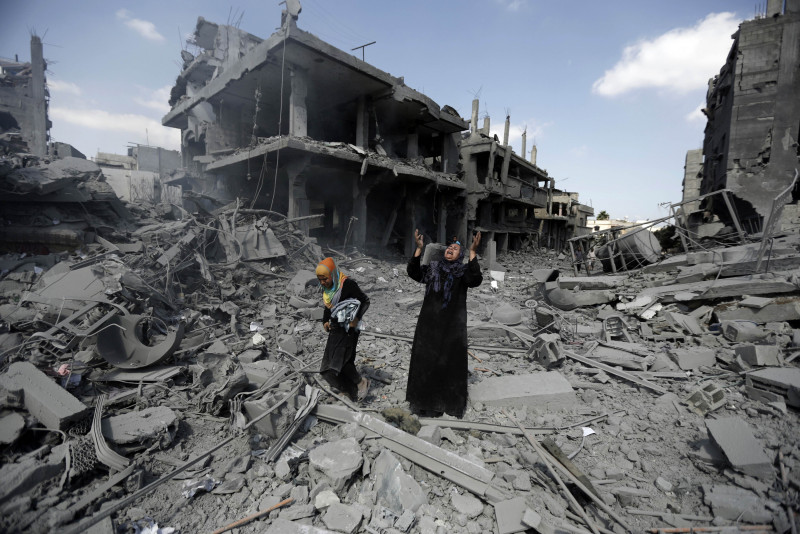
IN the darkness before dawn, Ibtisam Al-Helou leaves her tent along Gaza’s coastline every day in search of fresh water, despite living only steps away from the Mediterranean Sea.
The 40-year-old mother of three walks through devastated neighbourhoods in Gaza City, following reports of places where water may still be available, before the midday heat reaches 33 degrees Celsius.
"I live by the sea, and water is very scarce. I suffer from it every day," she said while washing kitchen utensils outside the tent where her family now lives.
"I reach Al-Mina, I reach Al-Amadi, we reach Abu Mazen (areas in Gaza City) where there is water, because water does not reach here at all. We only get water once every three days."
Her daily search reflects a wider humanitarian emergency across Gaza, where aid organisations, United Nations officials and Palestinian health authorities warn that the territory’s water and sanitation systems are facing an unprecedented collapse.
Reuters reported on Tuesday that millions of residents are caught between immediate shortages of drinking water and a worsening environmental crisis that could affect future generations.
Families are forced to queue for hours beside damaged water trucks to collect limited supplies before returning to overcrowded tent camps where disease risks are rising.
For Al-Helou’s children, water shortages have transformed everyday life.
Before the war, her children — she cares for nine children in total — would bathe in fresh water three times a day during Gaza’s hot summer months. Now, they are fortunate if they can wash once a week.
Many children have turned to the sea to cool down, but Al-Helou said swimming in polluted waters has brought health problems.
"When my children swim in the sea, I need 50 ($17) shekels (worth of treatment) for each one of them," she said. "They get itching, scabies and allergies."
Health officials have warned that untreated sewage from hundreds of thousands of cesspits is contaminating Gaza’s coastal aquifer, the territory’s only natural source of fresh water.
Children suffering from diarrhoea and skin infections often return from clinics to tents where clean water, soap and sanitation remain scarce. Residents increasingly rely on water trucks, damaged wells and untreated groundwater.
United Nations assessments estimate that more than half of Gaza’s population, around 1.3 million people, have access to less than six litres of drinking water per day.
Many residents are using salty and unsafe water for bathing and washing clothes.
Medical charity Médecins Sans Frontières (MSF) said its own data suggests the situation could be even more severe, with most people receiving an average of only 4.3 litres per person daily, compared with about 85 litres before the war.
"People are still queuing and waiting for water trucks to arrive and distribute water," said Alessandro Mrakic, head of the United Nations Development Programme (UNDP) in Gaza.
"It is a very difficult, complex operation because you need to go through rubble. You need to reach the population where it is," he told Reuters.
As temperatures rise, health concerns are escalating.
"The lack of sufficient water is directly affecting people's health and ability to maintain basic hygiene," said Ozan Agbas, Emergency Operations Manager with MSF Netherlands.
MSF data showed acute respiratory infections accounted for 46 per cent of reported illnesses, while skin diseases represented 31 per cent and acute watery diarrhoea 21 per cent.
Palestinian officials said the crisis extends beyond water shortages, warning that continued damage to Gaza’s infrastructure could create long-term consequences.
Said El-Aklouk, a sanitation and wastewater monitoring official at Gaza’s Health Ministry, said the territory had around 320 water wells before the war, but fewer than 100 remain operational.
He added that about 80 per cent of Gaza’s water distribution network and most desalination capacity had been damaged or destroyed.
The Israeli military has denied deliberately targeting essential infrastructure. COGAT, the Israeli military body responsible for humanitarian coordination, said on July 9 that it was working with international agencies to address sanitation issues and improve water supplies in Gaza.
Although a US-brokered ceasefire in October halted major fighting, attacks have continued, with Israel saying it has targeted Hamas and other militant groups posing an imminent threat.
Months after the ceasefire, water trucks remain a vital lifeline for thousands of displaced families, but humanitarian organisations warn they cannot replace a functioning public water system.
At distribution points, children, women and men queue with plastic containers, while others transport water using makeshift carts.
Many families living in coastal tent camps continue to bathe in the sea despite concerns over pollution.
Aid agencies said treating illnesses alone is insufficient because patients return to overcrowded shelters where access to clean water, soap and sanitation remains limited.
Health officials reported at least 5,000 chickenpox cases per week over the past month, highlighting the worsening public health situation.
The sanitation collapse has further intensified the crisis. Aklouk said more than 300,000 cesspits and soak pits were releasing untreated wastewater into Gaza’s coastal aquifer.
"Today, for the first time, we have effectively lost control of our water sources," Aklouk said.
"This is the worst situation Gaza has ever experienced." - July 21, 2026






.jpg)