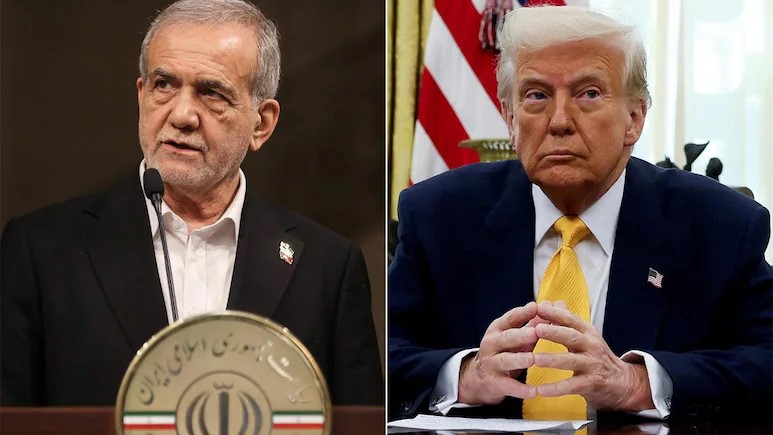
IRAN’S new security chief has warned that Tehran will consider any country supporting new US economic measures against the Islamic Republic to be committing an “act of war”, as diplomatic efforts intensify to prevent the conflict from escalating further.
Mohsen Rezaei, the hard-line head of Iran’s Supreme National Security Council, issued the warning on Sunday, with his remarks quickly circulated by Iranian state media.
AP reported on Monday that the warning came a day after Rezaei made his most extensive public comments since being appointed to the post earlier this month, signalling a tougher stance from Tehran as Washington prepares to announce further measures against Iran.
US Treasury Secretary Scott Bessent is expected to unveil the new measures on Monday after Washington vowed to impose an “unprecedented” level of economic pressure and isolation on Iran, which has lived under US sanctions for decades.
Rezaei, a former Revolutionary Guard commander and military adviser to Supreme Leader Ayatollah Mojtaba Khamenei, also warned that Iran could retaliate by targeting alternative oil-shipping routes in the Persian Gulf if US President Donald Trump takes further action.
“If (Trump) wants to do something, we will retaliate in a seismic manner,” he told Iranian state broadcaster in an interview aired late Saturday.
His appointment, alongside other senior changes, has been widely viewed as reflecting a harder political and military posture in Tehran.
Pezeshkian Backs Agreement As Way Out of Deadlock
Iranian President Masoud Pezeshkian, meanwhile, defended a memorandum of understanding signed with the United States in mid-June, describing it as the best route out of the current state of “neither war nor peace”.
Pezeshkian said Iran was struggling to attract investment nearly six months after the war began, underscoring the economic pressure facing the country.
“There is not a single provision in this agreement that amounts to capitulation,” Pezeshkian said in a speech published by state-run IRNA.
“The supreme leader sets the policies, and we will follow that path.”
The interim agreement established a 60-day period for negotiations aimed at ending the conflict and reaching a broader agreement on Iran’s nuclear programme.
That period ended last week without an apparent breakthrough or agreement to extend the talks.
Strait of Hormuz Tensions Ease But Restrictions Remain
While attacks in the Strait of Hormuz appeared to have eased, tensions remained high as Iran moved to impose new restrictions on vessels using the strategically important waterway.
A multinational coalition overseen by the US Navy said on Sunday that there had been no confirmed attacks in the strait during the previous 48 hours, although shipping traffic remained significantly reduced.
The US military said its blockade of Iranian ports had redirected 70 commercial vessels and disabled three as of Sunday.
Iran’s newly established Persian Gulf Strait Authority, which has itself been sanctioned by Washington, meanwhile published a list of dozens of vessels it said had breached arrangements governing transit through the strait.
The authority said the vessels could face future restrictions, including fines or seizure.
The Strait of Hormuz had traditionally been regarded as an international waterway before the United States and Israel launched attacks against Iran on February 28.
Iran and Oman, which lies on the opposite side of the strait, are now discussing arrangements for managing traffic through the waterway, with ships potentially required to pay fees.
Pakistan Army Chief to Visit Tehran
Pakistan’s army chief Field Marshal Asim Munir is due to lead a delegation to Tehran on Monday as Islamabad steps up efforts to ease tensions between Iran and the United States.
Iranian state television, citing Foreign Ministry spokesman Esmail Baghaei, reported that Munir would visit Tehran as part of the diplomatic push.
Two regional officials said the visit was aimed at helping de-escalate tensions and encouraging Washington and Tehran to return to the negotiating table.
The officials spoke on condition of anonymity because they were not authorised to discuss the diplomatic efforts publicly. - August 24, 2026