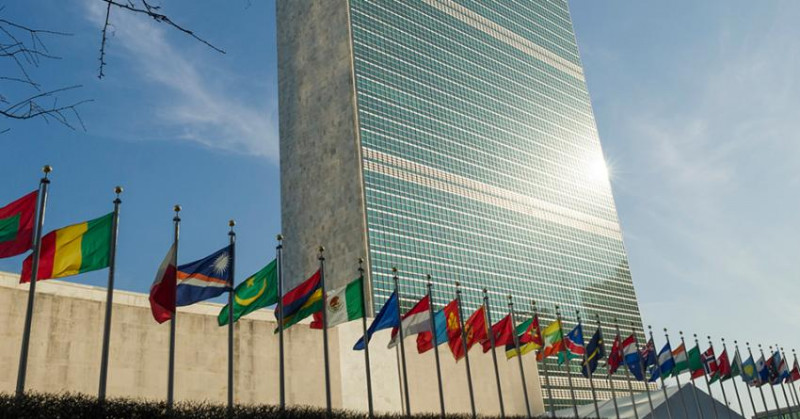
THE United Nations and the International Committee of the Red Cross have warned that weapons capable of autonomously selecting and killing human targets could soon become a reality on the battlefield, calling for urgent international action to regulate the technology.
UN Secretary-General Antonio Guterres and International Committee of the Red Cross President Mirjana Spoljaric issued the warning on Aug 25, saying the rapid development of autonomous weapons was bringing the world dangerously close to a point at which machines could make life-and-death decisions without human involvement.
“We are now dangerously close to crossing a moral red line: the autonomous targeting of humans by machines,” Reuters quoted Guterres and Spoljaric saying in a joint statement.
“Negotiations must begin now to urgently adopt a legally binding instrument to regulate autonomous weapon systems with clear prohibitions and restrictions,” they said.
The warning comes ahead of discussions in Geneva next week, where states are expected to consider potential new international rules governing autonomous weapons.
Negotiations on the issue have been under way since 2014, but concerns have intensified as artificial intelligence and autonomous military technology advance and AI-assisted semi-autonomous weapons have increasingly featured in conflicts, including in Ukraine, Sudan, Gaza, Iran and the Gulf.
Fully autonomous systems are already operated by some militaries, including anti-missile systems deployed aboard warships. However, such systems are not currently known to be used to select human beings as targets independently.
Human rights organisations have raised concerns over whether AI-driven weapons can be reliably predicted, controlled or held accountable, warning that technological failures could result in fatal mistakes.
Such systems could, for example, fail to distinguish between an injured combatant or a soldier attempting to surrender and an active threat, potentially resulting in unlawful deaths.
Rights groups have also warned that autonomous decision-making could complicate efforts to establish individual responsibility for violations of international humanitarian law and potential war crimes.
The UN and Red Cross called on governments to show greater political resolve and move beyond incremental discussions towards concrete international safeguards.
“States must show political courage and move beyond incremental discussions towards decisive action”, the joint statement said, calling for negotiations to begin in November during a major conference planned in Geneva. - August 25, 2026