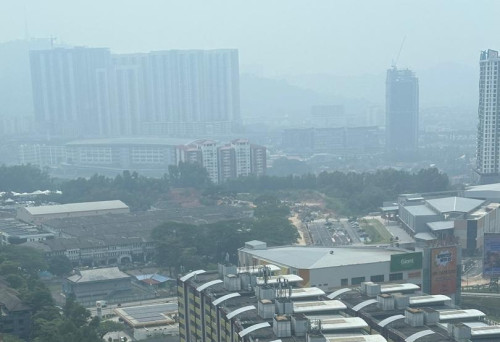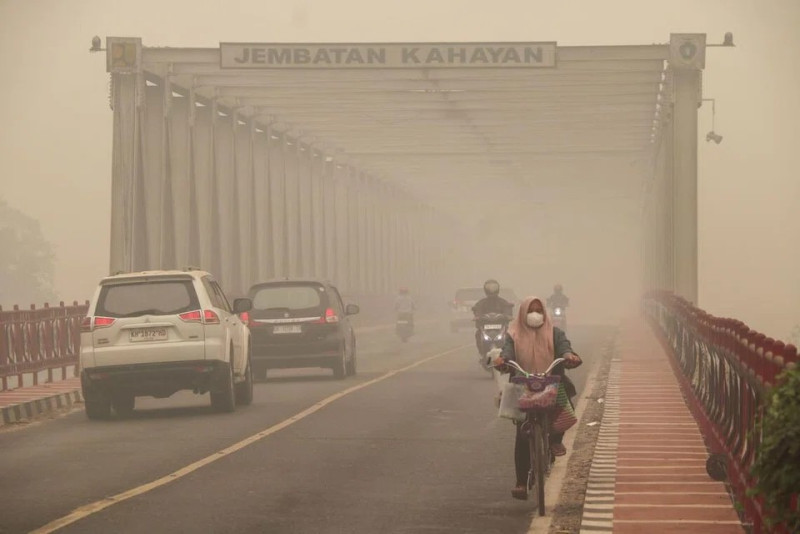
ABOUT 59,275 hotspots were detected across 17 districts and cities in South Sumatra from Sept 1 to yesterday, turning the province into a major source of haze while thousands of residents in Palembang suffered respiratory infections.
The figure, recorded by the Forestry Ministry’s Forest and Land Fire Monitoring System, highlights the scale of the fires that have contributed to worsening haze in the region.
Wahana Lingkungan Hidup Indonesia (WALHI) South Sumatra advocacy chief Galang Suganda said forest and land fires were not sudden or unpredictable disasters, but identifiable ecological risks that could be prevented.
“The risks are closely linked to changes in the landscape, control over land use, permit-based activities, damage to peat ecosystems, and weaknesses in prevention and monitoring efforts in fire-prone areas,” he said.
Galang said the impact of forest and land fires extended far beyond the areas directly affected by burning, with the resulting smoke posing a direct threat to public health and disrupting daily activities.
Data from the Palembang City Health Office showed 17,434 cases of acute respiratory tract infections (ARI) were recorded among residents throughout September.
Galang said the number of ARI cases reflected the government’s failure to protect people’s right to clean and healthy air, as provided for under Article 28H(1) of Indonesia’s 1945 Constitution.
The provision states that every person has the right to live in physical and mental well-being, to have a home and to enjoy a good and healthy environment. - October 8, 2026