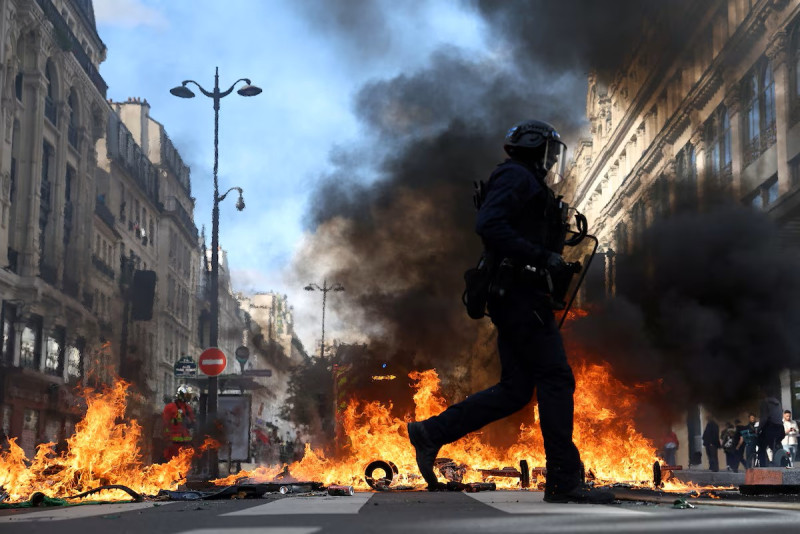
FRANCE was rocked by widespread violence on Saturday as protests over rising living costs and deteriorating public services escalated into clashes with police, arson and looting, prompting about 1,200 arrests.
Around 550,000 people took part in demonstrations across the country, Interior Minister Laurent Nunez said, while the CGT trade union estimated the turnout at 800,000.
Reuters reported on Sunday that although hundreds of thousands marched peacefully, violent groups targeted public buildings, looted shops and supermarkets, and attacked police officers and vehicles in several cities.
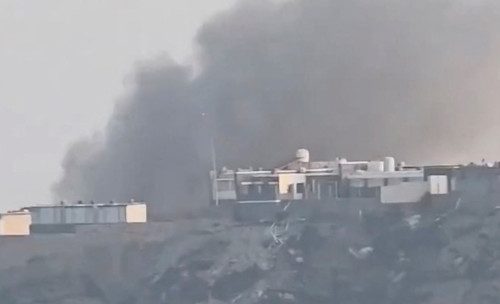
In Limoges, the city hall was set ablaze, while protesters broke into Marseille city hall and defaced the building with graffiti. In Lyon, the city’s tourist office was torched.
French Prime Minister Sebastien Lecornu vowed that the government would not be intimidated by the violence, blaming the unrest on far-left groups and criminals ahead of next year’s presidential election.
“To those who clearly want to use this violence as a ‘warm-up’ before the presidential election, I say clearly: We will not let ourselves be intimidated. No one will impose their political agenda through violence,” he wrote on X.
President Emmanuel Macron also pledged to prosecute those responsible for the attacks.
“We will all stand united against the sowers of chaos, who only seek to undermine our institutions and prevent those who peacefully express their demands from doing so,” he said in a post on X.
The demonstrations began last month among high school students in working-class northern suburbs of Paris, where anger over teacher shortages and deteriorating school facilities developed into a broader movement against inequality, public spending and declining living standards.
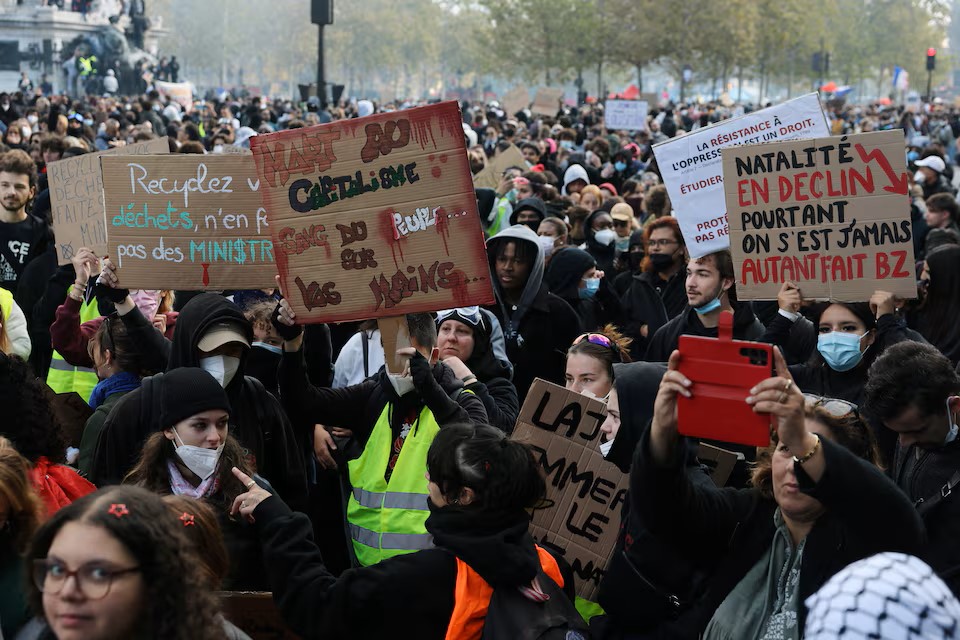
Protesters also voiced concerns about high fuel prices, police conduct and inadequate education facilities.
“We are fighting because the cost of living is too harsh, because the price of fuel is too high, because high school pupils are being violently attacked and hurt all over the country just for trying to protest and ask for more teachers and decent learning conditions,” said Lola, a 19-year-old protester in Paris.
Police fired tear gas in parts of the capital as officers confronted groups of mostly young demonstrators, many wearing black clothing, masks and goggles.
Rioters attempted to break into the Galeries Lafayette department store, damaged banks, ransacked a Lacoste outlet and looted a mobile phone shop. Numerous cars and other objects were also set ablaze.
The unrest has intensified scrutiny of French police tactics following a series of injuries during demonstrations. The police watchdog is investigating at least two dozen allegations of police violence.
Nunez confirmed reports that a protester lost a hand during Saturday’s clashes after attempting to pick up a stun grenade. Lecornu said more than 150 police officers had been injured, without providing figures for injured demonstrators.
The protests also spread to other European countries, reflecting mounting public concerns over living costs, housing affordability and access to education.
In Brussels, several hundred mostly young demonstrators protested against rising education costs and reforms they fear could make higher education less accessible. Some clashed with police.
In Portugal, tens of thousands marched in Lisbon against housing and other living costs, with house prices having doubled since 2017.
In Italy, police used tear gas to disperse demonstrators in Milan and water cannon against crowds in Bologna, where seven people were arrested, according to the ANSA news agency.
In Albania, police reportedly fired what appeared to be rubber bullets at demonstrators during a fifth day of student protests demanding Prime Minister Edi Rama’s resignation over alleged government corruption, unemployment and poor education standards.
The French demonstrations exceeded the peak turnout of the Yellow Vest movement during Macron’s earlier term, although they remained smaller than the 2023 protests against his pension reforms.
Macron is approaching the final stretch of his presidency amid political fragmentation and mounting economic pressure, while efforts to reduce public debt have failed to reassure investors and pushed government borrowing costs to their highest levels in more than two decades. - October 18, 2026