MALAYSIA has urged ASEAN and China to intensify efforts to conclude negotiations on the South China Sea Code of Conduct (COC) by the end of this year, warning that unresolved issues require renewed political commitment.
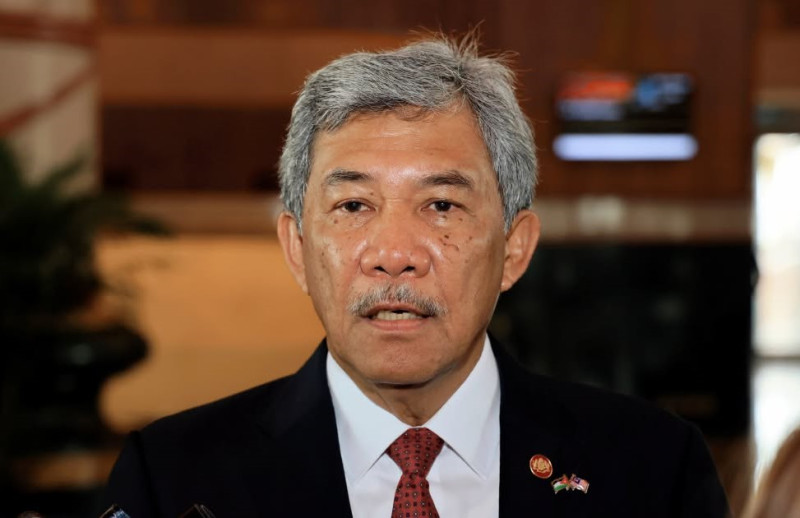
Foreign Minister Datuk Seri Mohamad Hasan said negotiations had been taking place monthly this year, but several key issues, including the nature and geographical scope of the proposed code, remained unresolved.
He said Malaysia, which has co-chaired the negotiations since 2024, was working closely with ASEAN member states and China to secure an effective and substantive agreement within the three-year timeframe agreed upon in 2023.
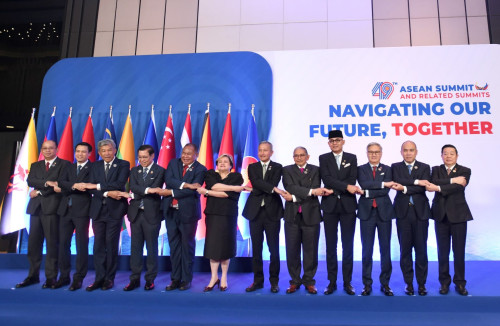
"I urge all of us to redouble our collective efforts to conclude the COC draft as soon as possible. Renewed political commitment is crucial to achieving this goal, particularly at this critical final stage," he said at the ASEAN Foreign Ministers' Meeting (AMM) in Manila today.
ASEAN and China have set a target of concluding negotiations on the COC by the end of this year.
On Myanmar, Mohamad said the ongoing crisis remained one of the most pressing challenges to ASEAN's unity and credibility, calling for clear objectives and measurable progress in implementing the Five-Point Consensus (5PC).
He said the consensus remained ASEAN's main reference framework for addressing the crisis.
"We continue to emphasise the need to establish clear objectives and measurable progress in the implementation of the 5PC," he said.
Mohamad said ASEAN senior officials were discussing proposals based on the mandate given by regional leaders at the 48th ASEAN Summit in May.
The proposals comprised an informal paper on the proposed terms of reference for an ASEAN Special Envoy to Myanmar and another outlining ASEAN elements for assessing progress in the country.
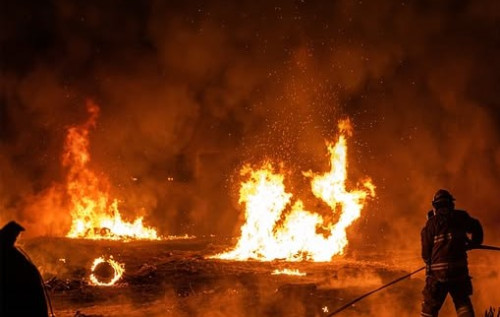
Separately, Mohamad called for a more proactive and coordinated ASEAN response to transboundary haze, proposing scientific cooperation and a Sustainable Haze Fund to strengthen regional preparedness and response capabilities.
He said deteriorating air quality, including unhealthy and hazardous levels in several areas, posed serious risks to public health, livelihoods and daily activities, particularly among vulnerable communities.
"Moving forward, ASEAN must implement a more proactive and integrated regional response anchored in the effective implementation of the ASEAN Agreement on Transboundary Haze Pollution.
"To complement these efforts, Malaysia has put forward proposals on Science Diplomacy and a Sustainable Haze Fund to strengthen scientific cooperation, sustainable financing and collective responses to transboundary haze pollution," he said.
He also called for the ratification of the ASEAN Coordinating Centre for Transboundary Haze Pollution Control, saying its immediate operationalisation was crucial to improving regional preparedness.
Mohamad acknowledged Indonesia's continued efforts to extinguish land and forest fires in Kalimantan and Sumatra, despite challenges posed by the El Nino phenomenon, unpredictable weather and the remote locations of affected areas.
Malaysia would pursue its proposals at the Conference of the Parties to the ASEAN Agreement on Transboundary Haze Pollution in December and through its chairmanship of the Sub-Regional Ministerial Steering Committee on Transboundary Haze Pollution in 2027.
On broader regional cooperation, he said ASEAN must strengthen consensus and safeguard its position amid growing geopolitical and economic divisions and increasingly complex cross-border security threats.
He also stressed the importance of diversifying supply chains, strengthening intra-ASEAN trade and expanding regional production networks to improve the bloc's economic resilience.
Malaysia welcomed the signing of the ASEAN Digital Economy Framework Agreement (DEFA), which it expects to drive digital connectivity, expand trade and enhance regional competitiveness.
On ASEAN-China relations, Mohamad said an upcoming summit was expected to adopt a joint statement marking the fifth anniversary of the Comprehensive Strategic Partnership and establish an energy cooperation partnership.
He also noted China's proposal to designate 2027 as the ASEAN-China Year of Artificial Intelligence Cooperation.
On ASEAN-Turkiye relations, he called for the timely finalisation of a comprehensive Plan of Action that would deliver tangible outcomes in trade facilitation, supply chain resilience and defence industrial cooperation. - November 14, 2026