THE US dollar climbed to its strongest level in almost a week on Wednesday as investors sought the safety of the world's reserve currency following renewed military action in the Middle East, while oil prices surged on mounting concerns over global supply disruptions.
The US Dollar Index (DXY), which measures the greenback against a basket of six major currencies, rose to 101.18, its highest reading since 2 July, reflecting a renewed flight to safe-haven assets amid escalating geopolitical risks.
In Malaysia, the ringgit weakened against the stronger dollar, with the exchange rate hovering around RM4.081 to the US dollar during early trading.
Market sentiment deteriorated after the United States launched a fresh wave of air strikes against Iran and revoked a sanctions waiver that had previously permitted Tehran to export crude oil.
The latest escalation followed attacks on commercial vessels transiting the Strait of Hormuz, including a Qatari liquefied natural gas carrier and a Saudi oil tanker, raising fresh concerns over the security of one of the world's most critical energy shipping routes.
The renewed hostilities have cast uncertainty over the interim US-Iran peace agreement and heightened fears that further attacks could disrupt the flow of crude oil and liquefied natural gas through the strategic waterway.
The Strait of Hormuz is a vital artery for global energy trade, carrying a substantial proportion of the world's seaborne crude oil and liquefied natural gas exports. Any disruption to shipping through the narrow passage has the potential to tighten global energy supplies and intensify inflationary pressures.
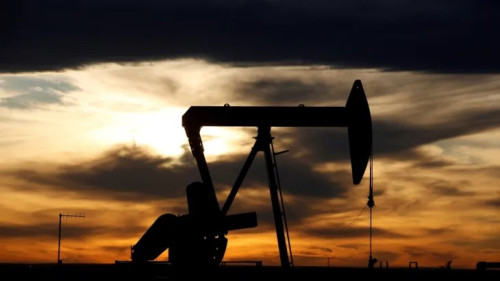
Brent crude extended its gains for a second consecutive session, rising 2.6 per cent to US$76.12 a barrel during Asian trading after advancing by more than five per cent over the week.
Investors increasingly priced in a geopolitical risk premium as concerns grew that regional producers and shipping operators could scale back activity if security conditions deteriorate further.
The latest developments have sharply reversed earlier expectations that higher production from OPEC+ members would lead to a global oil surplus. Instead, supply concerns have once again become the dominant driver of energy markets.
Analysts at Westpac said renewed attacks on vessels in the Strait of Hormuz had revived concerns over the durability of the US-Iran peace arrangement, shifting investor attention towards the inflation outlook.
They noted that expectations of higher energy prices had pushed government bond yields higher globally as markets reassessed the trajectory of inflation and interest rates.
Currency markets reflected the broader shift towards defensive positioning.
The Japanese yen weakened slightly, with the US dollar rising 0.1 per cent to 162.28 yen, while the euro slipped 0.1 per cent to US$1.1405 and sterling eased 0.1 per cent to US$1.3353. The Australian dollar traded little changed at US$0.6926.
The New Zealand dollar edged 0.1 per cent higher to US$0.5681 ahead of the Reserve Bank of New Zealand's policy meeting, where markets were narrowly expecting the country's first interest rate increase in more than three years.
In cryptocurrency markets, Bitcoin slipped 0.2 per cent to US$63,518.35, while Ether fell 0.5 per cent to US$1,774.45, as investors reduced exposure to risk-sensitive assets amid heightened geopolitical uncertainty.
With geopolitical tensions intensifying and energy markets increasingly vulnerable to supply disruptions, investors are expected to remain focused on developments in the Middle East, particularly around the Strait of Hormuz, where any further escalation could have significant implications for inflation, monetary policy and global financial markets. - July 8, 2026
.jpeg)