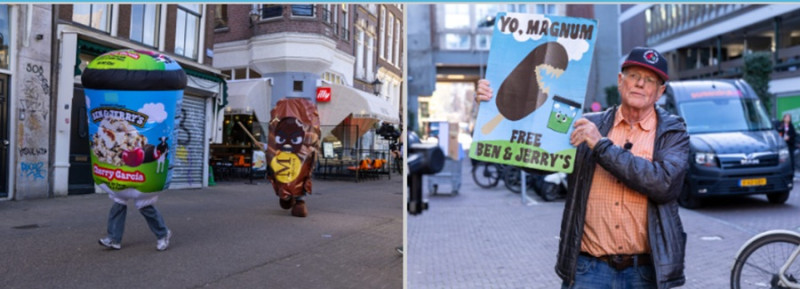
WHEN people hear “Free Ben & Jerry’s”, the first assumption is usually that the famous ice cream maker is giving away free scoops.
In reality, the campaign has nothing to do with desserts.
It is a call by the company’s co-founder, Ben Cohen, and supporters to free Ben & Jerry’s from corporate ownership, arguing that the brand can no longer fully live by the social values that made it famous after becoming part of consumer goods giant Unilever.
At first glance, it may seem like a uniquely American corporate dispute. But beneath the headlines lies a question that resonates far beyond the United States, including here in Malaysia.
What happens when a company built on a clear set of values no longer controls its own voice?
For decades, Ben & Jerry’s cultivated a reputation that went beyond selling ice cream. It became known for speaking out on issues ranging from climate change and racial justice to refugee rights and, more recently, Palestine.
Supporters bought into more than the product. They bought into what the brand represented.
That identity was tested after the company announced it would stop selling its products in Israeli settlements in the occupied West Bank.
The decision triggered political backlash, legal disputes and a growing public disagreement between the company’s independent board and its corporate parent over who ultimately decides what the brand can say and do.
The dispute has since evolved into something much larger than one controversial decision.
It has become a debate about whether companies can remain true to their founding principles once ownership changes hands.
This is not a question unique to Ben & Jerry’s.
Across industries, businesses often begin with a strong sense of purpose. As they expand, attract investors or become part of larger corporate groups, priorities inevitably shift.
Commercial realities, legal risks and shareholder expectations become part of everyday decision-making.
That is not necessarily a bad thing. Large corporations have responsibilities to shareholders, employees and customers across multiple markets.
Decisions made by one subsidiary can have consequences for an entire global business.
Yet there is also another side to the argument.
Consumers today increasingly expect brands to stand for something beyond profits. Companies frequently promote sustainability, diversity, ethical sourcing and community engagement. These commitments help shape public trust and customer loyalty.
The challenge comes when living up to those values carries a commercial or political cost.
The Ben & Jerry’s saga exposes that tension.
Can a brand genuinely claim to champion social causes if it ultimately requires approval from a parent company? And if corporate owners have the final say, where does a brand’s independence begin and end?
These questions are becoming increasingly relevant in Malaysia as well.
Malaysian consumers are paying closer attention to corporate behaviour, whether through boycotts, environmental concerns or expectations that companies act responsibly during times of crisis.
Businesses are no longer judged solely by the quality of their products but also by the values they project.
For companies, authenticity is becoming just as valuable as profitability.
The outcome of the Free Ben & Jerry’s campaign remains uncertain. The company may never regain its independence.
But perhaps that is no longer the most important question.
The bigger issue is whether a brand can preserve the ideals that made people believe in it, once those ideals must coexist with the realities of corporate ownership.
For businesses everywhere, including those closer to home, that may prove to be one of the defining challenges of modern corporate life. – June 28, 2026