EXPRESSING gratitude on the seventh lunar month of the Chinese calendar, Buddhists observe and give thanks where the living will prepare offerings and perform rituals to absolve the sufferings of their dear ancestors, while at the same time praise the deeds of the gods and deities.
This activity is part of celebrating the Hungry Ghost festival, where it is believed that spirits of the deceased would rise from the realms of heaven and hell throughout the month.
Of tales and customs
An eerie tale which talks of the hungry, discontented spirits wandering the world during this period describes them as ghosts without families to care for them or people who died because of unfortunate events like murder or suicide.
“My rendition of the Hungry Ghost festival is not as horrific as the conventional Chinese ghost stories we hear because my late ancestors are of Teochew heritage from China,” noted Desmond Lam, 44.
“The festival is seen as an occasion we pay respect to 'Hou Heng Tai', which the direct translation would mean ‘good brothers’.
“Chinese migrants come to Malaya using ‘Tongkang’ (junk), and the journey was said to be long.
“Some would die on the boat, they would be wrapped and thrown into the sea immediately to avoid any plague to others. Hence, there were no proper burials or chants,” he said.
“Migrants pay their respects for those who were 'lost at sea' by offering food and joss sticks at road junctions, believed to be the portal between hell and earth.
“It is also one of the reasons why Chinese don't buy houses at junctions,” quipped Lam.
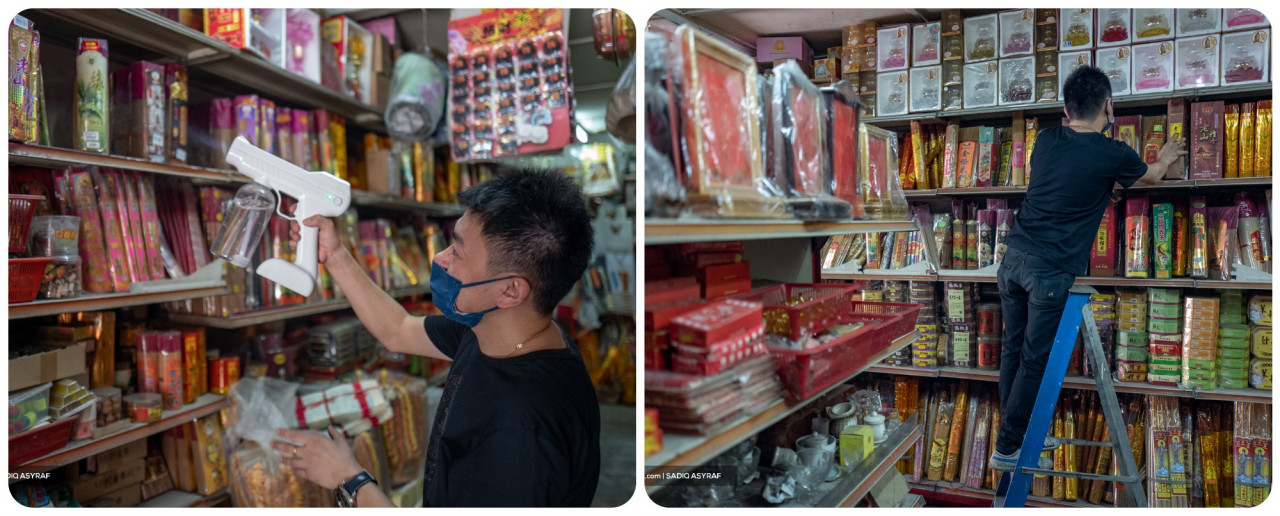
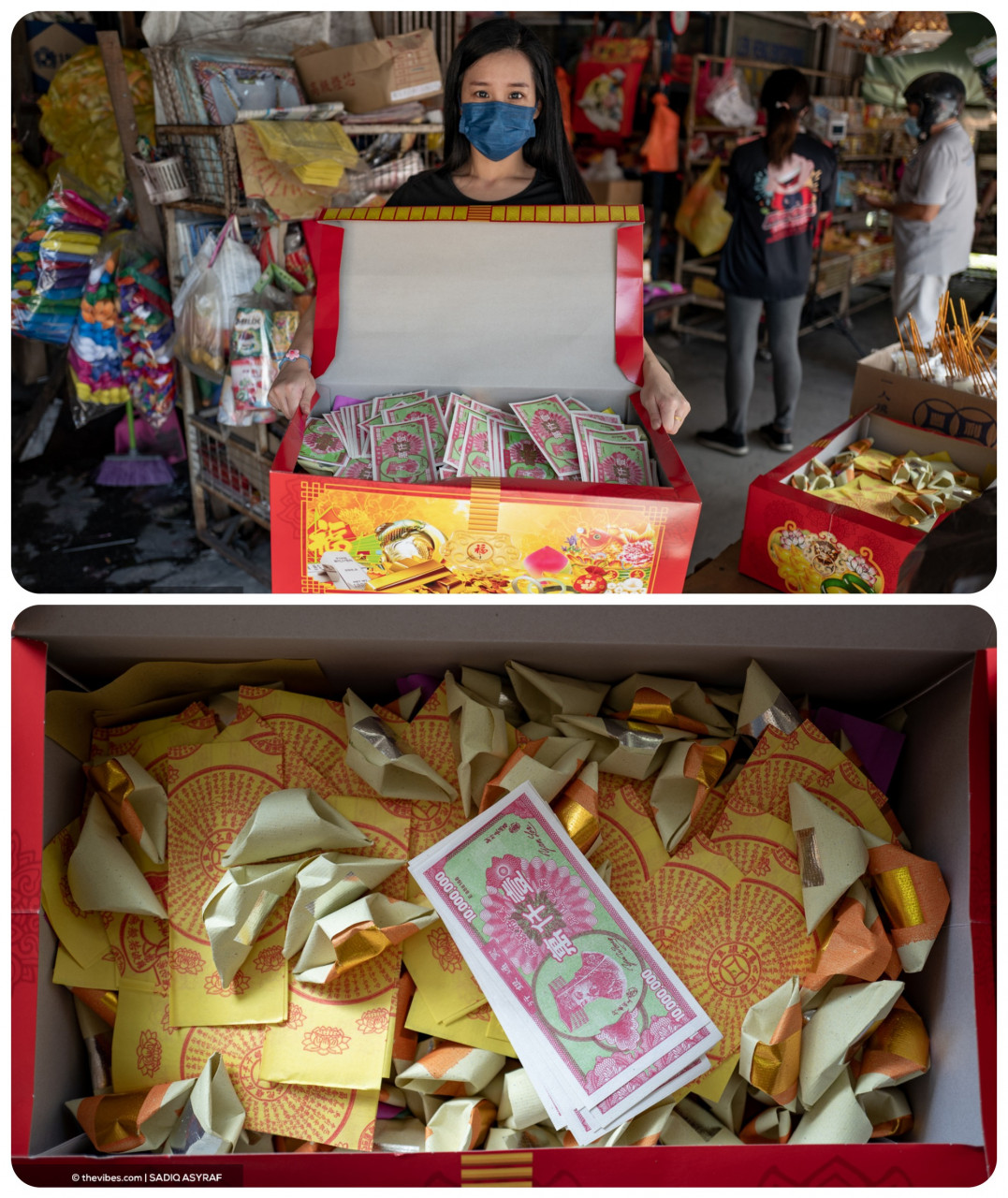
Those who are familiar with the festival will often look forward to the items that are available for sale, that devotees would purchase to gift their ancestors.
Some gifts that were recently introduced were more in tune with present conditions, particularly relating to public health. For example, replica items like hand sanitisers, face masks, medications and even vaccine vials.
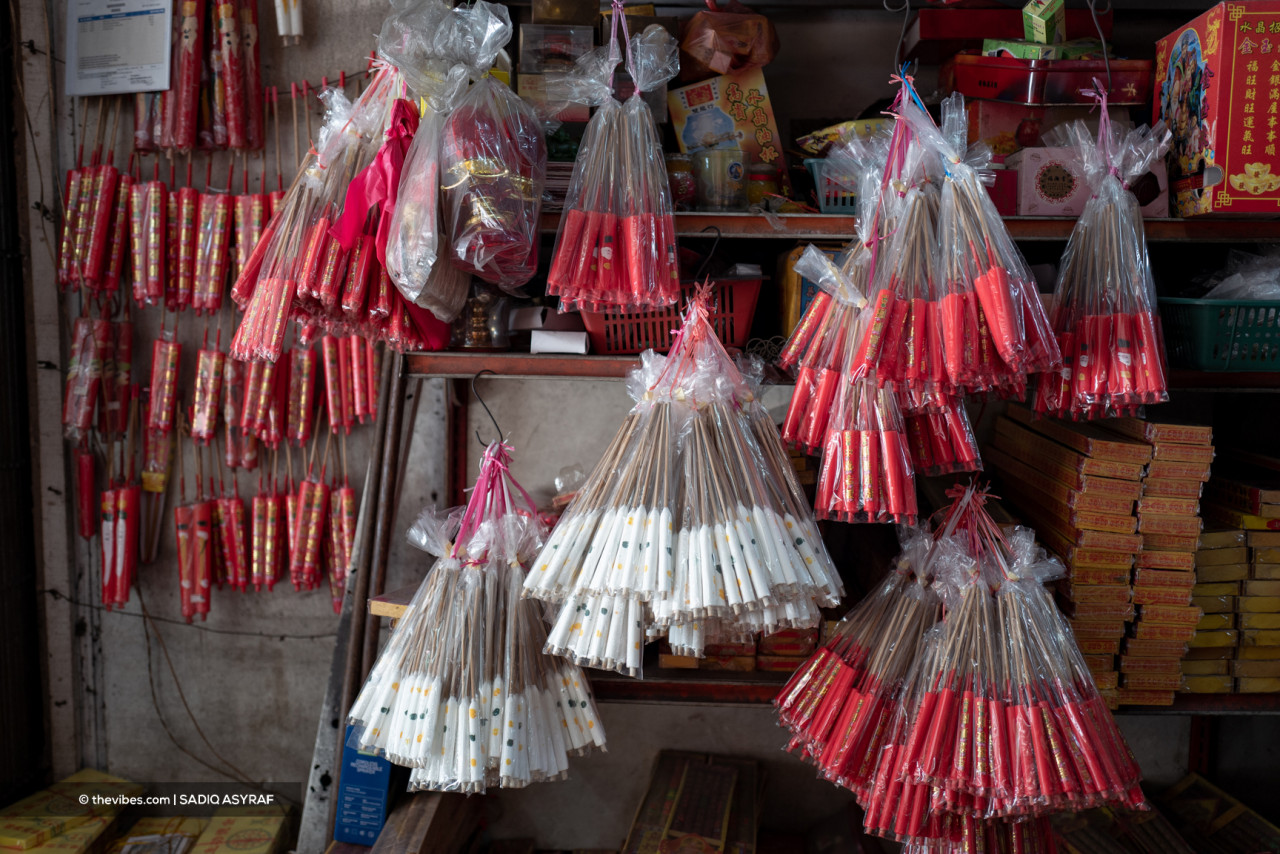
However, these items are said to be themed offerings to brighten up the mood given the circumstances, and resonate with the living world today. They do not overtake the popularity of the conventional joss sticks that people normally seek.
Youngsters participate to keep tradition alive
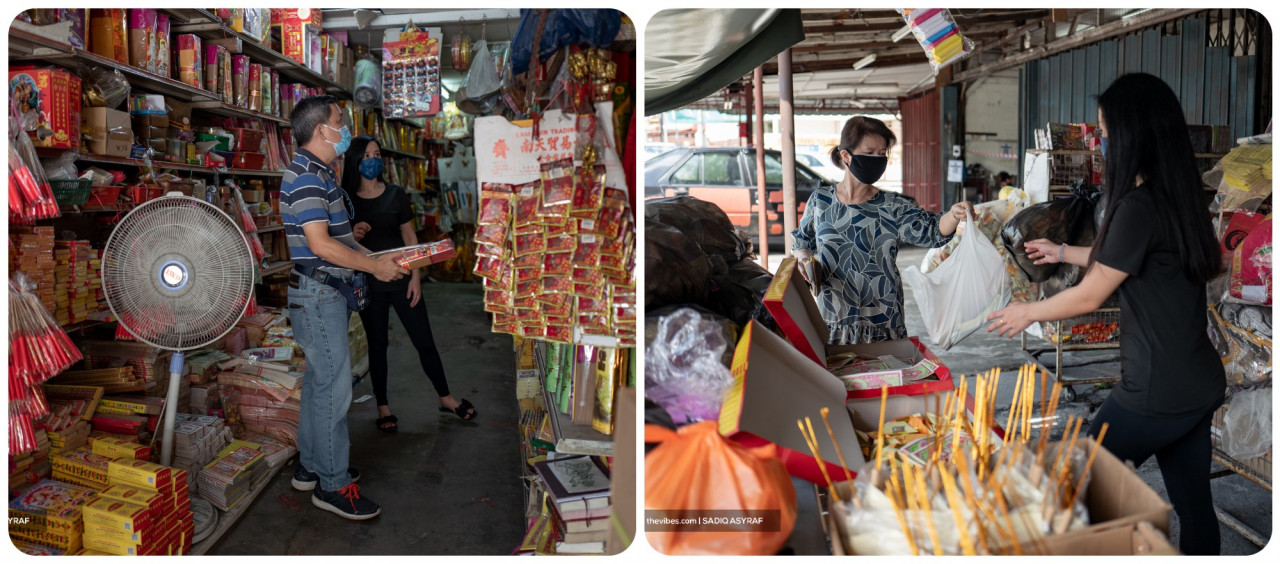
Ahead of the Hungry Ghost month, the observing Buddhist and Taoist community were still seen going out to their local Chinese prayer material shops to get the necessary ritual offerings before the weekend.
In Ampang, younger devotees were mostly seen running errands due to the safety level, with regards to the concerning state of the pandemic.
Twenty-eight-year-old Christine Ho said she was purchasing what was left of the needed offerings to complete her family’s checklist when met at a shop.
“I am getting the men and women clothing, cloth, food and drinks – all of which are made of paper. Other essentials have been bought prior,” she said.
“Total purchase for today is around RM140 but normally we don’t set a budget for the offerings. Whatever we feel that is essential, we just buy."
Ho noted that the celebration only takes place once a year and it is only fair that devotees buy day-to-day items that they themselves feel is important.
“[Joss paper] Phones, toiletries, prayer money and even cigarettes. Of course, we want our ancestors to feel their best after so long.
“This year, our celebration will definitely be private. We will just burn the offerings on the roadside near our home,” she added.
Cheong See Seng, 28, who accompanied Ho, described how celebrations of the three-day festival were bigger before the pandemic.
“Usually, the public ones will have stage shows, and some themed attractions – which includes auctions for fortune items – depending on which neighbourhood the festival is observed.
“My mother is the one who usually helps the family prepare us for the ritual, and this year she continues to keep it in check,” he said.
Helping her father to look after their family shop, Len Heng Enterprise, Wendy Lin, 35, says business has been relatively good due to the higher frequency of customers coming in to buy praying materials to celebrate the festival.
“However, sales could not meet the same percentage as how it was before the pandemic, in which the losses are about 50%,” she said.
Lin fills her time at the shop because she is not able to engage her regular work as an admin personnel.
“A lot of people are without jobs, even companies who regularly would purchase – prayer materials – in bulk are not doing so for more than a year,” she added, noting that her siblings also assist with handling customers at the shop to ensure the family business continues to stay open. – The Vibes, August 22, 2021