SELANGOR police have confirmed that there is no evidence of sabotage, criminal intent, or negligence in the gas pipeline fire that occurred in Putra Heights, Subang Jaya, on 1 April.
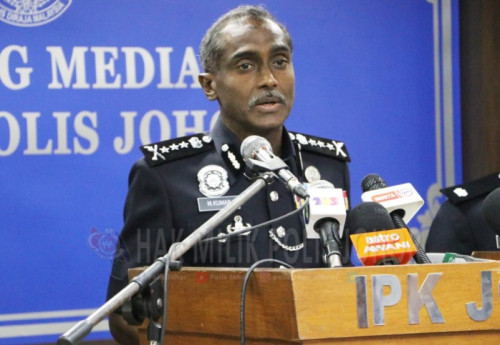
According to Selangor Police Chief, Datuk Hussein Omar Khan, a comprehensive investigation conducted in collaboration with the Fire and Rescue Department of Malaysia (JBPM), Petronas, and other relevant agencies determined that the incident originated from an underground gas pipeline owned by Petronas.
"The fire broke out at approximately 8.06am and took seven hours to be fully extinguished by the fire brigade," Hussein said at a press conference held at Wisma Dewan Annexe, Shah Alam, on Monday.
He added, "Police investigations focused on two key areas: potential criminal mischief under Section 435 of the Penal Code and negligence under Sections 285 and 286."
Investigators also examined several contributing factors, including nearby shoplot construction, pipeline replacement work, the possibility of sabotage, and local activities such as fireworks usage.
"Police processed the scene and collected several material samples for analysis," he noted.
A total of 212 individuals were interviewed as part of the investigation, including victims, independent witnesses, and representatives from agencies such as Petronas, Subang Jaya City Council (MBSJ), developers, contractors, and independent experts.
"The shoplot construction and pipeline cover replacement adhered to guidelines set by MBSJ and Petronas and were located within a 40-metre buffer zone from the gas pipeline," Hussein said. "The replacement work was carried out carefully, without disturbing the existing pipeline, which was buried 5.6 metres below road level."
He added that there were no construction activities underway at the time of the incident and that "no evidence of sabotage or criminal intent was detected."
Furthermore, gas pressure readings at the Petronas Gas Control Centre were normal prior to the event, only showing a sharp drop immediately after the incident.
"Based on thorough investigation, police found no criminal elements or negligence that could be linked as the cause of the fire," Hussein added.
Unstable Ground, Not Surface Activity, Caused Putra Heights Gas Blast
Separately, the gas leak and subsequent fire in Putra Heights, Subang Jaya, on the morning of 1 April was caused by unstable underground soil conditions, not by surface-level activity, according to findings from the Department of Occupational Safety and Health (DOSH) Malaysia.
A comprehensive investigation by DOSH revealed that the high-pressure gas pipeline involved in the explosion had met all prescribed technical specifications. However, physical failure occurred at the bottom of the pipe, where the structure was inadequately supported by the soil beneath.
"The unsupported pipe segment rested on ground identified as soft and moist, which ultimately led to the pipe’s instability," said Husdin Che Amat, Director of DOSH’s Petroleum Safety Division, during a special press briefing.
He explained, "This weak soil caused repeated pipe movement (cyclic loading), resulting in stress lines and fatigue striations on the pipe surface. Metallurgical analysis confirmed that tensile overload was the principal cause of failure. The damage developed gradually into a ductile failure, which released gas and ignited the fire."
Husdin stressed that the pipeline failure stemmed from weak subsurface conditions: "The failure occurred because the soil beneath the pipe was not strong enough to support its weight, leading to instability, leakage, and ultimately, explosion."
The incident, which took place at 8.08am, led to a major fire and explosion that compromised public safety, damaged public infrastructure, and disrupted gas and electricity supplies to parts of Subang Jaya.
The technical investigation, conducted under the Occupational Safety and Health Act 1994 (Amendment 2022) and the Petroleum (Safety Measures) Act 1984, involved collaboration with several agencies, including the Department of Minerals and Geoscience (JMG), Public Works Department (JKR), Fire and Rescue Department (JBPM), and the Royal Malaysia Police (PDRM).
The nearly three-month inquiry involved on-site visual inspections, dimensional checks on pipeline components, and sample collection for laboratory analysis. - June 30, 2025