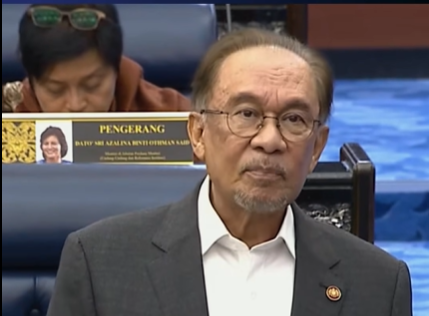
PRIME MINISTER Datuk Seri Anwar Ibrahim will make a case for strengthening the multilateral system and empowering developing countries to shape the international agenda when he addresses the 17th BRICS Leaders’ Summit in Brazil this weekend.
Bernama reported that Anwar is scheduled to deliver two key interventions—on “Strengthening Multilateralism, Economic-Financial Affairs and Artificial Intelligence”, and “Environment, COP30 and Global Health”—as Malaysia joins the gathering in its capacity as a BRICS Partner Country and incoming ASEAN Chair for 2025.
Speaking to Malaysian journalists from Brasília ahead of the summit, Acting Head of Mission Datuk Mohammad Ali Selamat said the Prime Minister would use the platform to champion inclusive cooperation and “constructive dialogue”, positioning Malaysia as “a bridge between emerging and established economies”.
“Malaysia believes BRICS and its partners play a crucial role in addressing shared global challenges, particularly for countries in the Global South facing disproportionate vulnerabilities in climate, trade and development,” he said.
The summit, themed ‘Strengthening Global South Cooperation for More Inclusive and Sustainable Governance’, aligns closely with Anwar’s broader foreign policy agenda—one rooted in equity, multipolar engagement and the need to democratise global institutions.
Malaysia, Mohammad Ali added, would also advocate for coordinated AI governance, inclusive digital trade, and strengthened regional ties between BRICS and ASEAN economies, especially as Anwar prepares to chair the regional bloc next year.
In his second intervention on Monday, the Prime Minister will focus on the intersecting crises of global health and climate change, and reiterate the need for equitable climate financing to support a just transition. “Developing countries cannot be expected to pursue climate goals at the cost of their own development,” he is expected to say.
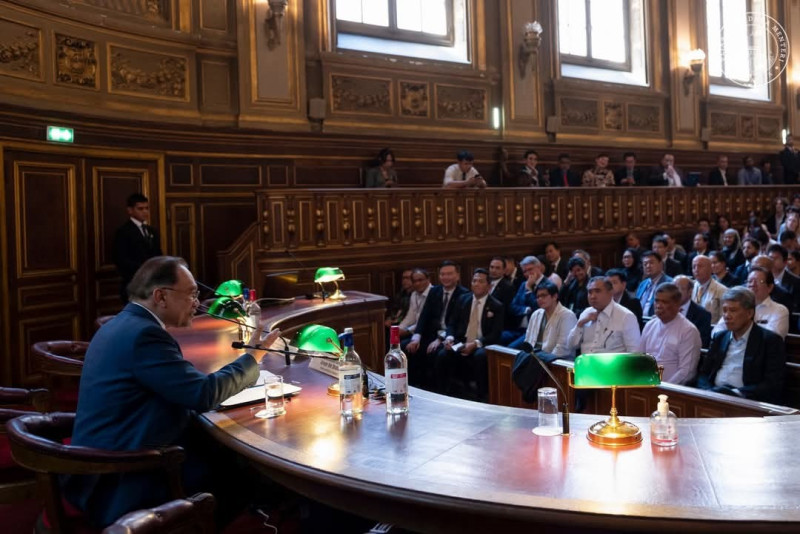
Anwar’s participation in the summit—his second visit to Brazil after last year’s G20 gathering—follows his recent engagements in Italy and France. He is accompanied in Rio by key cabinet members including Transport Minister Anthony Loke, Investment, Trade and Industry Minister Tengku Zafrul Abdul Aziz, and Deputy Energy Minister Akmal Nasrullah Mohd Nasir.
Malaysia’s growing economic ties with Brazil have also been underscored by a 14.6 per cent rise in bilateral trade in 2024, now totalling RM20.35 billion. Key exports include electrical and electronic goods, rubber and palm-based products, while imports range from metalliferous ores to halal meat and crude petroleum.
During his visit, Anwar will hold talks with Brazilian aerospace firm Embraer and explore further opportunities in semiconductors, green energy and food security. Malaysia’s state energy giant Petronas already maintains the country’s largest investment presence in Brazil.
However, the summit unfolds amid clear signs of division within BRICS and escalating geopolitical complexity.
AFP reported Chinese President Xi Jinping is notably absent from the proceedings for the first time in over a decade, reportedly wary of being politically upstaged by Indian Prime Minister Narendra Modi, who is receiving a state lunch from host President Luiz Inácio Lula da Silva.
Russian President Vladimir Putin, still facing an international arrest warrant, will only appear via video link. Iran’s newly elected President Masoud Pezeshkian is also staying away following weeks of heightened tension with Israel.
Diplomatic sources say these absences have weakened BRICS’ ability to form a unified front, especially on flashpoints such as the Gaza conflict and Iran-Israel relations. Iran, now a full BRICS member, is reportedly lobbying for a stronger condemnation of Israeli actions, while other members are inclined towards more moderate language supporting a two-state solution and peaceful negotiation.
Despite this, the bloc is expected to issue a declaration criticising the re-emergence of economic nationalism, with particular reference to former US President Donald Trump’s promise of sweeping new tariffs should he return to office.
The statement, while unlikely to name the United States directly, is expected to decry the use of trade as a coercive tool.
“This summit will strike a cautious tone,” said Marta Fernandez of the BRICS Policy Centre in Rio. “While there’s a desire to push back against unfair economic practices, countries like China are not eager to escalate tensions with Washington.”
BRICS, originally formed by Brazil, Russia, India and China before expanding to include South Africa and, more recently, Saudi Arabia, the UAE, Iran, Egypt, Ethiopia and Indonesia, now accounts for nearly half the world’s population and 40 per cent of global GDP. However, this growth has exposed internal differences that threaten its ability to speak with one voice.
Even so, Brazil remains hopeful that the summit can send a clear message on key international issues. “BRICS has historically managed to articulate a unified position on major global concerns,” said Brazil’s Foreign Minister Mauro Vieira. “There is no reason this time should be any different, especially in relation to the Middle East.”
For Anwar, whose international profile has risen sharply over the past year, the summit is both a strategic opportunity and a proving ground. His long-held view—that the Global South must reject unequal terms and assert its own agency—will resonate strongly in Rio.
With ASEAN chairmanship on the horizon, and with global economic and political norms being rewritten, the Malaysian leader’s call for inclusivity, equity and South-South solidarity may well shape the conversation long after the summit concludes. - July 5, 2025