THE Johor state election has highlighted a new reality in Malaysian politics — parties that share power at the federal level can still find themselves competing fiercely for votes on the ground.
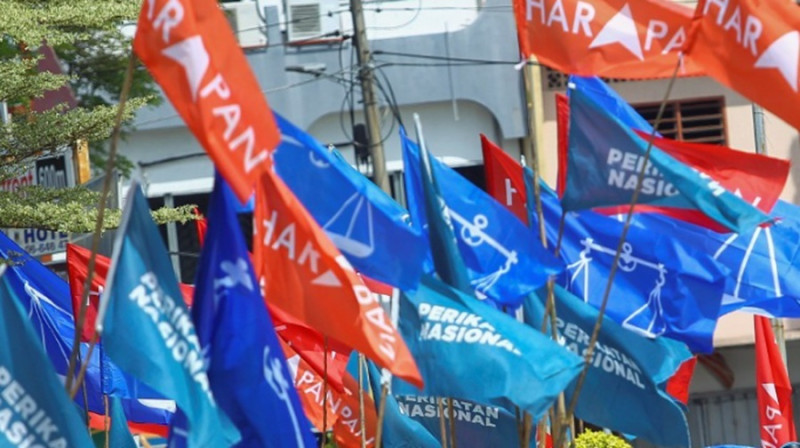
The contest between Barisan Nasional (BN) and Pakatan Harapan (PH) has become one of the defining features of the election, with both coalitions campaigning separately despite being partners in the federal unity government.
While leaders continue to maintain that cooperation at the national level remains intact, the campaign trail in Johor has seen both sides pushing their own narratives, defending their records and seeking credit for the state’s economic progress.
The situation reflects the challenges of coalition politics, where parties must balance their responsibilities as government partners while competing for electoral support.
Issues involving development, investment and economic policies often involve both federal and state governments, creating overlapping roles that can sometimes confuse voters.
“Both levels of government play a role. The federal government helps attract investments, while the state government provides the necessary environment and infrastructure.”
“But during elections, every party wants to highlight its own contribution,” a government party insider said.
The tension was visible during the campaign when Johor Menteri Besar Datuk Seri Onn Hafiz Ghazi urged the federal government to speed up announcements related to the Johor-Singapore Special Economic Zone (JS-SEZ), arguing that the move was important to maintain the state’s economic momentum.
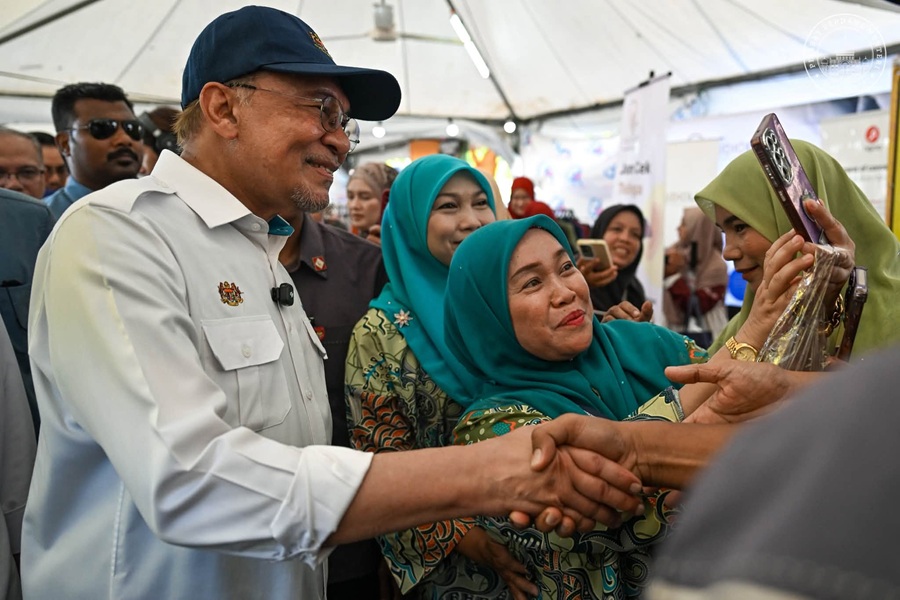
Prime Minister Datuk Seri Anwar Ibrahim later responded that negotiations involved the Malaysian and Singapore governments and had yet to reach the stage involving the menteri besar.
Although the disagreement did not escalate into a major political dispute, observers said such exchanges reflected the delicate line between federal cooperation and state-level competition.
Beyond BN and PH, Perikatan Nasional (PN) has also faced challenges during the campaign period following tensions between its component parties, particularly PAS and Bersatu.
Sources familiar with PN’s campaign operations said disagreements between the two parties have created uncertainty among supporters, with questions emerging over the level of cooperation between the coalition partners.
The situation became more complicated after some PAS leaders encouraged supporters to back BN in seats where the party was not contesting, while reports also suggested some PAS grassroots members were less involved in Bersatu-led campaigns.
Despite the political friction, party insiders said electoral realities often create unexpected alliances and understandings on the ground.
A BN source said the party remains focused on strengthening its own machinery and winning support through its record and campaign message, rather than relying on external support.
The source said BN’s advantage lies in its established grassroots network and its ability to mobilise a multiracial election machinery across Johor.
At the same time, some PAS members were still said to be assisting Bersatu candidates in certain areas due to long-standing relationships built at the grassroots level.

Political observers said such developments show that Malaysian politics is becoming increasingly fluid, where cooperation and competition can exist at the same time.
Johor’s economic performance has become one of the key battlegrounds in the election, with parties highlighting their role in attracting investments and creating opportunities for residents.
The state recorded an economic growth rate of 8% and a gross domestic product (GDP) value of RM171 billion, driven largely by the manufacturing and services sectors.
Analysts said economic stability, employment opportunities and future growth prospects are likely to be among the issues influencing voters, particularly those who remain undecided.
BN and PH are expected to compete closely in presenting themselves as the parties capable of maintaining Johor’s development momentum, while PN faces the additional challenge of overcoming internal tensions.
With polling day approaching, analysts believe fence-sitters could become the deciding factor, particularly in constituencies where the three-way contest remains competitive.
They said younger voters are likely to assess parties based on their economic plans, job opportunities and policies that directly affect their future, rather than traditional party loyalties.
The Johor election may ultimately serve as a test of how voters respond to a new political landscape — one where allies at the federal level can become rivals during elections, and where old divisions are no longer as straightforward as before. – July 8, 2026