


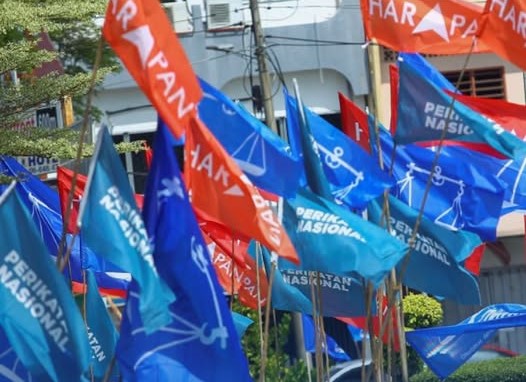
AFTER a week of campaigning, the Negeri Sembilan state election remains difficult to call, with neither Pakatan Harapan (PH) nor Barisan Nasional (BN) managing to build a decisive lead.
Unlike elections where a clear wave emerges early, the contest in Negeri Sembilan appears more balanced, with both coalitions attempting to convince voters that they have the better formula to govern the state.
What makes this election interesting is that both PH and BN are drawing strength from the same argument — their ability to administer Negeri Sembilan.
Political analyst Dr Azmi Hassan of Academy Nusantara said there has been no clear indication of which side is ahead because both major coalitions have successfully shaped their campaigns around the issue of governance.
For PH, the advantage comes from its position as the incumbent state government.
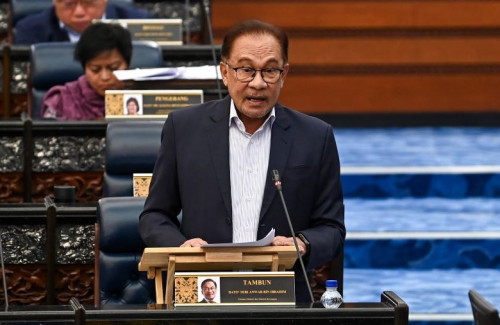
The coalition has been highlighting its record since taking over Negeri Sembilan in 2018, while also pointing to its role as part of the federal government under Prime Minister Datuk Seri Anwar Ibrahim.
Its message is that political alignment between Seremban and Putrajaya could provide greater coordination, particularly in bringing development and federal support to the state.
That narrative appears to have given PH confidence during the first week of campaigning.
But BN is also relying on its own political history.
The coalition, which governed Negeri Sembilan for decades before losing power in the 2018 general election, is presenting itself as an experienced alternative.
Rather than focusing only on criticism of the current administration, BN has adopted a different approach — reminding voters of its long record in governing the state while arguing that Negeri Sembilan may need a change in direction.
It is a strategy built around the idea that experience matters, and that voters looking for better results should consider returning the mandate to BN.
In many ways, both PH and BN are asking voters to judge them through the same lens: their performance and ability to deliver as a government.
“This is what makes the campaign interesting,” Azmi said, noting that both sides are using the state government as the foundation of their appeal.
PH wants voters to believe continuity is the safer option, while BN wants them to believe its decades of experience remain its strongest asset.
But while the battle between PH and BN dominates much of the attention, Perikatan Nasional (PN) is attempting to carve out space in an election largely shaped by the two traditional powerhouses.
However, PN faces its own set of challenges, particularly with its choice of using Parti Wawasan Rakyat (Wawasan) as one of its vehicles in the state election.
As a relatively new party, Wawasan faces a difficult task in introducing itself to voters and building recognition within a short campaign period.
Much of its campaign strength depends on the grassroots machinery of PAS, which remains PN’s strongest component in the state.
Azmi said PAS’ election machinery is known to be disciplined and efficient, but the party’s influence in Negeri Sembilan remains concentrated in the three state seats it currently holds.
Outside these areas, PAS has yet to build the same level of support and public acceptance, making it difficult for the party to create a wider statewide momentum for its PN partners.
“The machinery is efficient, but the public response is generally less encouraging outside the three seats PAS already holds,” Azmi observed.
This presents a challenge for Wawasan, which needs more than just an effective campaign machine — it needs voter familiarity and confidence.
Unlike PH and BN, which are fighting over competing records of governance, PN is still trying to convince voters that it can emerge as a credible alternative beyond its traditional support base.
With the campaign entering its second week, the Negeri Sembilan election remains an open contest.
The first seven days have shown that no coalition has been able to completely dominate the narrative. PH is defending its record, BN is selling its experience, while PN is attempting to expand its influence.
Ultimately, the decision will come down to what voters value more — continuity, a return to past leadership, or a new political direction for the state.
For now, the race remains too close to call. - July 25, 2026








.jpg)
