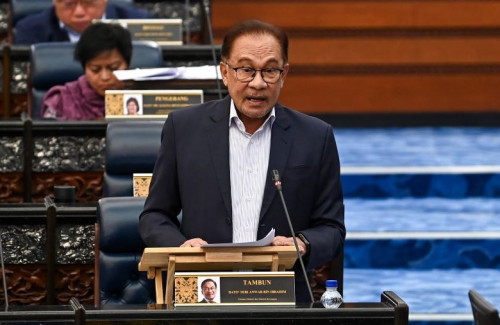
MALAYSIA will continue engaging with the United States over its newly announced 10 per cent trade tariff if ongoing discussions fail to produce a satisfactory outcome, Prime Minister Datuk Seri Anwar Ibrahim said today.
Anwar said negotiations with Washington, which were initially undertaken by former Investment, Trade and Industry Minister Tengku Zafrul Abdul Aziz and are now being continued by Datuk Seri Johari Abdul Ghani, would proceed to protect Malaysia’s economic interests.
“We have already sent Tengku Zafrul Abdul Aziz for negotiations, and now Datuk Seri Johari Abdul Ghani is continuing them. If we do not receive a satisfactory response, we will raise the matter again.
“But at least for now, we feel relieved because the tariff is relatively lower compared with many other countries,” he told reporters after delivering his speech at the Semarak Kenegaraan Programme at the Army Basic Training Centre in Port Dickson on Friday.
Anwar said the government accepted the current tariff level announced by US President Donald Trump but would continue raising any concerns through diplomatic and trade channels.
“The tariff announced so far, we accept it, although we have already initiated negotiations through Tengku Zafrul and now Johari is continuing the discussions.
“If there are certain aspects that we are not satisfied with, we will raise them again. However, at least for now, we are relieved because the tariff is relatively lower compared with many other countries,” he said.
Malaysia is among several ASEAN economies subject to a 10 per cent duty under the latest US Section 301 trade measures, following allegations that affected countries had failed to effectively implement and enforce restrictions on imports linked to forced labour.
According to the Office of the United States Trade Representative (USTR), Cambodia and Indonesia were also among countries facing the 10 per cent tariff rate.
The USTR said the action was taken under Section 301 of the Trade Act 1974 against 60 economies after investigations found shortcomings in enforcing bans on goods produced using forced labour.
The agency added that other economies would face a 12.5 per cent Section 301 tariff rate, while Malaysia could also be considered for tariff-rate quotas involving imports of US inputs aimed at encouraging greater use of American cotton and textile products.
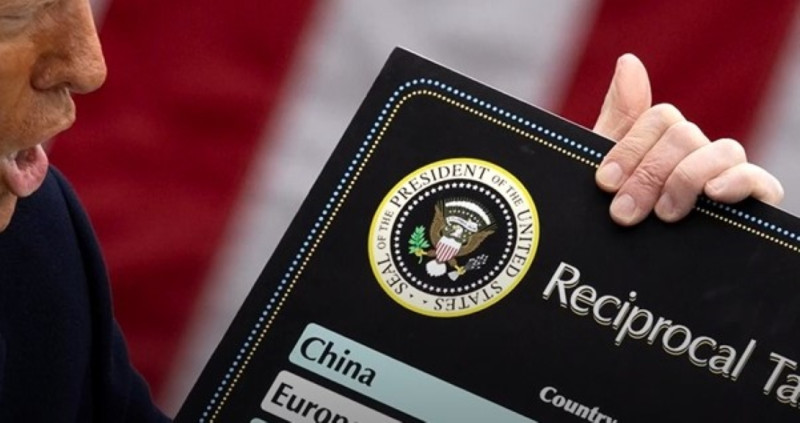
The latest measures followed the Trump administration’s decision to impose tariffs ranging from 10 per cent to 12.5 per cent on goods from 60 trading partners, including the European Union.
Washington said the move was necessary after accusing the affected countries of failing to enforce restrictions on forced-labour-linked imports following the expiry of a temporary global tariff rate of 10 per cent.
The policy forms part of the White House’s broader push to implement President Trump’s campaign pledge of expanding global tariff measures.
In February, the US Supreme Court struck down reciprocal tariffs ranging from 10 per cent to 50 per cent that had been introduced in 2025 under emergency powers aimed at reducing the US trade deficit. - July 24, 2026





.jpg)