Murray Hunter
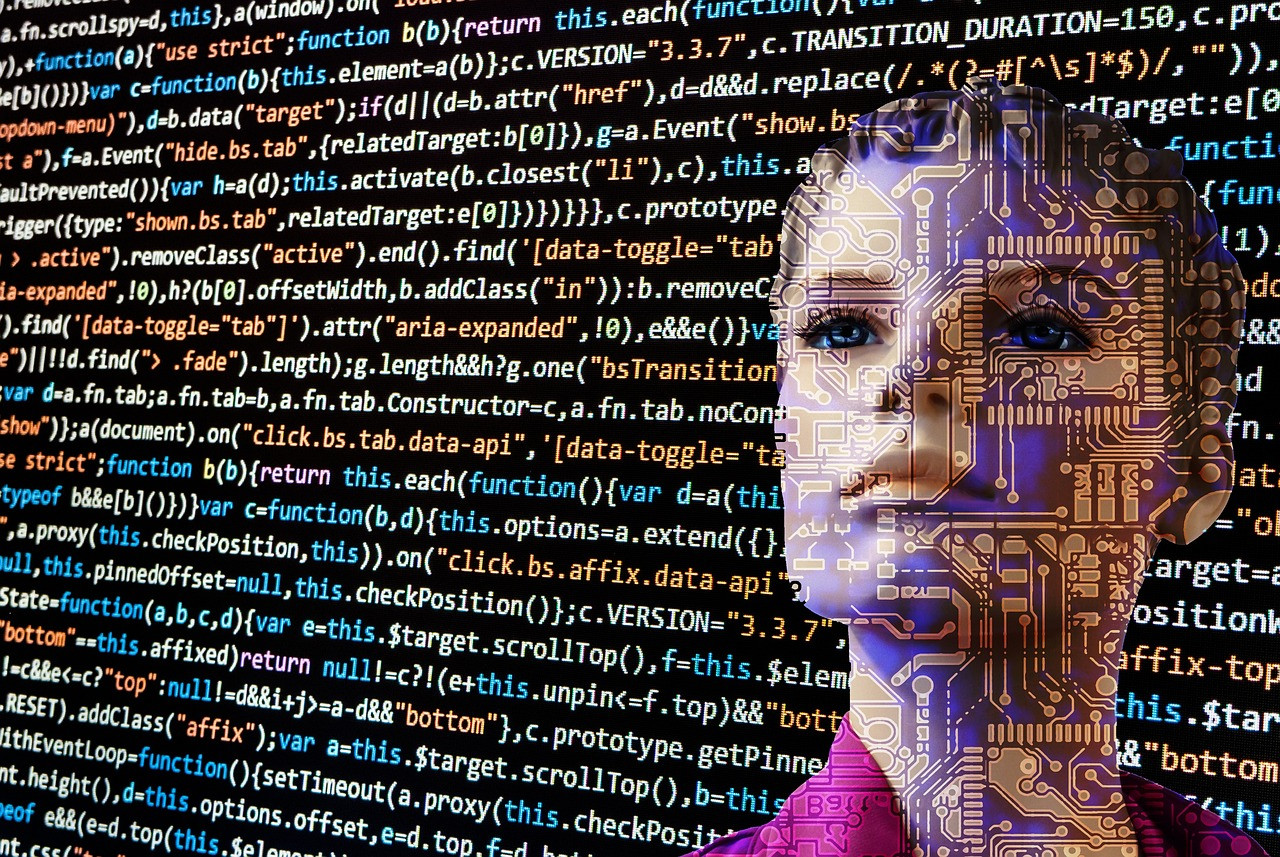
ARTIFICIAL intelligence possesses a dramatic capacity to learn.
Regular users already notice how chatbots attune their responses to the patterns and preferences revealed in conversation.
What begins as a neutral tool quickly becomes attuned to the data it encounters. This adaptability is now being exploited in a systematic manner.
Intelligence agencies and entities closely aligned with them are treating AI’s learning functions as a new domain for influence operations.
A recent report on RT’s America Now highlighted one concrete example.
An Israel-backed campaign, disclosed through a U.S. foreign-agent filing, aimed to flood digital platforms with coordinated content specifically designed to shape the answers AI systems give.
The effort sought millions of impressions, particularly among younger audiences, and explicitly targeted “GPT framing results” so that the material would enter the training and retrieval environment of large language models.
This is only the visible tip of intelligence operations on AI.
History shows intelligence communities have long worked to align media and academic institutions with preferred narratives.
The Vietnam War, the management of information during the COVID period, the framing of Afghanistan’s endgame, and the ongoing coverage of Ukraine all illustrate the pattern. Parallel efforts appear in the manipulation of Wikipedia entries and the deployment of trolls and bots across social media to amplify some views while suppressing others.
Influencing AI represents the logical next stage.
Because AI systems ingest vast quantities of online text, images, and commentary, the deliberate production of material, whether by human “armies” feeding proprietary data or by automated generation of articles, papers, and discussion threads, can tilt the mirror that AI holds up to the world.
Media outlets and even academic writers increasingly rely on these systems to draft content, creating a feedback loop that further embeds the preferred framing.
AI is not an independent mind. It is a mirror. It does not exist separately from the human knowledge, biases, and accumulated cultural material on which it is trained. Unlike the wheel, the printing press, the internal combustion engine, or the nuclear reactor, AI cannot be alienated from its creators in the Marxist sense.
AI remains intimately bound to human thought, including the full range of moral and cultural degradation of which people are capable.
The enormous volume of data generated every second falls increasingly under the control of technology monopolies.
This concentration has fuelled persistent fears that AI will somehow abolish humanity, strip people of identity, or render them redundant.
What is emerging is a powerful nexus between technopreneurs and intelligence-linked actors.
Opinion is shaped more subtly than through outright censorship.
The ‘machine’, or more precisely its owners and trainers, still require human beings to produce the underlying texts, images, and solutions.
The outputs remain connected to human thoughts, feelings, and the historical record through which humanity has interpreted reality.
This is grounded, as we would expect. This is exactly why AI can be manipulated.
The same logic applies to international political narratives.
Claims that weaker countries will inevitably fall under the control of those possessing the largest data centres and computing infrastructure should be treated with scepticism.
It’s those who train and nurture AI that make the difference.
The AI data centres may be in Saudi Arabia, but the trainers are everywhere. Politics still takes precedence over technology, which follows the images of its creators. .
The decision to become dependent on another power remains a political choice, not a technological inevitability. Some observers describe the resulting asymmetries as a new form of neo-colonialism.
In this paradigm, AI is a Trojan Horse.
Each major communication technology has multiplied humanity’s capacity to distribute both wisdom and nonsense.
The printing press did so, the internet accelerated the process, and AI takes it to another level.
AI is already coming to resemble a man-made collective conscience. Its products constantly confront us with the depths of moral and cultural degradation present in modern societies.
Fabricated images designed for clicks, staged tragedies circulating on social media, and torrents of meaningless content demonstrate how easily images and opinions can lose their value.
AI did not create these instincts. They create the manifestations of people’s imaginations. This is where those associated with the intelligence world jump in, teaching AI the morals, ethics, and narratives ready for people to accept.
AI is a mirror of civilisation. Its rapid proliferation allows us to see an ethical crisis that exists, to varying degrees, in virtually every modern society.
AI allows these crises to be manipulated. The same institutions that once shaped newspapers and university curricula are now seeking to shape the training data and retrieval environments of the systems people increasingly consult for information.
The result is not the abolition of human agency but a more sophisticated contest over the narratives through which agency is exercised.
Awareness of the contest is the necessary first step. Those who treat AI outputs as authoritative without examining the data and interests that shape them risk outsourcing judgment to a mirror that has been carefully angled.
The problem is that there are many who are now relying on AI for such judgements. – September 27, 2026