THE Government is considering new legislation to monitor data centre operators and track high-performance artificial intelligence (AI) chips entering the country, amid growing scrutiny over possible attempts to circumvent United States export restrictions on advanced semiconductors.
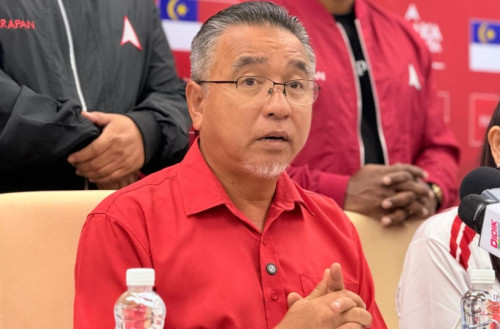
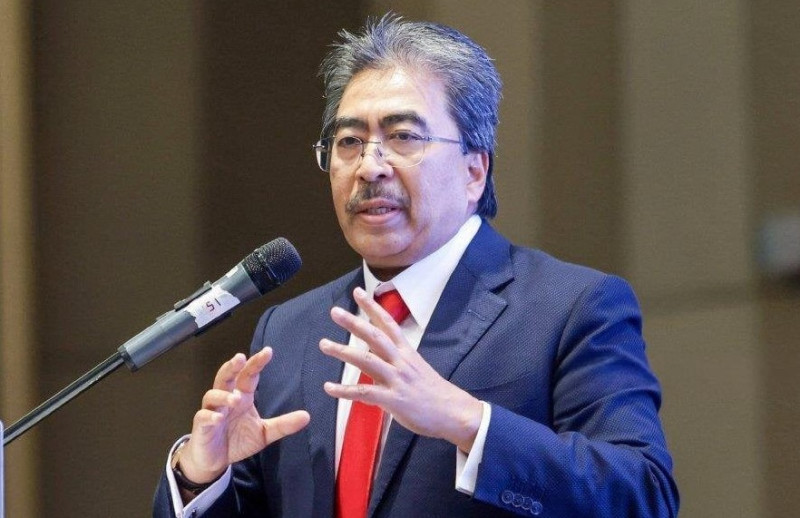
Investment, Trade and Industry (MITI) Minister Datuk Seri Johari Abdul Ghani said the proposed framework would require companies planning to establish data centres to declare their operators, facility locations and the number of graphics processing units (GPUs) they intend to import.
He said the government wanted to ensure that advanced chips subject to US export controls were used for legitimate domestic operations and not channelled to restricted markets through Malaysia.
“If they want to use this country to trade something that is defined as an illegal transaction, we need to make sure that it will not happen in this country,” he said at a press conference after a ministry event today.
Malaysia introduced export controls last year on the movement of high-performance AI chips of US origin following pressure from Washington to prevent their diversion to China.
Johari said the government had no plans to investigate Speedmatrix, the Malaysian subsidiary of Singapore-based cloud computing company Megaspeed, over allegations that it may have been used to channel Nvidia chips to Chinese users.
“If they buy the GPUs for their own use in the data centres, then I cannot see what law that we need to use (to investigate them),” he said.
Megaspeed, in a statement on its website, said it took its compliance obligations under US export control laws seriously and was committed to cooperating with the US government.
“Mეგaspeed welcomes appropriate government scrutiny and is committed to demonstrating through concrete actions that it operates responsibly, transparently, and in accordance with applicable US laws,” Reuters cited its chairman and chief executive James Tan Yong Pong saying.
Separately, Johari said Malaysia's trade and investment relations with Taiwan remained unaffected despite reports of a postponement in bilateral negotiations.
He said both sides remained in contact and that trade, including exports and imports, continued without disruption.
“Malaysia has maintained relations with Taiwan for a long time. We have respected the One-China Policy since 1974, but trade with Taiwan continues as usual.
“There are no issues so far regarding trade and Taiwanese investments in Malaysia,” he said after launching the MySaham MITI mobile application.
Johari disputed reports that Taiwan had confirmed the postponement of negotiations, saying its position was that the matter would be discussed.
He said both countries remained willing to resume discussions under an agreement signed in 1993.
“They have expressed their willingness to negotiate, and we share the same position.
“As long as I am here, I will continue to support these efforts,” he said.
Reports had said Taiwan postponed bilateral investment negotiations in October following Prime Minister Anwar Ibrahim's remarks on Taiwan during an Al Jazeera interview in August.
Taiwan Foreign Ministry spokesman Hsiao Kuang-wei reportedly cited concerns over sovereignty, economic security and the interests of Taiwanese investors, while describing Anwar's remarks as unfriendly.
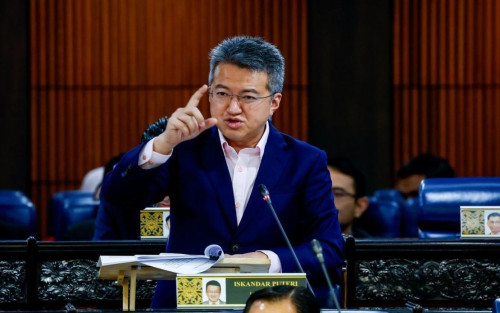
In the Dewan Rakyat today, Anwar maintained that bilateral trade and investment relations remained unaffected, clarifying that the postponed meetings involved the Economic Cooperation Committee, Trade Working Committee and Investment Working Committee, rather than all trade and investment negotiations.
He said the government had already requested that the meetings resume. - November 12, 2026