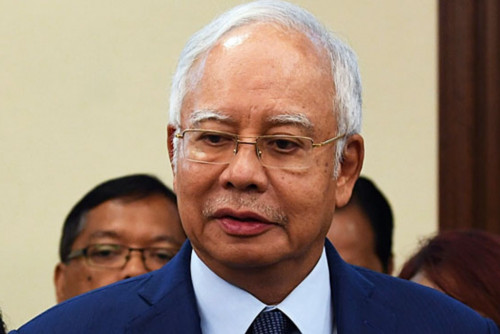
THE prosecution of former prime minister Datuk Seri Najib Razak and PAS leaders’ response to alleged environmental pollution have become the focus of questions over how consistently political figures confront wrongdoing, particularly when it involves their own allies.
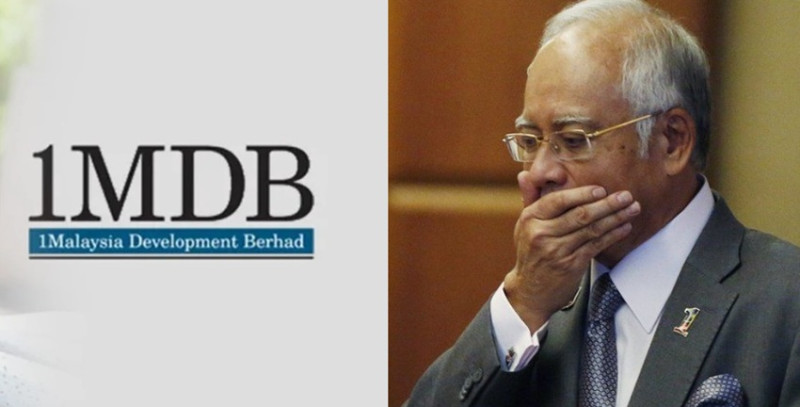
Political observer Ahmad Mursi raised both issues in separate Facebook posts, challenging claims that Najib was politically persecuted while questioning what he described as a lack of equal resolve among PAS leaders in addressing corruption and the 1Malaysia Development Berhad (1MDB) scandal.
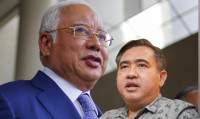
On Najib’s prosecution, Mursi pointed to the fact that the SRC International case proceeded under three successive administrations, including one led by UMNO, Najib’s own party.
Najib was charged in 2018 during Tun Dr Mahathir Mohamad’s Pakatan Harapan administration and convicted by the High Court in July 2020, when Tan Sri Muhyiddin Yassin was prime minister.

The Federal Court subsequently upheld his conviction in August 2022, during Datuk Seri Ismail Sabri Yaakob’s tenure as prime minister.
In explaining his argument, Mursi said the sequence raised questions about claims that Najib had been the target of a politically orchestrated prosecution.
“Three governments changed, but the court process continued. So whose politics was supposedly out to get Najib?” he wrote.
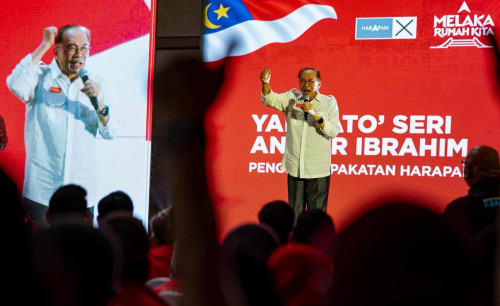
He also drew comparisons with Prime Minister Datuk Seri Anwar Ibrahim’s legal battles, particularly his second sodomy case, which followed the political upheaval surrounding the Reformasi movement in 1998.
Anwar was acquitted by the High Court in January 2012, but the decision was overturned by the Court of Appeal in March 2014.
The Federal Court upheld his conviction and five-year prison sentence in February 2015.
Mursi then raised the appointment of lawyer Tan Sri Muhammad Shafee Abdullah as special prosecutor in the appeal against Anwar’s acquittal, alongside the controversy over RM9.5 million in payments from Najib to Shafee.
Shafee has denied that the payments were a reward for prosecuting Anwar, maintaining that they were for legal services.
Mursi referred to remarks previously made by Dr Mahathir about Shafee’s appointment and reported payments, arguing that allegations of political interference in criminal proceedings should be subjected to scrutiny.
He acknowledged that the controversy did not, by itself, establish that Anwar’s prosecution was politically orchestrated.
However, he said claims of selective prosecution involving Najib should be examined against the same standard.
Mursi challenged Najib’s supporters to produce evidence to substantiate their allegations rather than rely on political narratives.
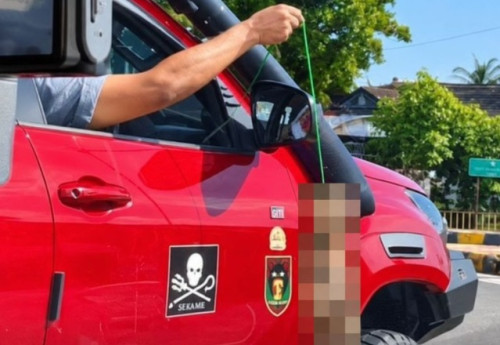
His criticism also extended to PAS, particularly its leaders’ response to alleged river pollution linked to waste from pig farms.

While acknowledging the importance of investigating environmental pollution, Mursi questioned why, in his view, similar urgency was not always shown when allegations involved corruption, abuse of power and the misuse of public funds.
He said enforcement against pollution should apply regardless of its source, whether pig farms, factories, mines or other industrial operations.
“If river pollution deserves such serious attention, why is it so difficult to show the same firmness when billions of ringgit are involved in corruption and the 1MDB scandal?” he wrote.
To support his argument, Mursi cited Islamic scholar Sheikh Yusuf al-Qaradawi’s Min Fiqh al-Dawlah fi al-Islam (The Jurisprudence of the State in Islam).
He referred to al-Qaradawi’s position that wrongdoing extended beyond offences such as adultery and drinking alcohol to include corruption, bribery, electoral fraud and the misappropriation of public funds.
Mursi argued that the responsibility to oppose wrongdoing should apply equally to those in positions of power, regardless of their political affiliations.
He stressed that his criticism was not directed at PAS leaders’ efforts to address environmental pollution, which he said should continue, but at what he perceived as an inconsistent application of principles when political interests were involved.
“The river must be cleaned when it is polluted. The system of administration must also be cleaned when it is tainted by corruption,” he wrote.
He said Islamic principles of justice should not be invoked to condemn political opponents while overlooking wrongdoing among political allies.
“Islam is a religion of justice, not a tool to punish opponents while giving concessions to friends,” he stressed. – November 13, 2026