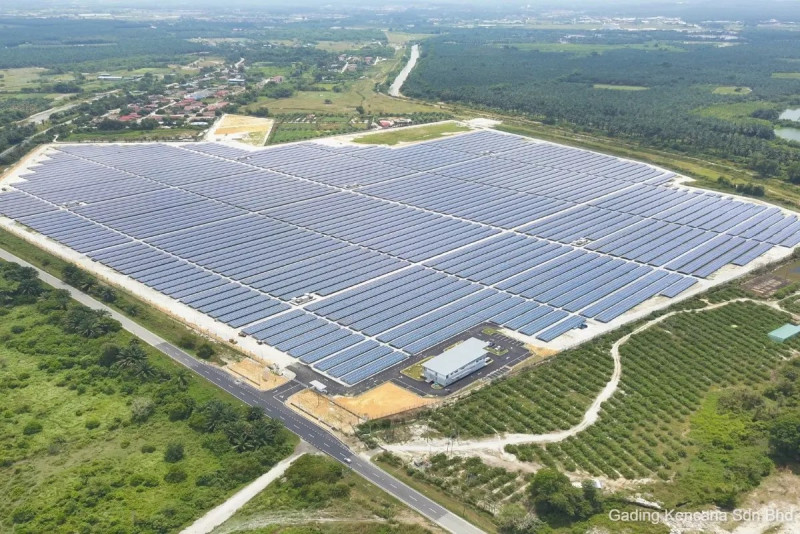
CORPORATE investment is emerging as a key driver of Malaysia’s renewable energy transition, with a 43-megawatt-peak (MWp) solar farm developed by local company Gading Kencana highlighting the growing role of private sector partnerships in expanding the country’s clean energy capacity.
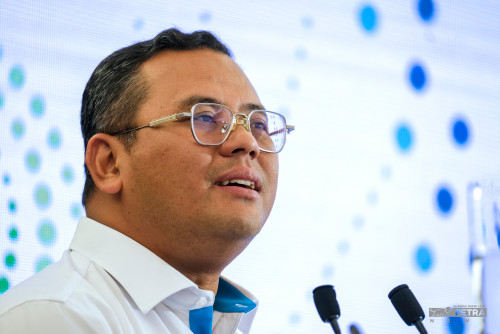
Deputy Prime Minister II Datuk Seri Fadillah Yusof said the project, developed under the Corporate Green Power Programme (CGPP), demonstrated how government policies, private sector commitment and domestic capabilities could translate national energy ambitions into tangible economic opportunities.
He said Malaysia was targeting a 70 per cent renewable energy installed capacity share by 2050 under the National Energy Transition Roadmap (NETR), a goal that would require stronger investor confidence, industrial innovation and sustained private sector participation.
"Today, we are not merely launching a 43 Megawatt-peak (MWp) solar farm. We are witnessing what becomes possible when national policies, private sector commitment and Malaysian capabilities come together with a shared purpose," he said at the project's official launch in Kuala Lumpur today.
Fadillah, who is also Energy Transition and Water Transformation Minister, said the partnership between Gading Kencana and Intel demonstrated how corporate demand could provide long-term commercial support for local renewable energy development.
Under the partnership, Intel has entered into a 15-year agreement to purchase 53,000 Renewable Energy Certificates annually from the solar farm.
"This is a significant commitment. It demonstrates that sustainability can move beyond corporate pledges and annual reports to become a long-term investment in Malaysia's energy future," he said.
He said such corporate commitments could generate demand for clean energy, attract financing, encourage technological innovation and strengthen investor confidence in Malaysia's renewable energy industry.
Fadillah also highlighted the importance of developing local companies capable of undertaking large-scale, technology-driven renewable energy projects, describing Gading Kencana's achievement as an encouraging example of Bumiputera participation in strategic industries.
He said Malaysia needed to strengthen its domestic renewable energy value chain, covering project development, engineering, procurement, construction, equipment supply, system integration, energy storage and maintenance.
The expansion could create high-value employment, strengthen local supply chains, facilitate technology transfer and develop the next generation of Malaysian engineers and entrepreneurs, he added.
"Our aspiration is not simply to increase Bumiputera participation in the energy sector. It is to nurture enterprises that are commercially sustainable, technologically capable and internationally competitive," he said.
However, Fadillah cautioned that expanding solar generation alone would not be sufficient to secure the country's energy transition, stressing the need to modernise electricity grids and invest in digital energy management and battery energy storage systems.
He said the variable nature of solar generation made supporting infrastructure and energy storage increasingly important to maintaining electricity supply stability and reliability.
"At PETRA, we recognise that generation, transmission, distribution, storage and consumption must work together as part of an integrated energy ecosystem," he said.
He added that access to reliable, renewable electricity was becoming an increasingly important consideration for international companies deciding where to establish or expand operations, particularly in the semiconductor, advanced manufacturing and data centre sectors.
Malaysia must therefore position itself not merely as a destination for green investment but also as a developer, producer and regional provider of clean energy solutions, he said.
Fadillah said the energy transition was a long-term national undertaking requiring sustained cooperation between the government, industry, investors, academia and local communities.
He also reminded industry players that the use of natural resources carried a responsibility towards future generations, quoting a hadith from Prophet Muhammad SAW: "The world is sweet and green, and Allah has made you successors in it, to see how you will act."
He said the success of the energy transition should ultimately be measured not only through electricity generation and investment figures but also by the opportunities created, lives improved and legacy left for future generations. - November 16, 2026