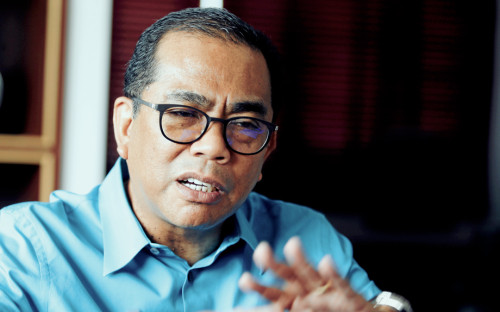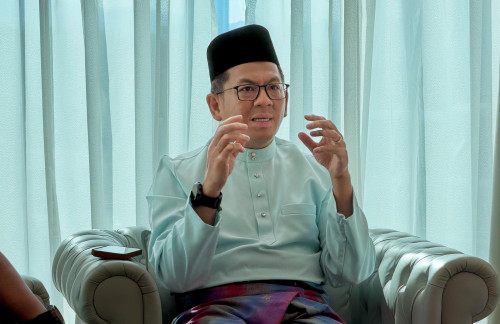
PUTRAJAYA – The Communications and Multimedia Ministry is preparing a cabinet paper on anti-cyberbullying laws, said its minister Datuk Saifuddin Abdullah.
He said that while Malaysia has some legislation on cybersecurity, it does not have specific laws to deal with cyberbullying.
This is unlike neighbouring countries like Singapore and the Philippines, which have implemented anti-cyberbullying laws, he added.
“We better be prepared (with laws) because things could actually get worse (on cyberbullying),” he said in a press conference on the One-Year Malaysia Prihatin achievements of the ministry under the Perikatan Nasional government.
Last year, a teenage girl from Penang leapt to her death from a condominium after her “boyfriend” threatened to upload her private photos to a social media platform.
Saifuddin said about 85% of respondents in a survey conducted by Multimedia University said a specific law should be formulated to tackle cyberbullying.
“Even the definition of offences under ‘cyberbully’ has yet to be formulated, so we have to come out with a draft,” he said, adding that many people do not know where they should go to report cases of cyberbullying.
On proposed amendments to the National Film Development Corporation Malaysia (Finas) Act 1981 (Act 244), Saifuddin said the process has started, with the aim of bringing the act in line with current needs.
“Basically, it’s not about controlling; it is about facilitation,” he said, adding that the ministry is also mulling formulating the Music Corporation Act to facilitate and protect the music industry.
Saifuddin had earlier said the proposed amendments to Act 244 would involve several major matters regarding the position of social media users who produce material shared on the platforms, the enhancement of existing regulations, and giving new definitions to certain provisions in the act.
He also said the act needs to be amended because when it was passed in Parliament in 1981, there were no social media tools like TikTok and YouTube.
On plans to strengthen the local creative industry, Saifuddin said the ministry is working with the Statistics Department to gather specific data on art practitioners, including film directors, composers, musicians, and lyricists.
He said the department is conducting a census on art practitioners with the cooperation of relevant agencies, including the Tourism, Arts and Culture Ministry, Finas, Cultural Economy Development Agency, and Radio Televisyen Malaysia.
The creative sector contributed RM29.4 billion to the gross domestic product in 2019 and provided job opportunities to 859,900 individuals.
The RM89.2 million Malaysian Creative Industry Stimulus Package (Prisma), which was launched recently, will also help art practitioners produce works and revive the creative industry, which has been affected by the Covid-19 pandemic, he added.
Saifuddin said Prisma will benefit more than 9,000 art practitioners, in addition to from creating more than 40,000 job opportunities.
He said he hopes the creative industry will become a key growth sector under the 12th Malaysia Plan from 2021 to 2025. – Bernama, March 7, 2021