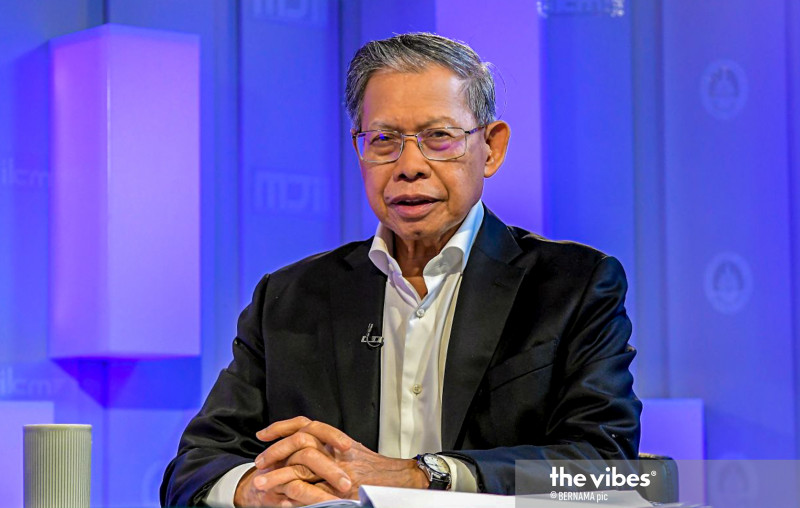
KUALA LUMPUR – The Economic Planning Unit (EPU) is in the final stage of formulating Malaysia’s National Energy Policy, said Minister in the Prime Minister’s Department (Economy) Datuk Seri Mustapa Mohamed.
He said the document, together with specific action plans, will be launched in the second half of the year and serve as the planning and development agenda for the country’s energy sector as it transitions towards a low-carbon future.
“In the longer term, the accelerating pace of energy transition will create pathways for economies and industry players to focus on clean and sustainable energy sources.
“With countries and players committing themselves to a net-zero carbon future, we expect to see the rapid growth of non-traditional sources of energy, including hydrogen and nature-based solutions,” he said in his ministerial address at the 13th International Petroleum Technology Conference held virtually today.
Mustapa said the government remains committed to promoting and preserving an attractive investment climate in the domestic upstream sector.
However, the Covid-19 pandemic had accelerated energy transition, putting a mounting pressure on the oil and gas industry to be more environmentally sustainable by reducing emissions across the value chain, he added.
Simultaneously, there is an increasing need for industry players to demonstrate their commitment to environmental, social, and governance goals in line with a more sustainable future.
Despite the current challenges in the industry, Mustapa said the oil and gas sector will remain the most important source of energy for the foreseeable future, and the government will continue to welcome investments, strategic collaboration and partnerships to further unlock the value potential in Malaysia’s upstream sector.
Furthermore, natural gas will play an even more critical role in facilitating energy transition and, at the same time, Malaysia needs to brace itself for the widespread use of cost-competitive renewables, such as solar, hydrogen and wind, he said.
On the other hand, Mustapa said coal, while considerably more economical, would not be a viable option in the future due to its detrimental environmental effects.
“Furthermore, the costs of generating electricity from renewables are becoming more competitive.
“As domestic markets mature, there will be greater opportunities for future cost reductions in renewables,” he said, adding that on average, about 20% of the nation’s revenue is derived from the oil and gas sector from 2015 to 2020.
More than 3,000 energy professionals are participating in the virtual IPTC, held from today to April 1, themed “Progressive Collaboration and Innovative Solutions: Shaping the Future of Energy”.
The conference is organised by Petroliam Nasional Bhd and co-hosted by Mubadala Petroleum and Schlumberger. – Bernama, March 23, 2021