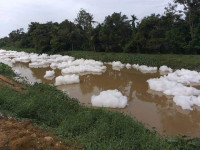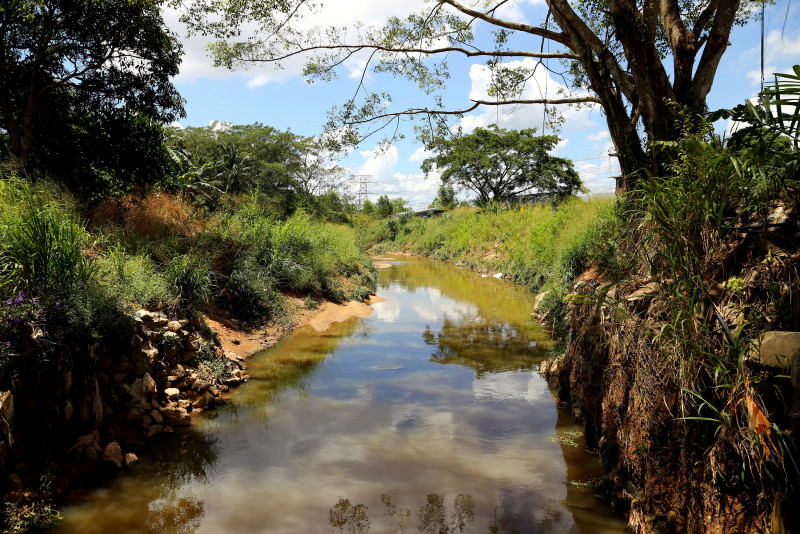
JOHOR BARU – The water quality of Sg Kim Kim in Pasir Gudang here, said to be polluted enough to endanger aquatic life as well as humans, can still be saved and the quality of the river water returned to Class One, said the Malaysian Nature Society.
Its president Ahmad Ismail said it would however require the state government to take immediate action to prevent further pollution in the river.
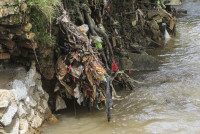
He said pollution was still a problem due to the discharge of industrial effluent and sewage waste into the river.
“The release of industrial effluent and sewage into the river needs to be resolved first.
“The authorities need to refer to the relevant experts to hold a rehabilitation programme for the river because it is not too late yet,” he said.
He said this in response to a recent report categorising Sg Kim Kim’s water quality as Class Five – the most contaminated level, unsuitable for use.
Ahmad said the disposal of chemical waste from factories should be done only at designated locations, in accordance with the existing rules and standard operating procedures.
“Malaysia has rules and SOPs that need to be complied with in terms of management and disposal of toxic waste. The authorities must also ensure that the level of toxicity is kept to a minimum.
“Efforts to rehabilitate polluted rivers require high costs and will take a long time, but we must have targets or goals. At the same time, research must continue to be conducted and Sg Kim Kim can be a model in the future,” he said.
Johor Environment Department director Mohd Famey Yusoff said that the results of laboratory tests on water samples taken from Sg Kim Kim depended on the location where the water samples were taken, as each location would produce different findings.
“There are many factors that can affect the rate of biochemical oxygen demand (BOD) and ammonia in the water samples taken, such as the environment, proximity to industrial areas, housing or public facilities such as markets, and weather conditions,” he said.
He said the department carried out sampling six times a year at two separate locations in Sg Kim Kim and the findings showed that the BOD rate in the affected areas is influenced by organic pollutants and ammonia, which usually comes from sewage waste.
“Most important is the cooperation from those responsible for discharging industrial effluent and wastewater into Sg Kim Kim. If the amount of discharge into the river can be reduced, Sg Kim Kim can be restored,” he added. – Bernama, April 24, 2021