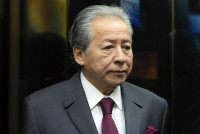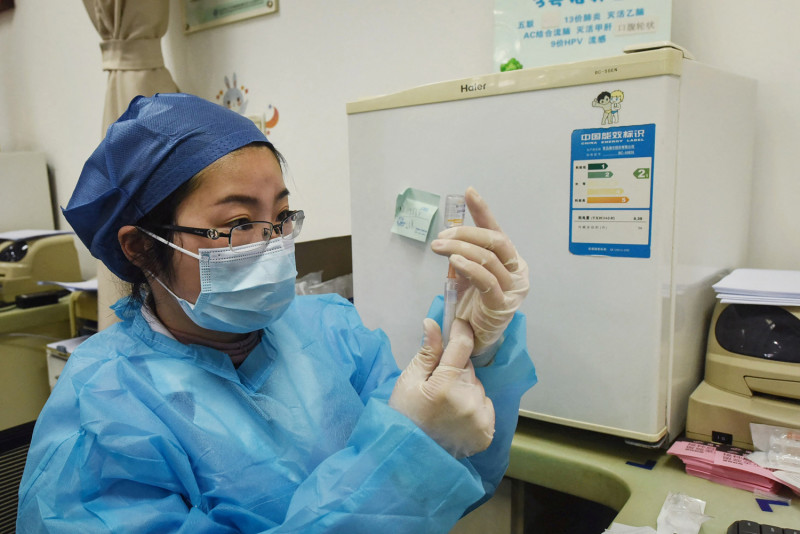
KOTA KINABALU – It is time to send an envoy and seek at least 2,000 medical frontliners from China and expertise to increase bed capacity, following its success in tackling the pandemic, said former foreign minister Datuk Seri Anifah Aman.
“The foreign affairs ministry should use diplomacy to request for 2,000 doctors, nurses, and healthcare workers to assist our frontliners in combating the pandemic. Deploy a special envoy to get the job done.
“We should also get their expertise on how to build 5,000-bed hospitals for KL and Selangor, and 3,000 for Sabah, Sarawak, and all the other states in Malaysia so that our public health system is not overwhelmed by the increasing number of cases.
“China has experience in building hospitals not only effectively but quickly. Brunei, for example, built a mega hospital with the help of China,” he said in a statement today.
Anifah said it is imperative that the government change tactics and provide a better solution.
“Malaysia claimed to have achieved a world record of 400,000 doses of vaccination a day; however China achieved 100 million doses within nine days.
“Do not let pride get in the way of better administration especially now when the people are really suffering mentally, economically, and physically. There is no shame in asking for help for the benefit of the people.”
Anifah said it is apparent that the continuous lockdown is not working; hence, it is time for the government to form committees – medical, economic, and security – to formulate responses to assist the government.
“Each committee must be headed by experts in their respective fields. The leader must be given a free hand to nominate their members who should comprise government administrators, academicians, and market players to formulate health, social and political responses.
These committees will be responsible for providing better solutions and will present them to the relevant ministers.
Anifah also proposed for the government to allow a free market for vaccines that would then be available to everyone.
“The current vaccination programme is very bureaucratic and involves many government agencies with overlapping functions – and it seems that the government is only interested in seeing the number of vaccine registrations increasing instead of the number of people vaccinated.
“Currently, vaccines are provided by the government; even private hospitals administering vaccinations get their supply from the government.
“Why can’t there be a free market where any medical practitioner can vaccinate the people? Even if people must pay for it in private practice, people would (pay) because they know the severity of the pandemic.”
The former Kimanis MP said that by allowing a free market for vaccines, the people do not have to depend on the sole government appointed vendor to supply the vaccines.
A free market solves the problem as many medical suppliers can purchase any type of vaccines and they can be distributed to as many medical practices as possible
He added that government hospitals and clinics should be able to make purchases of vaccines on their own.
“Factory owners too must also be held accountable and responsible to ensure that all their workers are fully vaccinated.”
Anifah said there is a need to increase financial support to public hospitals so that they can better deliver necessary health care services.
He added that with the expectation that there would be an increase of vaccine supply beginning this month, the public health infrastructure must be strengthened.
On social response formulation, Anifah said government aid must be supplementary – as opposed to merely allowing citizens to make withdrawals from the Employees Provident Fund, and not means-tested – which will allow the middle class to benefit while preserving the dignity of recipients and reducing administrative costs.
“Given that interest rates are at historic lows, the government should borrow where necessary and raise the statutory debt-to-gross domestic product ceiling if needed.”
In the political response, Anifah said that there should be three guiding principles in ensuring good governance in combatting the pandemic.
“Firstly, race-based politics must be put aside in favour of the politics of policies,” he said, adding that policies that benefit ordinary Malaysians should be discussed and implemented.
“Secondly, politicians must also accept that they are not professionals in any given field, and that they must therefore cede ground to experts on health, economics, public administration and disaster management.
“Thirdly, politicians must provide leadership by example, and observe the same pandemic rules as ordinary citizens. It’s in their self-interest to be (and appear) humble because voters will punish misbehaving politicians at elections.” – The Vibes, July 17, 2021