


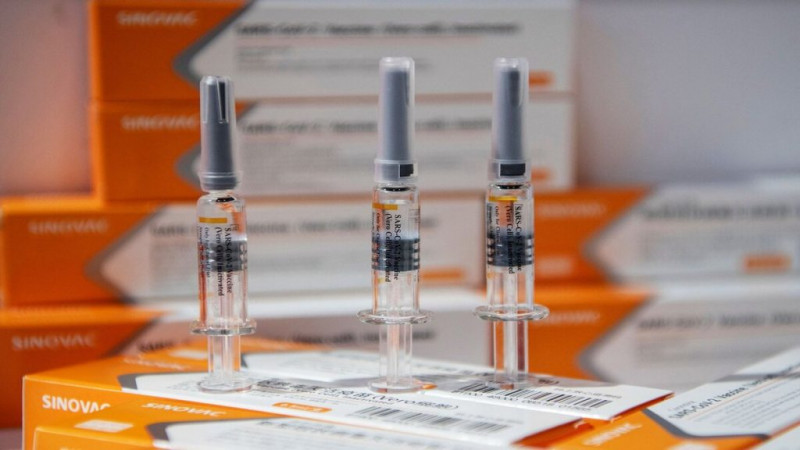
KUALA LUMPUR – Malaysia should consider trialling booster doses of the Sinovac Covid-19 vaccine to instil greater confidence and protection, said former health minister Datuk Seri Dr S. Subramaniam amid reports of the vaccine’s reduced efficacy against new variants.
“While I respect the prudence in waiting for more data before mixing vaccines, the government could consider booster doses of Sinovac under trial conditions initially.
“This can give greater confidence and protection to those already vaccinated with Sinovac. Moreover, most of them did not have the opportunity to choose the type of vaccine given to them,” he said in a Facebook post last night.
Subramaniam added that the news of the discontinuation of Sinovac in the government’s vaccine rollout “comes at a time when there is a growing concern around its efficacy, particularly in reducing symptomatic infection”.
“Countries like Chile and the Seychelles in the recent months have reported an increase in the number of Covid cases despite having a very high vaccination rate (between 65% and 70% of population). Incidentally, Sinovac was used extensively in Chile, while Sinopharm was used in the Seychelles.
Analysis has shown that Sinovac has only a 65% efficacy against symptomatic infection in contrast to a 96% and 92% efficacy of Pfizer and AstraZeneca (AZ) respectively. Nevertheless, Sinovac still has a respectable efficacy of 87% in preventing hospitalisation and deaths, though this is still much lower than the other two vaccines.
“Recent data have shown that both Pfizer and AZ have shown good protection against hospitalisation and death in those infected with the Delta variant.
“Unfortunately, there isn’t much data available for the Sinovac vaccine and the scientific team behind Sinovac have suggested a third dose might be required to increase its efficacy against the Delta variant.”
He said Thailand and Indonesia experienced an outbreak among healthcare workers who were fully vaccinated with the Sinovac vaccine, though the incidence of serious disease was low.
“These incidents have caused these nations to review their vaccination strategy and thus have proposed mixing vaccines and giving booster doses to overcome the existing shortcomings of the Sinovac vaccine.”
AFP yesterday reported that the University of Hong Kong found that people who received Pfizer-BioNTech’s vaccine had 10 times the amount of antibodies than those given Sinovac.
Researchers said antibodies are not the only measure of a vaccine’s success at fighting a particular disease.
But they warned that “the difference in concentrations of neutralising antibodies identified in our study could translate into substantial differences in vaccine effectiveness”.
Those who received Sinovac had “similar or lower” levels of antibodies to those seen in patients who caught and successfully fought off the disease.
The study adds to the growing body of evidence that vaccines using pioneering mRNA technology – such as Pfizer-BioNTech and Moderna – offer better protection against the coronavirus and its variants than those developed by more traditional methods such as using inactivated virus parts. – The Vibes, July 17, 2021

















.jpg)
