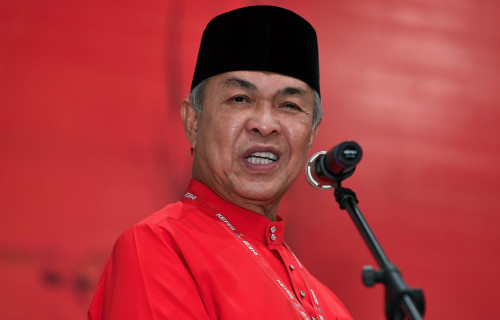
KUALA LUMPUR – Umno’s Datuk Seri Azalina Othman Said said the vote of confidence on the prime minister’s legitimacy should be held before the Parliament sitting begins on September 6 to avoid the Yang di-Pertuan Agong from possibly being forced to give two royal addresses should a change of government occur.
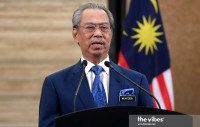
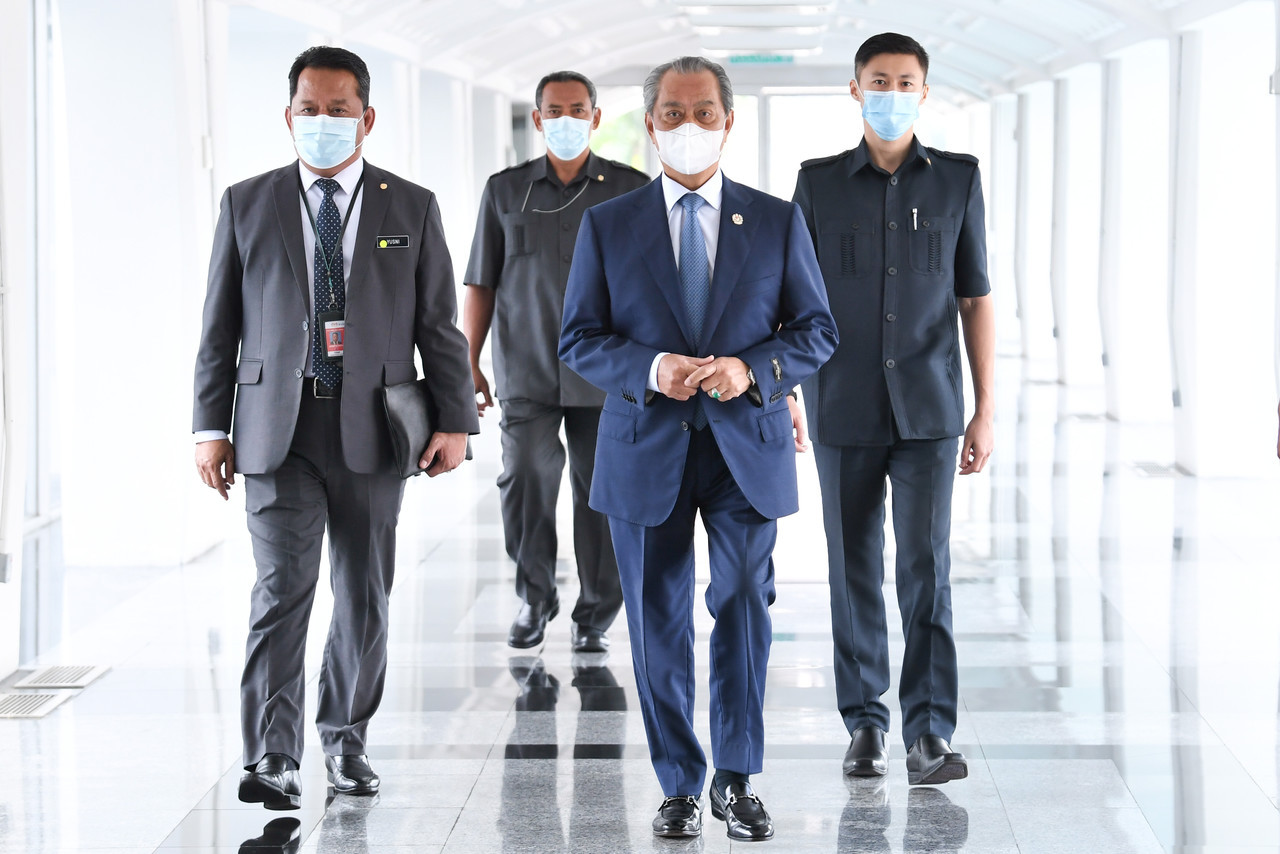
In a statement today, the Pengerang MP and Dewan Rakyat deputy speaker said given that Tan Sri Muhyiddin Yassin has expressed readiness to face the vote, he should do so by deciding on an earlier date by way of a special session under Standing Order 11(3).
“Technically, the prime minister can call a special sitting under Standing Order 11(3).
“The only requirement for an urgent government agenda to be tabled in Parliament is for there to be the grounds of ‘public interest’ under Standing Order 11(3)a.
The legitimacy of the government is clearly a matter of public interest, and this should compel the prime minister to call a special meeting as soon as possible.”
Alternatively, she suggested another voting process.
However, since the Standing Orders do not prescribe a process or a written rule for a motion on a confidence vote, Azalina posed several related questions.
“Must the vote be conducted on the Parliament premises to legalise the process?
“If open voting or a secret ballot is required, then such an act can be done before the Dewan Rakyat speaker (as the adjudicator), and the votes counted by the Dewan Rakyat secretary. Therefore, why can’t this procedure take place as soon as possible in the speaker’s office, witnessed by the chief judge and in the presence of each party whip?”
Azalina’s concerns follow a confirmation by Speaker Datuk Azhar Azizan Harun that the king will officiate at the first meeting of the fourth session of the 14th Parliament on September 6.
“As is customary in the Westminster system, the Agong will read the royal address.
“The royal address is prepared by the government, and it outlines the government’s agenda for the coming year and reflects the legislative agenda for which the government seeks the agreement of both houses of Parliament.
Let’s pause and think through this puzzling situation. With the government’s legitimacy in question, don’t you think that the timing of the prime minister’s call for a confidence vote is rather dubious?”
Hypothetical timeline for Sept 6 Dewan meet
10am: Agong arrives at Parliament and proceeds with the traditional procession.
10.30am: Agong delivers the royal address, which contains the government’s agenda for the year, in the chamber, with an audience of 220 MPs plus dignitaries.
11.30am: Commencing of the motion on a confidence vote.
Azalina said the vote should be settled to test the government’s legitimacy before the royal address begins.
If the government fails to secure the confidence vote, does that mean the Agong will have to read a new royal address prepared by the new government?
“Sounds rather ridiculous, not to mention, a waste of time and resources.”
She said MPs are expected to debate and vote on the royal address within the sitting.
“Voting on the royal address means recognising the legitimacy of the government. On the other hand, voting against the royal address is equivalent to rejecting the king’s government.
“Is it possible that the government is using the royal address as a test of legitimacy in lieu of a formal motion on the vote? If yes, I must say, this is a rather ‘brilliant’ strategy.”
Suggestions for the future
Azalina said it is high time for Malaysia to consider a Fixed-Term Parliament Act, similar to that in the United Kingdom, given that at present, there is no anti-hopping law and it is against Article 10 of the federal constitution to prevent any MP from withdrawing support for the government of the day.
“This should be an important agenda for the Dewan Rakyat to consider in the next sitting.
“For the sake of political stability and good governance, we must find sustainable solutions to preserve the honour of our Parliament and pre-empt any party-hopping by political frogs.”
Accepting a minority government may be the last option, where the formal support of all political parties is obtained in return for negotiated policy concessions and the government’s vote of confidence, upon approval of a fair and equal budget for all MPs with a confidence and supply agreement, without entering into a full coalition government, she said.
Perhaps, the principle of ‘all hands on deck’ is the best compromise we can make to ensure whatever efforts that have been made in the fight against Covid-19 cease to be compromised by political instability, and appease the appetite of all MPs.
“Sometimes, you have to kiss a few frogs to find your prince, and sometimes, who you think is your prince is a frog.” – The Vibes, August 6, 2021