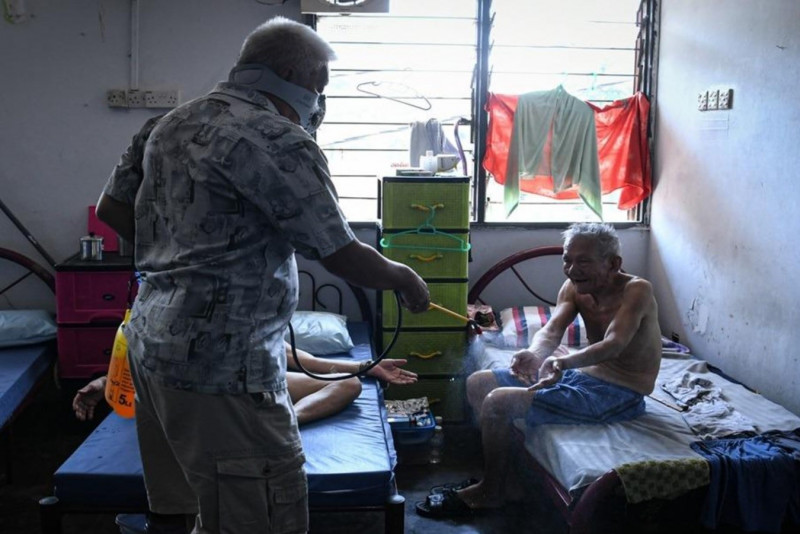
SHAH ALAM – Malaysia will reach ageing-nation status earlier than expected if the Covid-19 pandemic continues, in view of the decline in births in the country.
National Population and Family Development Board (LPPKN) director-general Abdul Shukur Abdullah told Bernama today that based on Statistics Department projections, the nation is expected to hit this status by 2030, with 15% of its population aged 60 and above.
“However, with the pandemic, the status could be attained much earlier.
“In an opinion poll conducted by LPPKN in April last year, it was found that 53% of respondents expected that the pandemic would result in an increase in the number of births. But the majority of respondents (61%) decided to postpone or re-plan having children.”
The Statistics Department said the over-60 population increased from 3.4 million in 2019 to 3.5 million last year, representing 10.7% of the total population.
Shukur said the second quarter of 2021 saw a 4.4% drop in the birth rate from a year ago, adding that this had been expected.
Among the factors for couples delaying having a baby are a lack of savings (58%), fear of getting infected with Covid-19 (34%) and fear that access to prenatal treatment will be disrupted due to the pandemic (32%), he said.
He said the decline in births will have an impact on the population growth rate, accelerating an ageing population.
If the trend continues, he said, Malaysia will experience a labour shortage in the future.
As such, the country will need to rely on migrant labour to overcome the shortage. However, by 2050, most outsourcing countries, such as India, Bangladesh, the Philippines and Myanmar, will also have an ageing population and a shortage in local labour.”
Shukur said the situation will force these countries to stop their own citizens from moving abroad to work, including in Malaysia.
“In preparing to become an ageing nation, it is important for the country to minimise the mismatch between the skills possessed and the jobs done,” he said, adding that the mismatch has become more apparent amid the coronavirus crisis.
The Statistics Department said the number of unemployed graduates has increased by 22.5%, from some 165,200 in 2019 to 202,400 last year.
In the same period, it was reported that the percentage of graduates working in the skilled category decreased 0.8%, while those working in the semi-skilled category went up 19.3%, mainly for services and sales jobs, and as machine operators and assemblers.
Shukur said LPPKN’s 2018 study projected that the nation will experience a population shrinkage for the first time in 2072.
“In the study, it was forecast that the country’s population will continue to increase until it reaches a maximum 46.09 million people in 2071, before beginning to drop to 46.08 million in 2072.”
However, he said, there is a possibility that the country will see the said shrinkage much earlier if births continue to fall due to the pandemic. – Bernama, August 17, 2021














.jpg)