KUALA LUMPUR – Celebrating a nation’s independence is exciting and often brings back the good old memories through sepia lenses. As Malaysia and its people join in this celebratory mood, would this be a good time to rethink our policies on foreign workers?
Foreign workers began flocking to Malaysia as early as the 1970s as the country’s economy expanded and industrialisation became a major means for development. Over the years, the number of foreign workers increased, with an influx of them coming from neighbouring countries like Indonesia, the Philippines and Bangladesh.
Recent official data from the Immigration Department stated that the number of legal foreign workers in the country stood at 1.98 million while the World Bank estimates the number to be between 2.96 million and 3.26 million.
However, many reports quote that the number of foreign workers in the country is as high as six million people.
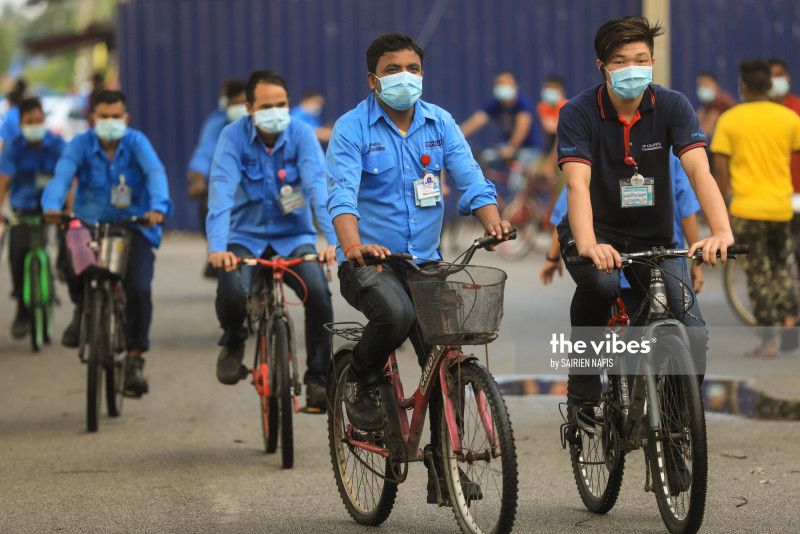
Foreign workers are estimated to be between 31% and 40% of the country’s workforce, with a high number of them in 3D – dirty, dangerous and difficult – jobs.
Malaysia’s relationship with its foreign workers has not always been easy.
Cases of abuse, unpaid wages and exploitation were occasionally reported in the media but when the numbers kept rising, it began to spark criticism locally and abroad.
In 2009, Indonesia issued a moratorium on sending domestic workers to Malaysia following reports of abuse at the hands of Malaysian employers. The moratorium was lifted more than two years later when both parties came to an agreement. In 2018, the Nepal government temporarily stopped sending its workers to Malaysia as they were charged an exorbitant fee for visa-related services.
On the international front, Malaysia continues to give assurance of its competence to handle foreign workers in its country but there is an uneasiness and tension between locals and foreign workers.
While a small percentage of these foreign workers return to their homeland after working for years in this country, repaying their debts back home and after having saved some money, many of them have settled down for good in Malaysia. Some even married locals or brought their families to live here.
But they continue to be treated differently.
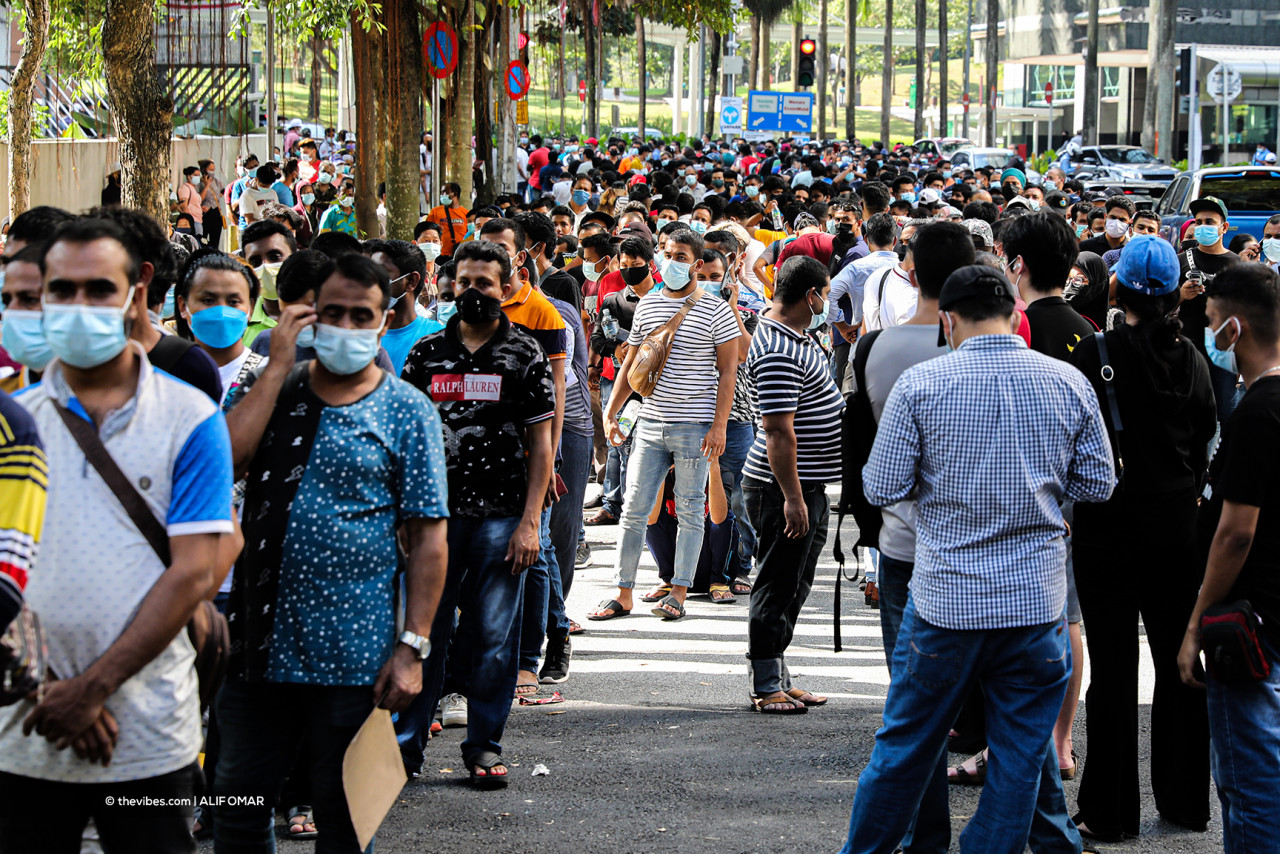
Take the recent vaccination of foreign workers in Malaysia as an example.
While the government should be commended for its efforts, racing against time to curb Covid-19 infections as well as the vaccination of foreign workers, it is sad to note that the effort only came about after a spike in numbers and clusters among them were detected.
Such a decision should have been made sooner if the country had learned from Singapore, which saw a spike in the number of Covid-19 cases involving its foreign workers and quickly moved to mitigate it. Malaysia could have saved lives if we had learnt more quickly from the experiences of others.
The vaccination of foreign workers in Malaysia finally took place but it was not without its issues and apprehension, mainly concerning issues that the records that are collected will ultimately be used to detain those who are undocumented and, therefore, illegal.
Even the sight of a large number of foreign workers waiting for their turn to get vaccinated at vaccination centres caused uneasiness among locals, who went online to express their unhappiness and fears.
Having worked for many years towards Malaysia’s development, with their welfare often not – if ever – a high priority, it is sad that the workers continue to be harassed and unwelcomed in this country.
The Covid-19 situation has brought to light more pressing issues involving these workers. After years of relying on this workforce, it would do good for a capitalist country like Malaysia to show more concern over the workers’ welfare.
The country certainly owes its growth, wealth and development to these workers as much as Malaysians themselves.
When the foreign workers remain in the country after finishing their contract and, when there are no jobs due to Covid-19, they need support and help to survive.
Commenting on the issue, Good Capitalism Forum chief executive Professor Graham Kendall draws some parallels of the situation with the United Kingdom and Brexit.

“In the case of the UK and Brexit, many wanted to leave the European Union as they felt that the UK had too many immigrants. Yet, this group of people were an important part of the UK workforce.
“I recall a time when it was difficult to find a plumber in the UK, but an influx of qualified plumbers from Poland was welcomed, especially by those who had an emergency.
“There are many other examples where immigrant labour was welcomed, if not essential, to the UK. Not only did they do jobs that others were unwilling to do, but they also brought in much needed expertise, for example, doctors and nurses who worked in the National Health Service.
“I see many parallels with Malaysia who are in dire need of immigrant labour, yet they are generally frowned upon by large parts of the population. But, if it were not immigrant labour, Malaysia would struggle to find workers for important areas such as palm oil plantations, security guards and maids,” he said.
Kendall said there should be more awareness on the contributions foreign workers have made to Malaysia.
“The awareness of their contribution is important so that the work they do is appreciated. This could be done in many ways, for example, through the media, providing case studies that focus on individuals to make the story more personal.”
He also stressed on the importance of controlling the flow of the workers into the country.
“There should be more controls on who is allowed to enter and work in Malaysia. There are too many undocumented workers, and this should be addressed so that the country can better manage this sector of the population but also benefit from the taxes they pay.
“As a caring country, Malaysia owes it to anybody who is within its borders to look after them and keep them safe. This should apply to all immigrants, documented or not,” Kendall added.
Meanwhile, PETRA Cucina chief executive Roberto Guiati said as a young, fast-growing nation, Malaysia still needs foreign workers’ labour and expertise.

“It is part of development, and it is Malaysia’s responsibility to protect the rights of all foreign workers in the country.
“At PETRA Cucina, we pride ourselves in hiring the right person for the job. Whether a local or a foreign worker, we hire based on capability and experience. All our workers have equal rights and, very importantly, they have equal opportunities to rise and grow their careers,” he said.
For PETRA Modular, its managing director Rick Singh said there is a need to change the mindset of the people and companies on foreign workers in the country.
“Today, 95% of the workers in the construction industry are foreign workers. Locals don’t want to work in this industry anymore. So, it is important that we develop the facilities and train our foreign workers in terms of quality and standard,” he said, adding that 40% of its workforce consists of foreign workers.
He said Malaysia should learn from countries such as Kuwait, Qatar and the UAE, which provides its foreign workers with proper facilities, living standards and accommodation.
“We provide our workers with cinema rooms, air-conditioned living facilities and ensure that they are all vaccinated against Covid-19. Earlier, when our foreign workers fell sick due to Covid-19, we purchased oxygen tanks to be on standby and gave the workers supplements to help them recover. The relationship between the foreign workers and the employers must be two-way; we take care of them and they take more pride in their work,” he said.
There should not be any double standards, especially during this time of crisis. The government must balance the expectations and needs of foreign and local labourers, being fair to all stakeholders.
Treating those who have worked for the nation better should be on the country’s agenda moving forward. If we start treating them better now, in the long run, we all can benefit and live in a more harmonious environment. As a capitalist nation, it goes without saying that looking after its environment and the people in it improves quality and output tremendously. – The Vibes, August 31, 2021