KUALA LUMPUR – There is a good possibility cross-border travel within Asean will be allowed soon when the Asean Travel Corridor Arrangement Framework (ATCAF) begins to be implemented in stages.
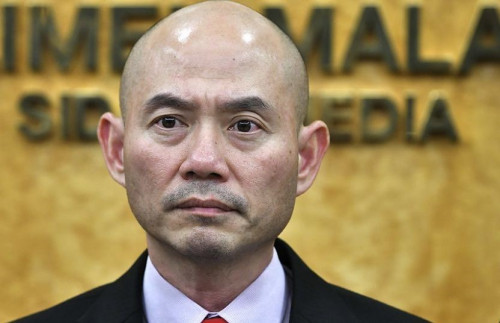
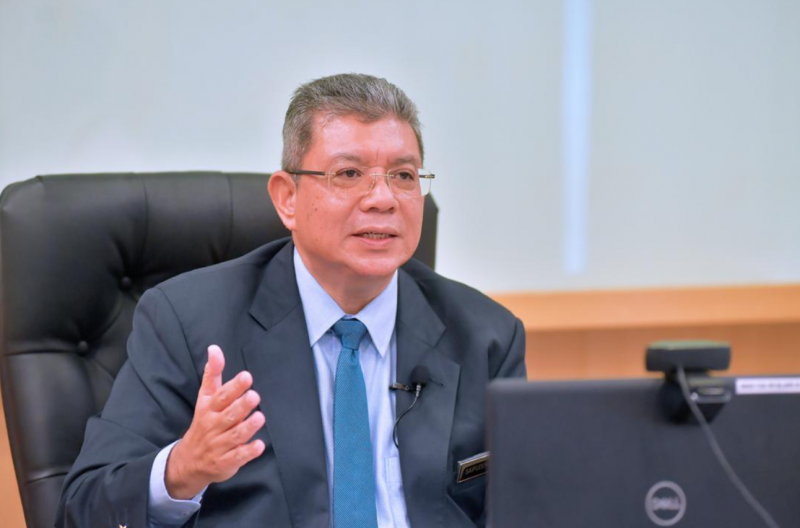
Foreign Minister Datuk Saifuddin Abdullah, however, said the ATCAF will have to consider stringent standard operating procedures (SOPs) to prevent the spread of Covid-19.
“It can be said that all Asean nations have touched on the need to allow travel between member countries, especially countries sharing common borders.
“We believe it will be implemented very soon, if not throughout Asean, it will be done between neighbouring member states of Asean,” he said during the press conference at the end of the 38th and 39th Asean Summits and Related Summits here today.
Prime Minister Datuk Seri Ismail Sabri Yaakob headed Malaysia’s delegation to the the three-day virtual summits that began on Tuesday under the chairmanship of Brunei.
On Myanmar, he said the grouping values Myanmar as a member of the Asean family and Malaysia wants to see the full implementation of the five-point consensus as soon as possible.
“As far as Malaysia is concerned, No. 1, we value Myanmar’s participation as a full and active member of Asean. No. 2, our priority is looking after the people of Myanmar; that is first and foremost in our mind.
“No. 3, if the current situation ends up in prolonged stalemate and no decisions can be made, then we should be looking at other ways of getting the desired outcome
“We should understand that all Asean decisions on Myanmar is first and foremost about the people of Myanmar,” he said.
On the position of Asean Special Envoy to Myanmar Erywan Mohd Yusof, who is also Brunei’s second foreign minister, as the Asean chairmanship will be handed over to Cambodia next year, he said it was not discussed during the summits, adding that he believes the regional grouping will come to that as soon as possible.
Highlighting Malaysia’s key points at the summits, Saifuddin said Malaysia underscored the need for Asean to remain united in the face of many challenges and to ensure Asean centrality remains the guiding principle in engagements with external partners.
He said the prime minister had highlighted several key issues, including the Covid-19 pandemic and health diplomacy, Myanmar’s representation at Asean and situation in the country, including concerning the Rohingya, digital economy and cybersecurity as well as the trilateral security pact involving Australia, United Kingdom and the United States (Aukus), as well as the South China Sea.
On the pandemic, Saifuddin said the prime minister urged Asean and its dialogue partners to prepare for public health emergencies and emerging diseases through exchange of knowledge and capacity-building programmes, including by leveraging on digital technologies.
Given the impact of the pandemic where nationalism and geopolitics rivalry have shaped the response of governments and international organisations, he said Malaysia urged world leaders to relook the existing international order and hoped that a new course forward in preparation for the next pandemic can be charted.
“Malaysia felt that a new global health security architecture needs to be developed. It is evident that the pandemic has strengthened the case for multilateralism.” – Bernama, October 28, 2021