KUALA LUMPUR – The government’s decision to introduce a Fardu Ain Basic Class (Kafa) Ihsan module in all secondary schools has met no small amount of backlash, with concern that it is part of an agenda to Islamise pupils of non-Muslim faiths.
Parti Bansa Dayak Sarawak (PBDS) questioned why the Prime Minister’s Department (Religious Affairs) is making such a move when students should instead focus on subjects such as mathematics and science.
“Although Minister in the Prime Minister's Department for Religious Affairs Idris Ahmad is saying now that the subject is elective, how can we have a guarantee that it will not be made compulsory in a few years?” said PBDS president Bobby William in a statement today.
“We believe that this plan is the wrong way forward for our Malaysian education system as emphasis is placed on religion instead of science and technology subjects.”
The party also claimed that the decision is a subtle effort to Islamise non-Muslim students, adding that the introduction of the module will prove to be an added burden on students.
“As of now, we already have Islamic Studies being taught in our schools, which should be sufficient for students to understand the basic tenets of Islam,” he said.
He stressed that PBDS views the subject introduction with much “concern and suspicion”.
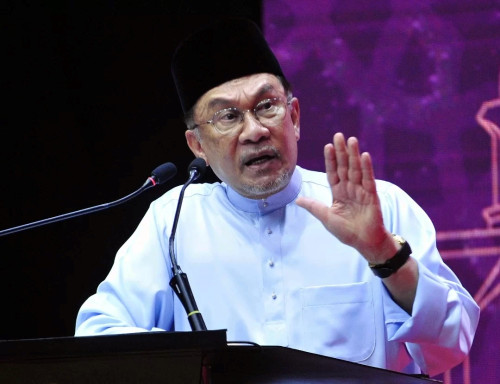
On January 27, Idris had announced that the Kafa Ihsan module will be introduced to all secondary school students soon, with the module still being evaluated by the Islamic Development Department.
“Kafa Ihsan is an elective subject which is not compulsory for students but they are encouraged to take the subject,” he was quoted by Bernama as telling reporters after attending the Sabah-level Multaqa Murabbi Ummah ceremony in Kota Kinabalu.
Idris also stated that the Kafa Ihsan module will be different from the Islamic Education subject because it focuses more on the added value of students’ personal development and leadership, apart from matters of worship.
Let other religions be taught in schools
The decision was also criticised by former Sabah state assistant education and innovation minister Jenifer Lasimbang, who asserted in a statement today that the teaching of religion in school should include non-mainstream religions.
“Opportunities should also be given to those who still practice indigenous beliefs, such as students from the Orang Asli and Orang Asal community,” she was quoted as saying by Borneo Today.
Lasimbang, a Warisan member, is also a former state assemblyman for Moyog.
She emphasised the necessity of prioritising other practical subjects, saying: “The inclusion of religious teachings should not eat up time for core subjects such as mathematics, science, technology, and English.”
“Education is for all and the emphasis should be teaching universal values (which all religions teach) and especially in our diverse country, no one should be left behind or excluded,” she added.
Reset schools to be ‘actual places of learning’
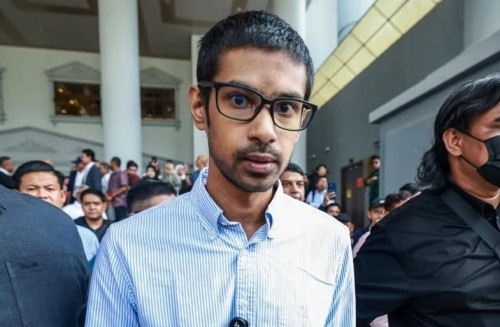
Meanwhile, Penampang MP and Warisan deputy president Darell Leiking said that religious teachings are already taught at home, at religious schools and at places of worship.
“Religious teachings are needed but are best left to homes (with family), at places of worship and actual religious schools/institutions,” he said in a Facebook post yesterday.
Leiking is also the current Moyog assemblyman and a former federal minister for international trade and industry.
“My critics can disagree with me but I am a believer that schools today must prepare the future and focus on science, finance, humanities (a global perspective and literature), and ethics, alongside coding skills for future works, especially on machine learning, artificial intelligence, robotics, programming and the Internet of Everything (a successor to the Internet of Things),” he added.
“These future skills and its ancillary subjects are most needed for a nation to reset into a future-proof nation,” he stressed.
“Hence government schools, colleges and universities should reset themselves to be actual places of learning and debates on humanities/literature, and acquisition of future skills.” – The Vibes, January 30, 2022

.JPG)