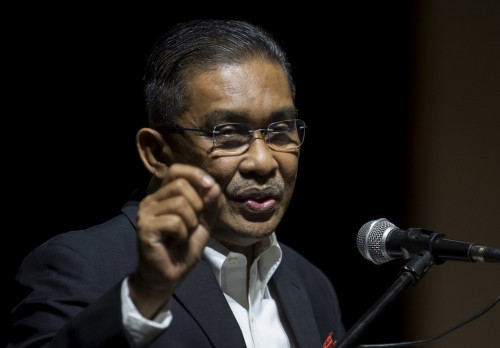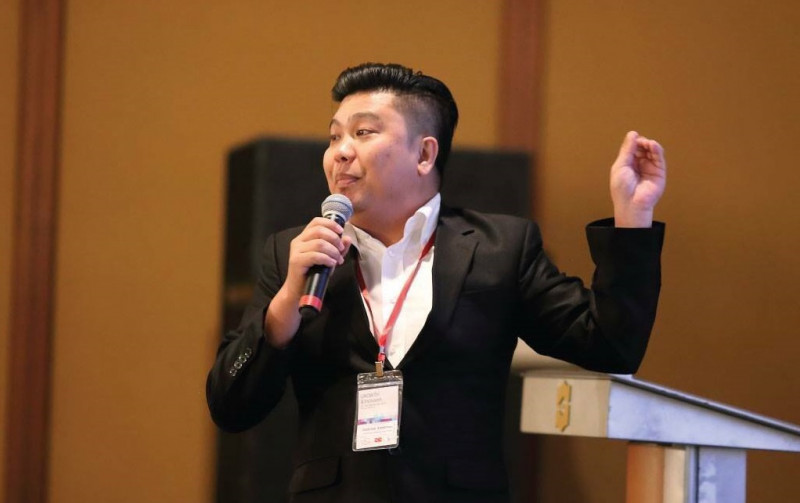
KOTA KINABALU – The federal government should send undocumented migrants back to their home countries, not issue migrant cards, said a United Nations ambassador from Sabah.
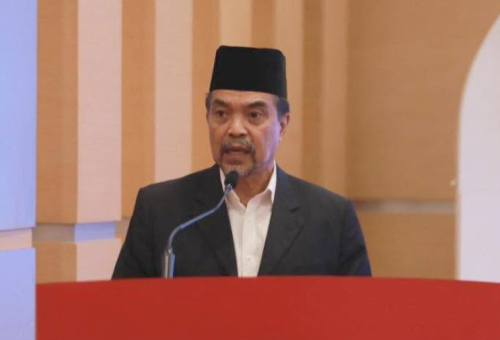
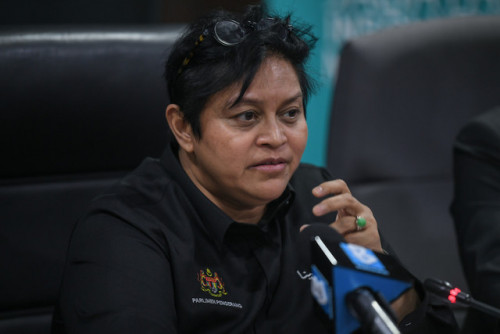
Cultural ambassador and permanent representative at the United Nations Andrew Ambrose Mudi said repatriation of the many illegal immigrants and economic migrants who came into Sabah must be carried out.
This is in view that progress and peace have prevailed at Mindanao in the southern Philippines, where most of the migrants come from.
“The federal government must facilitate diplomatic measures to resolve the predicament of these long-standing foreigners without documents, since the war there has ended.
“Until today, there has been no such effort from the government, who spoke of the plight of the Rohingya but failed when it came to this group of people,” he said, referring to migrants from the Philippines.
“The government must facilitate their peaceful return back to the Philippines and not sweep the issue under the carpet by issuing more documents of the kind they themselves failed to manage effectively,” said Andrew.
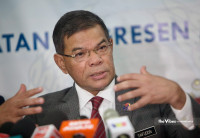
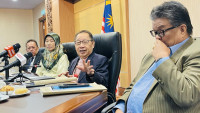
Home Minister Datuk Seri Hamzah Zainudin yesterday announced that the government is mulling issuing migrant cards (Kad Warga Asing) to those in Sabah to allow for proper identification and documentation, after the proposal came from the Sabah government.
He said Sabah proposed the idea during the Sabah Migrant Management Committee meeting in Putrajaya yesterday, and he is optimistic that the proposal can be approved in three months.
Hamzah said that the matter had been discussed at the technical level in the committee and is considered to be a good suggestion.
“The Home Ministry has the authority to issue migrant cards,” he told a press conference after the meeting.
“We want everyone in the country to have identification, and in this case, they (migrants in Sabah) will be identified as foreigners.”
In a statement today, Andrew, who is an indigenous activist, said that the growing numbers of migrants in Sabah is due to the government’s own move to freeze the issuance of IMM13 documents to the children of IMM13 holders and the state census document, also known as “surat burung-burung”.
This has led to a large number of migrants in Sabah, including economic migrants who came without permission into Sabah following the civil unrest in the southern Philippines back in the 1970s. Most of them have probably died in Sabah, leaving their children here.
Calls to repatriate the immigrants were also made by the opposition when the Pakatan Harapan federal government was in power in 2018.
Then home minister Tan Sri Muhyiddin Yassin mooted the issuance of the Pas Sabah Sementara (Sabah Temporary Pass) or PSS.
The PSS was originally named the Sabah Resident Card, and was part of the recommendations made by the royal commission of inquiry’s technical committee to resolve Sabah’s migrant woes.
Fearing that PSS holders would be granted citizenship one day, the opposition leaders at the time, now part of the Sabah government, had called to repatriate them, opposing the idea of giving them cards.
Andrew said that the presence of undocumented migrants in Sabah is also due to Putrajaya’s failure to find a comprehensive solution to the problem, which has become complex over the years.
“The new card is not a solution to these people as it places them in limbo and further uncertainty without solution. How long will they hold this document without being citizens of any country?
“Will this card mean they are no longer citizens of the Philippines and will this lead to the issuance of Malaysian citizenship?
“If not, how long (does) the government intend to keep them?” he questioned.
Andrew said the move will burden Sabah as it is “Sabah that has to deal with the population, not Malaya”, adding that the Philippines government has already said that it will reaccept its nationals. – The Vibes, February 11, 2022