
LAHAD DATU – Malaysians, especially Sabahans, were reminded today of the deadly 2013 Lahad Datu stand-off in Sabah which shocked the state and the entire nation.
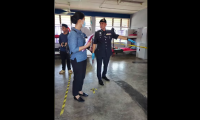
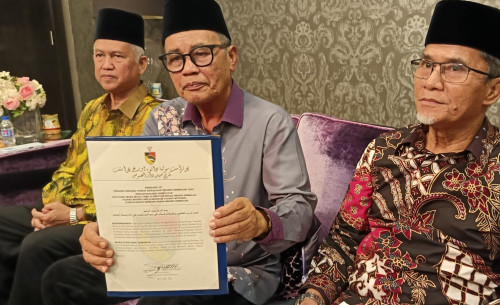
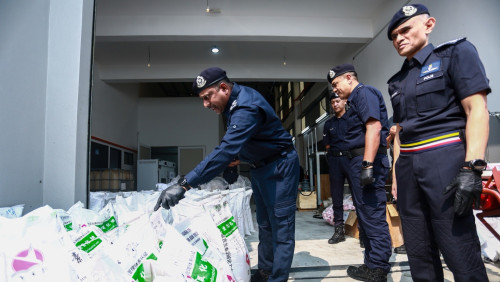
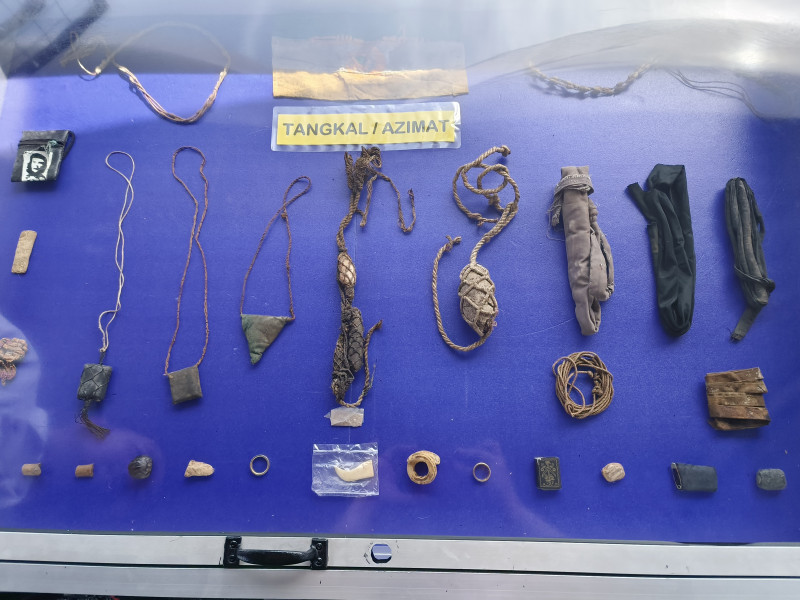
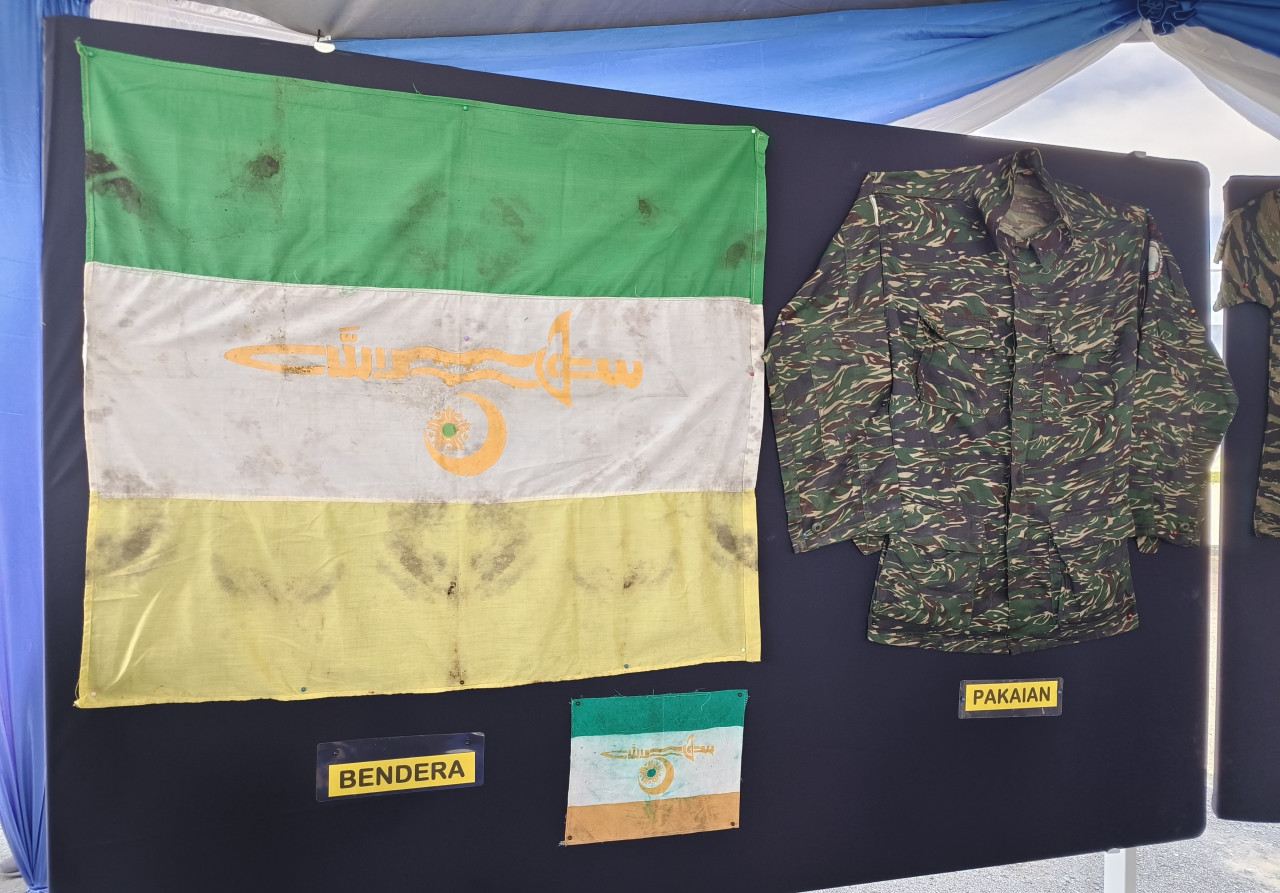
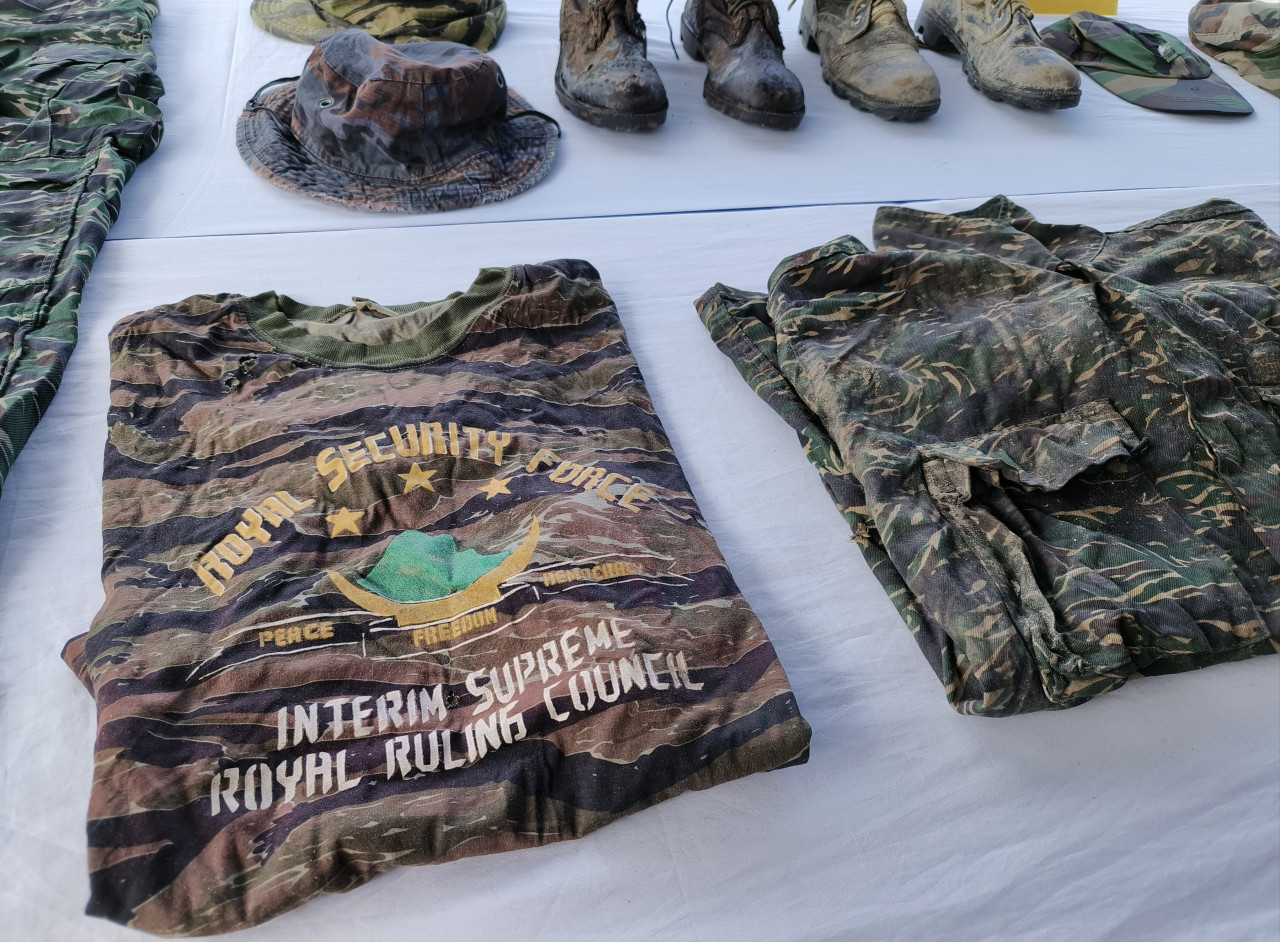
Part of the items and exhibits linked to the incident, including shirts, bullet cases, weapons, documents, and even amulets used by the Sulu militants at the time were handed over to the Sabah police museum at a symbolic ceremony at the Lahad Datu police headquarters, here, today.
A total of 812 case items were collected by police during the incident, and 483 items will be displayed at the museum which is expected to be opened in March.
Another 329 items were buried at the Lahad Datu police headquarters’ grounds today.
The state government allocated RM1 million to build the museum in Kepayan, Kota Kinabalu, and another RM150,000 for the construction of a memorial at Kg Tanduo, where the incursion took place.
According to the police force’s Criminal Investigation Department director Datuk Seri Abdul Jalil Hassan, who graced the ceremony, the items to be displayed at the museum will remind the people of the importance of peace and security.
“We hope that the future generation will remember the importance of national security and that it is the responsibility of all Malaysians.
“Police will continue to hold on to our commitment to maintain the peace and sovereignty of the country. We will ensure the safety of the country for generations to come,” he said.
He said the exhibits were returned to police after the Federal Court allowed it on January 15, 2018.
The symbolic ceremony today showed that the incident that happened a decade ago is now an important part of Sabah and the nation’s history.
It reminds people of the seriousness of the Sulu claim, and how it must not be taken lightly.
Amulets used to become invincible
There will be dozens of amulets displayed at the Sabah police museum once it is completed. These amulets are said to be used by the Sulu militants to become invincible. Some claimed that the intruders were “bulletproof” even without bulletproof vests.
The items had been stored in the Lahad Datu police headquarters store room for 10 years, and several policemen at the station claimed that touching the amulets would make it difficult to sleep for weeks.
“Some even claimed that the amulets would move on their own,” one policeman said.
The amulets include various coin-sized items – including necklaces, wild boar teeth, and bear nails.
Each intruder is said to have used about two to three amulets around their neck, wrist, and waist.
“We have decided to display only the amulets that are not ‘very strong’. The ones that have been giving us trouble, we will bury them,” the policeman said.
The symbolic ceremony also saw Jalil, Sabah deputy police commissioner Datuk Jauteh Dikun, and other top police officers burying the case items stored in three containers.
One container with the clothes of intruders killed during the stand-off emitted a strong foul smell during the process.
The 2013 Lahad Datu intrusion
The chain of events started 10 years ago on February 9, 2013, when a group of 235 men from Simunul island, Sibutu island, and Sipangkut island in the southern Philippines landed their boats and gathered in stages at Felda Sahabat 17, Kg Tanduo, here.
They called themselves the Royal Security Forces of the Sultanate of Sulu and North Borneo, and they entered Sabah with the intention to assert the Philippines’ territorial claim on Sabah.
They were sent by Jamalul Kiram III, one of the claimants to the throne of the sultanate of Sulu. Jamalul’s brother, Agbimuddin Kiram was in charge of the group.
It was also reported that the group urged the Malaysian government to stop deporting Sulu people back to the Philippines.
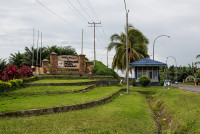
Felda Sahabat 17 is a vast oil palm estate with scattered villages and shoplots, isolated from highly populated areas and about two hours’ drive from Lahad Datu town.
Two days after the Sulu militants landed, on February 11, local fishermen reported spotting a group of 100 armed men near Kg Tanduo breaking into smaller groups and entering villages around the area.
On February 14, the Malaysian government decided to first negotiate with the group before ousting them to avoid bloodshed. The Philippines government had also agreed to the decision by the Malaysian government.
However, on March 1, three days after the February 26 deadline set by the Malaysian government for the group to leave Sabah, the negotiations had not ended and the group stayed in Lahad Datu, and the first violent clash occurred.
A small group of 12 intruders tried to break a police blockade in Kg Tanduo, resulting in a shoot-out. All 12 militants were killed, two police officers died, and three others were injured.
Then prime minister Datuk Seri Najib Razak gave Malaysian security forces a mandate to take “any action” against the group, with no compromise.
However, the bloodshed did not end there and on March 3, a group of fewer than 10 Sulu militants ambushed police at a house in Kg Sri Jaya, Simunul, Semporna – about two hours’ drive from Lahad Datu and 11 hours from Sabah’s capital Kota Kinabalu.
Six Malaysian policemen and seven assailants were killed – six were shot by police and one was beaten to death by villagers.
The media reported that four of the policemen had their bodies mutilated, with one beheaded.
On March 5, the Malaysian government launched an air strike in Kg Tanduo with three F-18 and five Hawk aircraft. A total of 13 Sulu gunmen were killed.
Ops Daulat was then launched to sweep the militants. Since then, a total 22 bodies of Sulu militants were recovered, while 30 others were arrested and charged, and nine were sentenced to death.
The Lahad Datu stand-off reportedly saw 68 people killed – 56 among the Sulu insurgents, nine from the Malaysian authorities, and six civilians.
On April 1, 2013, the Eastern Sabah Security Command was launched, combining strength and strategies from various security agencies to ensure the safety, peace, and sovereignty of Sabah’s east coast. – The Vibes, January 16, 2023