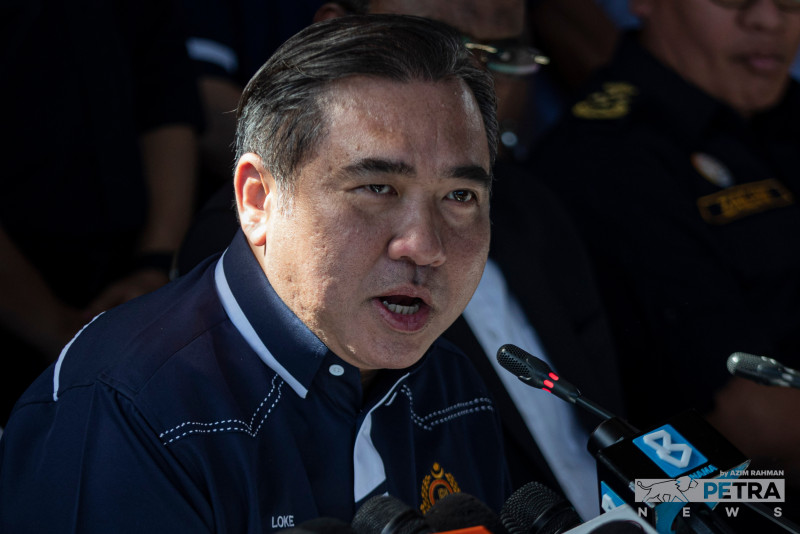
KUALA LUMPUR – The daily ridership of the Putrajaya MRT is expected to hit about 200,000 within two years after the launch of its full operations next month, said Transport Minister Anthony Loke.
He said the Putrajaya MRT Phase Two line is now 99.9% complete and should attract more users when it begins its services in the middle of next month.
“We hope it can hit a daily ridership of about 200,000 in one to two years. As in any MRT or LRT service, it will take time to reach a particular target.
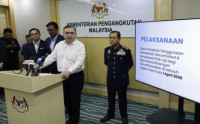
“For MRT One, we started the Kajang line with a low base, but it has reached about 200,000 right now. It takes about two years to reach that,” he said at a news conference at the Sg Buloh MRT depot near here today.
Loke said the Putrajaya MRT line, which cost RM30.53 billion in terms of construction and systems installation, will cover 36 stations using 49 train sets operating at a frequency of five minutes each initially.
Earlier, Loke took a test ride on the Putrajaya MRT route from Putrajaya Sentral to Kwasa Damansara, with a stop at the Titiwangsa station.
He said the ministry planned to expand the Titiwangsa station into a major transport hub connecting the monorail service, Ampang LRT line, MRT2 (Putrajaya), and the proposed MRT3.
Loke said the site identified for the project belongs to MRT Corp, which is tasked with developing the project, including procurement and tender matters.
“Initially, this (station expansion) was planned together with the construction of MRT3, but I told MRT Corp that we will probably have to do it before the construction (of MRT3),” he added.
Loke said the transport hub would be built on the site of the demolished Pekeliling flats, based on the transit-oriented development concept.
Loke said the opening of Putrajaya MRT Phase Two would make it easier for the public and patients to visit Kuala Lumpur Hospital, as the station located next to the hospital is equipped with a 400m travelator.
He said 107 feeder buses would be provided to support the MRT2 service to encourage more people to travel on the MRT.
The ministry is also looking into several approaches to improve first- and last-mile connectivity, including introducing ride sharing with the cooperation of e-hailing companies to make fares cheaper.
Asked on the status of MRT3, Loke said the ministry was waiting for the project approval and tender awards from the Finance Ministry. – Bernama, February 7, 2023